The Story
The journey of mtDNA haplogroup U5A2C2
Origins and Evolution
mtDNA haplogroup U5A2C2 is a subclade within the U5A2 branch of the broader U5 maternal lineage, a clade that is one of the oldest and most characteristic haplogroups of prehistoric and modern Europe. U5 diversified in Paleolithic Europe, and the U5A2 sub-branches expanded during and after the Last Glacial Maximum as human groups reoccupied northern latitudes. Based on its phylogenetic position under U5A2C and on ancient DNA evidence for related lineages, U5A2C2 most likely originated in Northern or Northeastern Europe in the early to mid‑Holocene (on the order of ~10 kya), reflecting post‑glacial recolonization and local continuity of hunter‑gatherer maternal lines.
Subclades (if applicable)
U5A2C2 is itself a terminal or near‑terminal subclade in many published phylogenies; depending on sequencing resolution, studies sometimes recover additional private mutations within U5A2C2 in particular regional samples. As a nested lineage under U5A2C, its closest relatives are other U5A2-derived subclades (e.g., U5A2C and other U5A2x lineages). High‑resolution mitogenomes are required to resolve fine substructure beneath U5A2C2, and published data indicate relatively limited diversification compared with more widespread European mtDNA clades.
Geographical Distribution
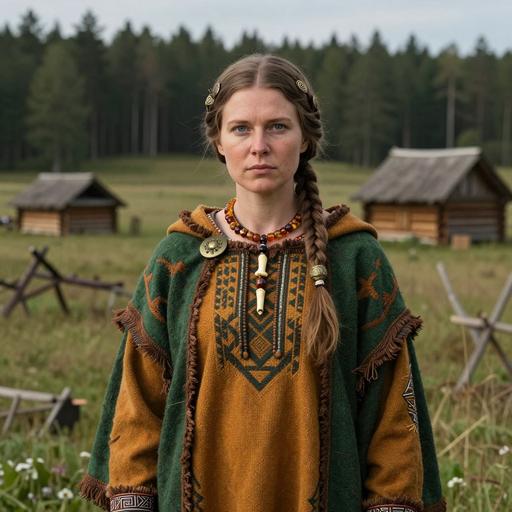
The distribution of U5A2C2 is concentrated in northern and northeastern Europe with lower frequencies elsewhere. Modern occurrences are most notable among:
- Fennoscandian populations, including Finland and parts of Sweden and Norway.
- Saami groups, where several U5 sublineages show elevated representation relative to southern Europe.
- Baltic and northwestern Russian populations (Estonia, Latvia, Lithuania, and adjacent Russian regions).
- Lower to moderate frequencies in central and western European samples, typically reflecting long‑term low‑level continuity or more recent gene flow.
- Low frequency, sporadic occurrences recorded in the Caucasus, parts of Central Asia, and rare isolated finds in North Africa, often likely reflecting historic movement or sampling artifacts.
Ancient DNA contexts: U5A2C2 and closely related U5A2C lineages are documented in Mesolithic European hunter‑gatherer remains, consistent with a deep local presence in northern Europe since the early Holocene.
Historical and Cultural Significance
U5A2C2 is principally significant as a marker of continuity from Mesolithic hunter‑gatherers into later northern European populations. Its presence among modern Saami and northern Finnish groups supports scenarios in which maternal lineages persisted locally through the Neolithic and into the historic era, even as societies adopted new technologies and experienced migrations of farming and pastoralist peoples. U5 lineages more broadly are often used in population genetics as indicators of pre‑Neolithic European ancestry; U5A2C2 fits this pattern as a geographically informative subclade reflecting northern post‑glacial demography rather than a signal of later steppe expansions (which are typically characterized by other haplogroups).
Conclusion
U5A2C2 represents a relatively rare but informative northern European maternal lineage tied to post‑glacial hunter‑gatherer populations. Its restricted geographic pattern and low to moderate modern frequencies, together with ancient DNA occurrences, make it useful for tracing persistence and local continuity of maternal ancestry in Fennoscandia, the Baltic and adjacent regions. Continued mitogenome sequencing of modern and ancient samples will refine the internal structure, age estimates, and migration history of this subclade.
Key Points
- Origins and Evolution
- Subclades (if applicable)
- Geographical Distribution
- Historical and Cultural Significance
- Conclusion