The Story
The journey of mtDNA haplogroup U5A2C3
Origins and Evolution
mtDNA haplogroup U5A2C3 is a subclade of U5A2C, itself nested within the broader U5A2 branch of haplogroup U5. Haplogroup U5 is one of the oldest and most characteristic maternal lineages of post‑glacial Europe, and U5A2C3 represents a later, geographically constrained diversification that likely occurred during the Early Holocene as Ice Age refugial populations expanded northward into newly habitable areas. Based on the phylogenetic position under U5A2C (parent node ~12 kya) and the distribution of descendant lineages, a reasonable estimate for the origin of U5A2C3 is around ~10 kya in Northern or Northeastern Europe following the retreat of glacial cover.
Subclades
U5A2C3 is itself a terminal or near‑terminal subclade in many published phylogenies; if minor downstream subbranches exist they are typically rare and geographically restricted. Because its parent clade U5A2C shows limited diversification, U5A2C3 is primarily treated in population studies as a lineage marker rather than a major branching node with many well‑sampled daughter clades. Future ancient DNA sampling in northern Mesolithic and early Neolithic contexts may reveal additional micro‑subclades.
Geographical Distribution
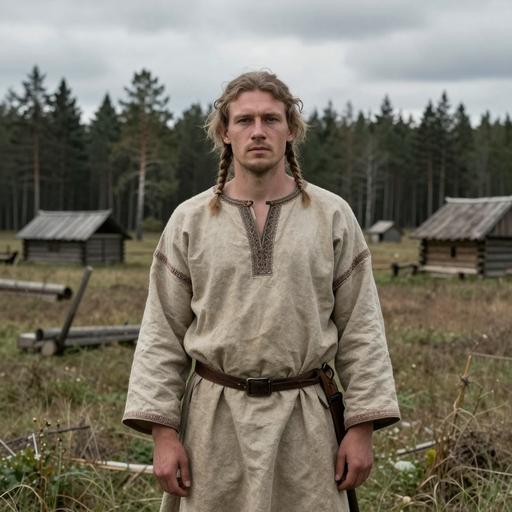
The geographical footprint of U5A2C3 is concentrated in northern and northeastern Europe, with highest relative representation among populations in Fennoscandia and the Baltic region. It is detectable at low to moderate frequencies in some modern Scandinavian and Finnish groups and is observed among Saami samples in genetic surveys and a small number of ancient DNA individuals from Mesolithic or early Holocene contexts. The lineage occurs at lower frequencies in neighboring Eastern and Central European populations and appears sporadically in the Caucasus and isolated cases in further regions, consistent with drift, migration, or later admixture.
Historical and Cultural Significance
U5A2C3 is valuable for reconstructing the maternal legacy of Mesolithic hunter‑gatherers in northern Europe. Its presence in ancient hunter‑gatherer remains and continuity into some modern northern populations supports scenarios of partial continuity through the Neolithic and later periods, where indigenous maternal lineages persisted alongside incoming farmer and steppe ancestry. While not a hallmark of major Bronze Age migration events, U5A2C3 and related U5 subclades illustrate how pre‑agricultural maternal diversity contributed to the genetic substratum of Northern and Northeastern Europe.
Conclusion
As a low‑to‑moderate frequency, geographically focused maternal marker, U5A2C3 is most useful in studies of post‑glacial recolonization, Mesolithic population structure, and maternal continuity in Fennoscandia and the eastern Baltic. Its restricted distribution and occurrence in ancient samples make it an informative lineage for fine‑scale regional history, though its low prevalence limits its utility for broad continental reconstructions without complementary data from other haplogroups and autosomal markers.
Key Points
- Origins and Evolution
- Subclades
- Geographical Distribution
- Historical and Cultural Significance
- Conclusion