The Story
The journey of mtDNA haplogroup U5B1B1
Origins and Evolution
mtDNA haplogroup U5B1B1 derives from the broader U5 maternal lineage, one of the oldest and most characteristic mitochondrial haplogroups of postglacial European hunter-gatherers. While U5 itself originates in the Upper Paleolithic and expanded across Europe during and after the Last Glacial Maximum, U5B1B1 represents a downstream branching event that likely formed in Northern or Central Europe in the late Neolithic to Bronze Age (approximately 3–5 kya). Its emergence reflects local differentiation of older U5 diversity that had persisted in northern refugia and then continued evolving in situ as populations transitioned through Neolithic and later cultural processes.
The subclade shows phylogenetic ties to U5B and U5B1B (its immediate parent), and its mutational profile indicates a relatively young coalescence compared with basal U5 branches but still preserves the deep Mesolithic ancestry signal inherited from earlier U5-bearing maternal lines.
Subclades (if applicable)
Documented diversity within U5B1B1 is limited compared with deeper U5 branches; published and database sequences suggest a small number of downstream lineages and local variants, particularly in northern Fennoscandia. Ancient DNA identifications (the user's dataset notes ~22 aDNA hits) indicate the clade appears intermittently in archaeological contexts, consistent with persistence rather than massive population replacement. Continued sampling and full mitogenome sequencing occasionally reveal micro‑subclades tied to regional founder events (for example, haplotypes enriched among Saami and northern Scandinavian communities).
Geographical Distribution
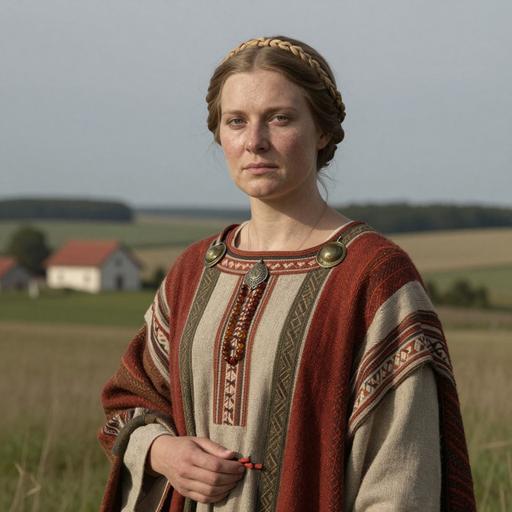
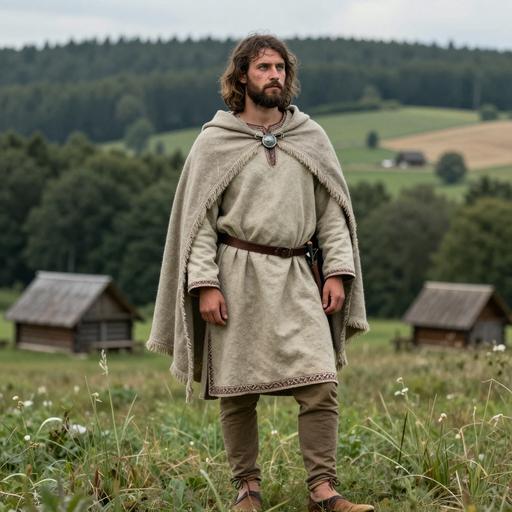
U5B1B1 is concentrated in northern Europe, with its highest relative frequencies and distinctive haplotypes recorded among Saami and other populations of northern Scandinavia. It also occurs at lower to moderate frequencies across broader northwestern and central Europe (British Isles, Scandinavia, Iberia, Germany, Poland, Baltic regions) and has sporadic low-frequency detections in adjacent regions such as the Caucasus and parts of North Africa, likely reflecting historical gene flow, small-scale migrations, or ancient shared ancestry.
Ancient DNA evidence places U5B1B1 and closely related lineages in archaeological samples spanning the Neolithic through the Bronze Age into historic periods in northern Europe, supporting a model of regional continuity with periodic admixture from neighboring groups.
Historical and Cultural Significance
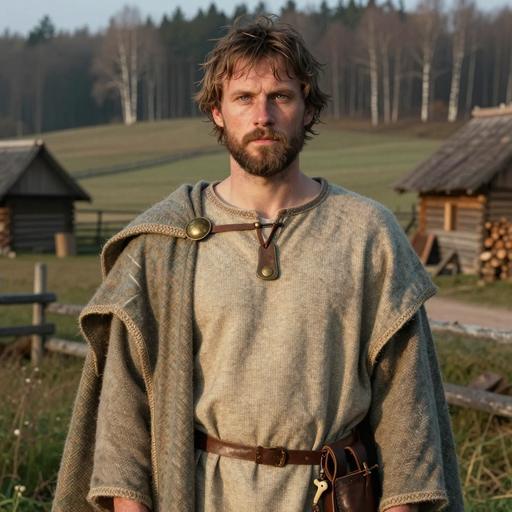
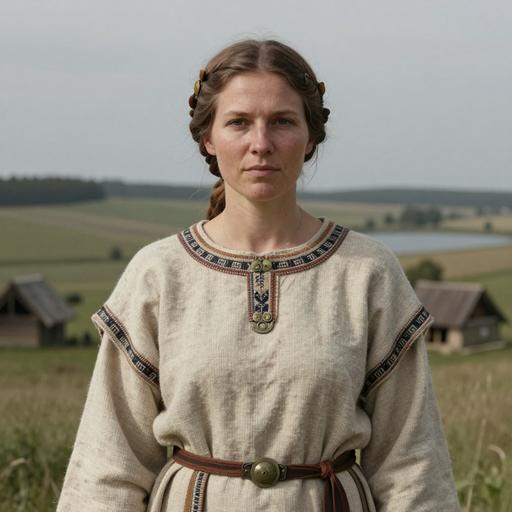
Because U5B1B1 derives from the Mesolithic-associated U5 backbone, its presence in modern northern European and Saami populations is often interpreted as a signal of deep local maternal continuity through the Neolithic and later periods. It is not typically associated with the major demographic pulses that brought Neolithic farmers (whose female lineages were often H, J, T etc.) or steppe pastoralists (who influenced autosomal ancestry strongly) as primary founders; instead, U5B1B1 represents persistence of indigenous maternal ancestry that was assimilated into later cultural packages.
In cultural-archaeological terms, U5B1B1 appears as a background lineage in regions associated with Mesolithic and postglacial recolonization, and it continues into later contexts (Neolithic, Bronze Age) where it marks local continuity. Its enrichment among the Saami supports hypotheses of regional founder effects and genetic drift acting on small, relatively isolated populations in northern Fennoscandia.
Conclusion
U5B1B1 is a regionally informative mtDNA subclade that illustrates how deep Paleolithic and Mesolithic maternal lineages persisted and differentiated locally in northern Europe. Its modern distribution and presence in ancient samples make it a useful marker for tracing continuity and founder events in Scandinavia and adjacent parts of Europe, particularly in studies focused on the maternal legacy of postglacial hunter-gatherer populations and their interactions with incoming groups during the Neolithic and Bronze Age.
Key Points
- Origins and Evolution
- Subclades (if applicable)
- Geographical Distribution
- Historical and Cultural Significance
- Conclusion