Menu
mtDNA Haplogroup • Maternal Lineage

U5B1B1G

mtDNA Haplogroup U5B1B1G

~3,000 years ago
Northern / Central Europe (Scandinavia)
1 subclades
1 ancient samples
Scroll to explore
Chapter I

The Story

The journey of mtDNA haplogroup U5B1B1G

Origins and Evolution

U5B1B1G is a terminal subclade nested within mtDNA haplogroup U5B1B1, itself a branch of the ancient European haplogroup U5. Haplogroup U5 has deep roots in Europe going back to the Mesolithic, and many of its downstream branches reflect long-term local persistence and later regional differentiation. Based on the position of U5B1B1G beneath U5B1B1 (which has been dated to roughly the late Neolithic/Bronze Age in Northern/Central Europe), U5B1B1G most plausibly formed in a northern European context during the later Bronze Age to early Iron Age (on the order of ~3 kya), reflecting local divergence of maternal lineages within relatively isolated or small populations.

U5B1B1G likely arose by one or a few mutations on top of the U5B1B1 background and has remained rare and geographically restricted, consistent with founder effects and drift in marginal northern populations. Its survival to the present day indicates continuity of maternal lines in at least some communities across millennia.

Subclades

At present U5B1B1G appears to be a relatively terminal and low-diversity branch with few (if any) well-documented downstream clades in public phylogenies. That pattern—limited substructure—is typical of late-forming, regionally restricted mtDNA lineages that have been subject to drift. As more full mitochondrial genomes are sequenced from northern and historic samples, additional downstream branches could be discovered, but current evidence supports U5B1B1G as a narrow, localized lineage within the U5B1B1 clade.

Geographical Distribution

U5B1B1G shows its highest frequency and concentration in northern Scandinavia, especially among populations with continuity to pre-modern northern hunter-gatherer-derived groups (notably the Sámi). It also appears at low to very low frequencies across broader Scandinavia and sporadically in the British Isles, Iberia, Central and Eastern Europe. Isolated low-frequency occurrences in North Africa and the Caucasus have been reported for related U5 subclades, and U5B1B1G could appear at trace levels in those regions as well due to historic mobility and complex prehistoric contacts. The haplogroup has been identified in at least one ancient DNA sample, supporting its presence in archaeological contexts and continuity through time in northern Europe.

Historical and Cultural Significance

Because U5 is a hallmark of Europe's Mesolithic maternal pool, subclades such as U5B1B1G represent the persistence of those deep maternal roots into later prehistoric and historic periods. The geographic association of U5B1B1G with northern Scandinavia and the Sámi indicates it may be part of the maternal substrate that persisted through the arrival of farming and subsequent Bronze/Iron Age population movements. In small, relatively isolated northern communities, genetic drift and founder effects can amplify rare lineages; U5B1B1G's distribution is consistent with this process. It therefore contributes to genetic signatures used to study continuity, isolation, and gene flow in northern Europe, and can help differentiate localized maternal histories (e.g., Sámi continuity versus later Scandinavian expansions).

Conclusion

U5B1B1G is a rare, regionally concentrated mitochondrial lineage representing a late-formed branch of the ancient European U5 family. It reflects the complex layering of Mesolithic ancestry and later local differentiation in northern Europe, particularly Scandinavia and Sámi-associated populations. As sequencing of modern and ancient mitogenomes progresses, the phylogenetic detail and distribution of U5B1B1G may become clearer, but current data support its interpretation as a northern, low-frequency lineage with deep maternal roots and prolonged local persistence.

Key Points

  • Origins and Evolution
  • Subclades
  • Geographical Distribution
  • Historical and Cultural Significance
  • Conclusion
Chapter II

Tree & Relationships

Phylogenetic context and subclades

Evolution Path

This haplogroup's evolutionary journey from its earliest ancestor to the present.

Steps Haplogroup Age Estimate Archaeology Era Time Passed Immediate Descendants Tested Modern Descendants Ancient Connections
1 U5B1B1G Current ~3,000 years ago ⚔️ Iron Age 3,000 years 1 4 1
2 U5B1B1 ~4,000 years ago 🔶 Bronze Age 4,000 years 3 49 0
3 U5B1B ~5,000 years ago 🔶 Bronze Age 5,000 years 2 64 31
4 U5B1 ~9,000 years ago 🌾 Neolithic 9,000 years 9 165 0
5 U5b ~9,000 years ago 🌾 Neolithic 9,000 years 3 495 140
6 U ~46,000 years ago 🦴 Paleolithic 46,000 years 12 2,835 110
7 R ~60,000 years ago 🦴 Paleolithic 60,000 years 12 10,987 57
8 N ~60,000 years ago 🦴 Paleolithic 60,000 years 15 15,452 13
9 L3 ~70,000 years ago 🦴 Paleolithic 70,000 years 11 17,621 6
10 L ~160,000 years ago 🦴 Paleolithic 160,000 years 7 18,987 5

Siblings (2)

Other branches from the same parent haplogroup

Chapter III

Where in the World

Geographic distribution and modern presence

Place of Origin

Northern / Central Europe (Scandinavia)

Modern Distribution

The populations where mtDNA haplogroup U5B1B1G is found include:

  1. Saami (Sápmi, Northern Scandinavia and Kola)
  2. Scandinavian populations (Norway, Sweden, Denmark)
  3. British Isles populations (England, Scotland, Ireland)
  4. Iberian Peninsula populations (Spain, Portugal)
  5. Central and Eastern European populations (Poland, Germany, Baltic states, Russia)
  6. North African groups at low frequency (Berber-speaking populations and adjacent regions)
  7. Caucasus populations at low frequency
CHAPTER IV

When in Time

Your haplogroup in the context of human history

~10k years ago

Neolithic Revolution

Agriculture begins, settled communities form

~5k years ago

Bronze Age

Metalworking, writing, and early civilizations

~3k years ago

Iron Age

Iron tools, expanded trade networks

~3k years ago

Haplogroup U5B1B1G

Your mtDNA haplogroup emerged in Northern / Central Europe (Scandinavia)

Northern / Central Europe (Scandinavia)
~2k years ago

Classical Antiquity

Greek and Roman civilizations flourish

Present

Present Day

Modern era

Your Haplogroup
Historical Era
Chapter IV-B

Linked Cultures

Ancient cultures associated with mtDNA haplogroup U5B1B1G

Cultural Heritage

These ancient cultures have been linked to haplogroup U5B1B1G based on matching ancient DNA samples from archaeological excavations. The presence of this haplogroup in these cultures provides insights into the migrations and population movements of populations carrying this haplogroup.

Asturian Culture Ertebølle Estonian Bronze Age Hallstatt Culture Ottoman Imperial Saxon Culture Southeast Iberian Bronze Viking Volosovo Culture
Culture assignments are based on archaeological context of ancient DNA samples and may represent regional associations during specific time periods.
Chapter V

Sample Catalog

Top 1 ancient DNA samples directly related to haplogroup U5B1B1G or parent clades

1 / 1 samples
Portrait Sample Country Era Date Culture mtDNA Match
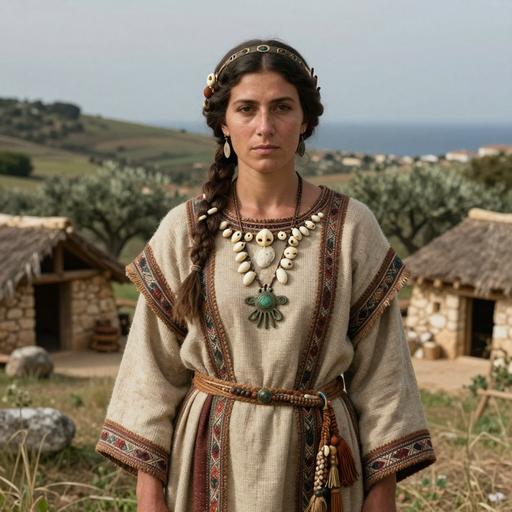
Portrait of ancient individual LHO003 from Spain, dated 1669 BCE - 1504 BCE
LHO003
Spain Bronze Age Southeast Iberia 1669 BCE - 1504 BCE Southeast Iberian Bronze U5b1b1g Direct
Chapter VI

Carrier Distribution Map

Geographic distribution of 1 ancient DNA samples carrying haplogroup U5B1B1G

Time Period Filter
All Time Periods
Showing all samples
Each marker represents an ancient individual
Chapter VII

Temporal Distribution

Distribution of carriers across archaeological periods

Chapter VIII

Geographic Distribution

Distribution of carriers by country of origin

Chapter IX

Country × Era Distribution

Cross-tabulation of carrier countries and archaeological periods

Data

Data & Provenance

Source information and data quality

Last Updated 2026-02-16
Confidence Score 50/100
Coverage Low
Data Source

We use the latest phylotree for MTDNA haplogroup classification and data.