Menu
mtDNA Haplogroup • Maternal Lineage

U5B2A1A1A

mtDNA Haplogroup U5B2A1A1A

~4,000 years ago
Western Europe
0 subclades
1 ancient samples
Scroll to explore
Chapter I

The Story

The journey of mtDNA haplogroup U5B2A1A1A

Origins and Evolution

mtDNA haplogroup U5B2A1A1A is a downstream subclade of haplogroup U5, a maternal lineage that arose in Upper Paleolithic/late Pleistocene Eurasia and became a hallmark of European hunter-gatherer populations. The immediate series of mutations that define U5B2A1A1A place it well within the U5b2 branch; because it is a narrowly defined subclade (multiple terminal derivations indicated by the long suffix), its most likely time of emergence is much later than the origin of U5 itself. Based on its phylogenetic position and the present paucity of observations, a reasonable estimate is a late Neolithic to Bronze Age origin (several thousand years ago), though confidence is limited until more ancient and modern sequences are sampled.

Subclades

As of current knowledge, U5B2A1A1A is a terminal or near-terminal branch within U5b2-derived lineages. It descends from U5 → U5b → U5b2 → U5b2a1 → U5b2a1a → U5b2a1a1 → U5b2a1a1a (nomenclature simplified for clarity). Because this clade is narrowly resolved and rare, few if any well-attested downstream subclades are established in published phylogenies; future whole-mitochondrial sequencing of additional ancient or modern samples could reveal further internal structure.

Geographical Distribution

Empirically, U5 and many U5b-derived lineages have long-standing connections to Western, Central and Northern Europe, appearing prominently in Mesolithic hunter-gatherers and persisting at low frequency into later periods. For U5B2A1A1A specifically, the haplogroup has been observed in a very small number of ancient contexts (one sample in the referenced database), so its detected geographic footprint is limited. Based on the parent clade distributions and the archaeological contexts where related U5b2 lineages appear, the best-supported inference is a primary concentration in Western to Central Europe, with occasional occurrences further north or south through time due to population movements and admixture.

Historical and Cultural Significance

Haplogroup U5 and its U5b subbranches are widely interpreted in population genetics as markers of Paleolithic and Mesolithic European maternal ancestry. Subclades like U5B2A1A1A that arise later may represent localized survival and drift of hunter-gatherer-derived mitochondrial lineages through the Neolithic and Bronze Age transitions. Because only a single ancient occurrence is currently recorded for U5B2A1A1A in the referenced database, any specific association with major archaeological complexes (e.g., Bell Beaker, Corded Ware, Yamnaya) must be framed cautiously: the lineage could reflect continuity of local maternal ancestry, rare retention of pre-farming lineages, or assimilation into expanding cultural groups.

Conclusion

U5B2A1A1A is a rare, narrowly defined maternal lineage that sits within the broader, ancient European U5 family. Its current detection in very few ancient samples suggests a low-frequency, regionally constrained history in Western/Central Europe, likely with a late Neolithic–Bronze Age emergence from U5b2-derived ancestors. Additional complete mitochondrial genomes from both archaeological contexts and modern populations are required to refine age estimates, geographic origin, and historical associations for this subclade.

Key Points

  • Origins and Evolution
  • Subclades
  • Geographical Distribution
  • Historical and Cultural Significance
  • Conclusion
Chapter II

Tree & Relationships

Phylogenetic context and subclades

Evolution Path

This haplogroup's evolutionary journey from its earliest ancestor to the present.

Steps Haplogroup Age Estimate Archaeology Era Time Passed Immediate Descendants Tested Modern Descendants Ancient Connections
1 U5B2A1A1A Current ~4,000 years ago 🔶 Bronze Age 3,500 years 0 0 1
2 U5B2A1A1 ~5,000 years ago 🔶 Bronze Age 5,000 years 1 5 0
3 U5B2A1A ~7,000 years ago 🌾 Neolithic 7,000 years 3 30 50
4 U5B2A1 ~10,000 years ago 🌾 Neolithic 10,500 years 2 48 0
5 U5B2A ~11,000 years ago 🌾 Neolithic 11,000 years 5 100 34
6 U5B2 ~12,000 years ago 🌾 Neolithic 12,000 years 5 290 0
7 U5b ~9,000 years ago 🌾 Neolithic 9,000 years 3 495 140
8 U ~46,000 years ago 🦴 Paleolithic 46,000 years 12 2,835 110
9 R ~60,000 years ago 🦴 Paleolithic 60,000 years 12 10,987 57
10 N ~60,000 years ago 🦴 Paleolithic 60,000 years 15 15,452 13
11 L3 ~70,000 years ago 🦴 Paleolithic 70,000 years 11 17,621 6
12 L ~160,000 years ago 🦴 Paleolithic 160,000 years 7 18,987 5

Subclades (0)

Terminal branch - no known subclades

Chapter III

Where in the World

Geographic distribution and modern presence

Place of Origin

Western Europe

Modern Distribution

The populations where mtDNA haplogroup U5B2A1A1A is found include:

  1. Mesolithic and later ancient individuals from Western and Central Europe
  2. Modern Western and Northern European populations at very low frequency (e.g., regional isolates such as Basques or northern coastal groups)
  3. Occasional occurrences reported from Southern European regions (Iberia, Italy) reflecting sporadic survival or later admixture
CHAPTER IV

When in Time

Your haplogroup in the context of human history

~10k years ago

Neolithic Revolution

Agriculture begins, settled communities form

~5k years ago

Bronze Age

Metalworking, writing, and early civilizations

~3k years ago

Haplogroup U5B2A1A1A

Your mtDNA haplogroup emerged in Western Europe

Western Europe
~3k years ago

Iron Age

Iron tools, expanded trade networks

~2k years ago

Classical Antiquity

Greek and Roman civilizations flourish

Present

Present Day

Modern era

Your Haplogroup
Historical Era
Chapter IV-B

Linked Cultures

Ancient cultures associated with mtDNA haplogroup U5B2A1A1A

Cultural Heritage

These ancient cultures have been linked to haplogroup U5B2A1A1A based on matching ancient DNA samples from archaeological excavations. The presence of this haplogroup in these cultures provides insights into the migrations and population movements of populations carrying this haplogroup.

Anglian Armenian LBA-EIA Corded Ware Danish Medieval Danish Post-Medieval Early Croatian Knoviz-Hallstatt Culture Late Iron Age British Lech Valley Bronze Age Nordic Late Neolithic Sarmatian Culture Usatove
Culture assignments are based on archaeological context of ancient DNA samples and may represent regional associations during specific time periods.
Chapter V

Sample Catalog

Top 1 ancient DNA samples directly related to haplogroup U5B2A1A1A or parent clades

1 / 1 samples
Portrait Sample Country Era Date Culture mtDNA Match
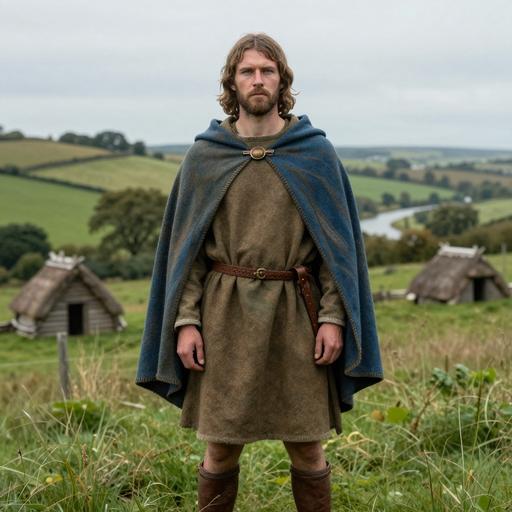
Portrait of ancient individual I14091 from United Kingdom, dated 442 CE - 602 CE
I14091
United Kingdom Anglian Scorton, England 442 CE - 602 CE Anglian U5b2a1a1a Direct
Chapter VI

Carrier Distribution Map

Geographic distribution of 1 ancient DNA samples carrying haplogroup U5B2A1A1A

Time Period Filter
All Time Periods
Showing all samples
Each marker represents an ancient individual
Chapter VII

Temporal Distribution

Distribution of carriers across archaeological periods

Chapter VIII

Geographic Distribution

Distribution of carriers by country of origin

Chapter IX

Country × Era Distribution

Cross-tabulation of carrier countries and archaeological periods

Data

Data & Provenance

Source information and data quality

Last Updated 2026-02-16
Confidence Score 50/100
Coverage Low
Data Source

We use the latest phylotree for MTDNA haplogroup classification and data.