The Story
The journey of mtDNA haplogroup U5B2B4
Origins and Evolution
mtDNA haplogroup U5B2B4 is a downstream subclade of U5B2B, itself nested within the broader U5b/U5 clade that represents one of the oldest and most characteristic maternal lineages of post-Last Glacial Maximum (LGM) Europe. The parent lineages (U5 and U5b) have deep Upper Paleolithic origins, while subclades such as U5B2B appear to have differentiated in Western and Northern Europe during the late Mesolithic to early Neolithic transition. Based on the phylogenetic position below U5B2B and the patterning of related clades in ancient DNA datasets, a plausible coalescence time for U5B2B4 is on the order of several thousand years after the LGM — roughly the mid-to-late Mesolithic (estimated here at ~7 kya) — although precise dating requires full-tree molecular-clock calibration with high-quality mitogenomes.
Subclades
As a named terminal subclade (U5B2B4), this lineage represents a relatively specific branch with limited observed diversity in current datasets. It sits beneath U5B2B in the phylogeny and, based on available samples, shows few further well-sampled downstream sub-branches; that pattern is consistent with a rare lineage that persisted at low frequency rather than with a major population expansion. Continued sequencing of modern and ancient mitogenomes could reveal additional substructure or previously unsampled sister clades.
Geographical Distribution
U5B2B4 is primarily a northern and western European lineage in both modern and ancient contexts. It has been documented at low frequencies in:
- Northern Europe (including Scandinavian populations and some Saami individuals), where U5b sublineages are relatively enriched compared with southern Europe;
- Western Europe and Central Europe at low levels, reflecting persistence of Mesolithic maternal signatures in later populations;
- Scattered occurrences in Eastern Europe, and rare, sporadic hits in adjoining regions such as parts of North Africa and the Anatolian/Caucasus zone — these peripheral occurrences are likely the result of complex later gene flow, small-scale migrations, or sampling of older deeply-branching lineages.
Ancient DNA support: the lineage or very closely related haplotypes have been identified in a small number of archaeological samples (four samples in the queried database), consistent with survival from Mesolithic or early post-Mesolithic contexts into later periods at low frequency.
Historical and Cultural Significance
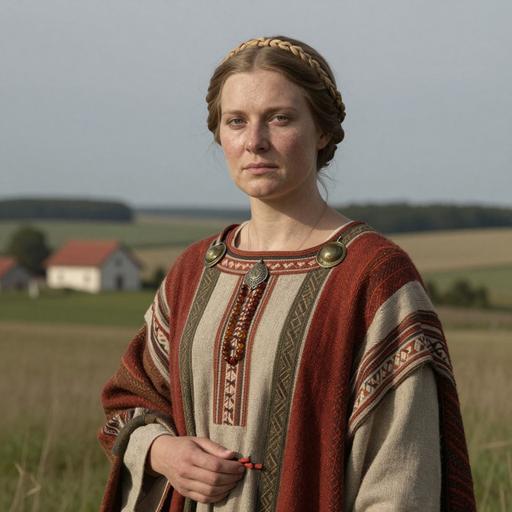
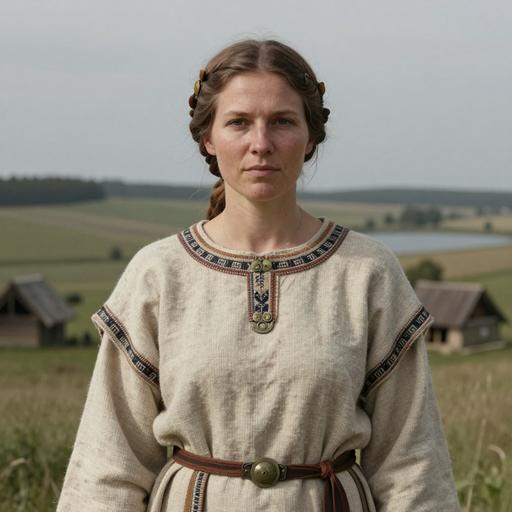
Lineages in the U5 family are strongly associated with European hunter-gatherer populations after the LGM. The presence of U5B2B4 in northern and western Europe fits the broader picture in which U5 subclades were frequent among Mesolithic foragers and subsequently persisted at variable low levels as farming populations spread across the continent. In northern Scandinavia and Saami groups, certain U5 subclades show higher persistence due to geographic isolation and local continuity; U5B2B4 likely represents one of the small number of maternal lineages that survived in subarctic and temperate pockets.
U5B2B4 is not typically linked to major Neolithic farming expansions (which carried other mtDNA haplogroups such as H, J, T and N1a in higher frequencies), nor to Bronze Age steppe-associated demographic turnovers as a driver of its distribution; instead its pattern is best interpreted as continuity from Mesolithic ancestry with occasional admixture into neighboring populations.
Conclusion
U5B2B4 is a rare, geographically focused mtDNA subclade that illustrates the persistence of Mesolithic maternal ancestry in parts of northern and western Europe. Its limited modern and ancient occurrences make it valuable for tracing local continuity and small-scale demographic events rather than for explaining broad continent-wide migrations. Further high-coverage mitogenome sequencing of both modern and ancient samples will refine its age, internal structure, and finer-scale distribution.
Key Points
- Origins and Evolution
- Subclades
- Geographical Distribution
- Historical and Cultural Significance
- Conclusion