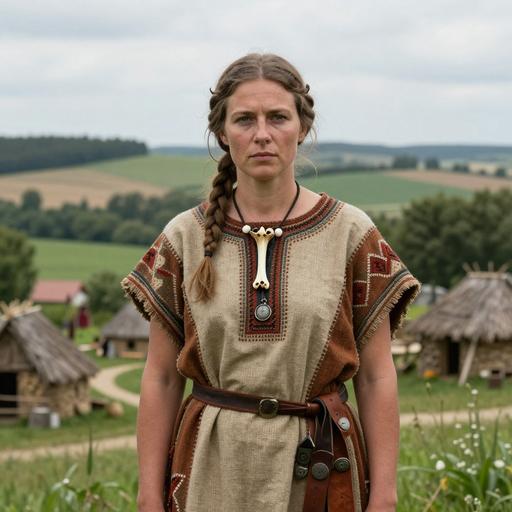
The Story
The journey of mtDNA haplogroup U5B2C3A
Origins and Evolution
Haplogroup U5B2C3A is a downstream subclade of U5B2C3, itself nested within the broader U5b2 → U5b → U5 branch of the mtDNA tree. The broader U5 lineage is one of the oldest and most characteristic maternal lineages associated with European Mesolithic hunter-gatherers. Based on the position of U5B2C3A within this phylogeny and the estimated age of its parent clade (early Holocene), U5B2C3A most likely coalesced in Western or Northern Europe during the early Holocene (roughly 8–10 kya). Age estimates for rare terminal subclades are inherently uncertain and depend on sampling, but a time depth on the order of several thousand years after the Last Glacial Maximum is consistent with available phylogeographic patterns.
Subclades (if applicable)
As a terminal or near-terminal branch described as U5B2C3A, this haplogroup appears to be a low-diversity subclade with few downstream branches reported in current public and curated databases. The scarcity of observed sublineages and its identification in only a very small number of modern and ancient samples suggest that U5B2C3A is a relatively rare lineage that has experienced limited expansion since its origin. Future whole-mitogenome sequencing and expanded ancient DNA sampling may reveal additional internal structure or previously unsampled sister lineages.
Geographical Distribution
The distribution of U5B2C3A mirrors that of other rare U5-derived lineages: it is principally a European lineage with highest occurrence in northern and western portions of the continent, while being present at low, sporadic frequencies elsewhere. Typical patterns are:
- Northern and Western Europe: Primary area of persistence, including detection among some indigenous northern groups (e.g., Saami and other northern European populations) and low-frequency occurrences in broader western European populations.
- Central and Eastern Europe: Recorded at low frequencies, reflecting post‑Mesolithic admixture and gene flow.
- Peripheral, sporadic occurrences: Very low-frequency, likely due to historical gene flow or long-distance migration, have been observed or reported in North Africa and the Anatolian/Caucasus region, though such records are uncommon and often need careful verification.
Because U5B2C3A is rare, regional frequency estimates are generally low and confidence is shaped by limited sample sizes.
Historical and Cultural Significance
U5B2C3A is best understood in the context of Mesolithic persistence and later demographic processes in Europe. The parent lineage U5b2 and broader U5 group are strongly associated with European hunter-gatherers of the Late Upper Paleolithic and Mesolithic. The presence of U5-derived lineages through the Neolithic and into later archaeological cultures often reflects genetic continuity in isolated or relict populations as well as incorporation of hunter-gatherer maternal lineages into farming and pastoralist communities.
- Mesolithic hunter-gatherer context (Primary): The root of U5B2C3A ties it to the post-glacial recolonization of northern and western Europe and to populations that persisted in these regions after the arrival of farming.
- Neolithic and later cultures (Associated/Secondary): Low-frequency presence in Neolithic, Bronze Age, and later archaeological contexts is consistent with the survival of hunter-gatherer maternal lineages within expanding farmer and pastoralist societies. U5B2C3A itself has not been documented as a marker of large-scale demographic expansions; instead its pattern suggests continuity and persistence in refugial or isolated groups.
Note: only a single ancient DNA sample has been reported for U5B2C3 (and related terminal branches), highlighting how rare and patchily sampled this lineage is in the archaeological record.
Conclusion
U5B2C3A represents a rare maternal subclade of the ancient European U5b2 lineage, with an origin in Western/Northern Europe in the early Holocene. Its limited diversity and low modern frequencies suggest long-term persistence in specific northern and western European populations rather than participation in major continent-wide expansions. Improved resolution from additional whole-mitochondrial sequencing and broader ancient DNA sampling will refine its age, internal structure, and historical biogeography.
Key Points
- Origins and Evolution
- Subclades (if applicable)
- Geographical Distribution
- Historical and Cultural Significance
- Conclusion