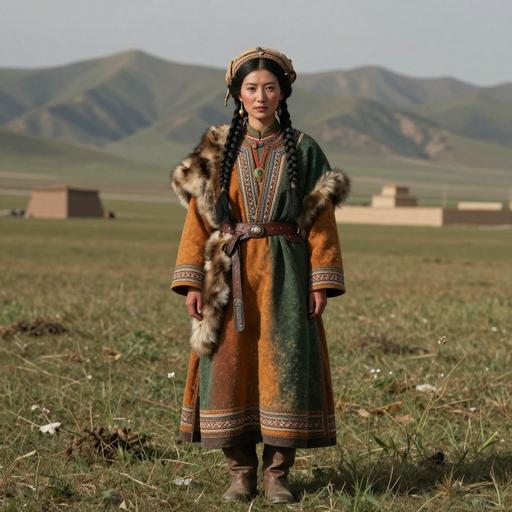
The Story
The journey of mtDNA haplogroup U8A1A1
Origins and Evolution
mtDNA haplogroup U8A1A1 is a downstream subclade of U8A1A (itself within U8A → U8), and therefore sits on a branch of haplogroup U that is associated with late Upper Paleolithic and postglacial maternal lineages in West Eurasia. Given the parent clade U8A1A is estimated at ~18 kya in the Near East/Caucasus, U8A1A1 likely arose after that split during the late Pleistocene or early Holocene (roughly ~15 kya, with uncertainty), probably in or near the Near Eastern/Caucasus zone. Its rarity and limited diversity suggest it survived in low numbers through the Last Glacial Maximum and postglacial population rearrangements, later becoming dispersed by small-scale migrations and gene flow events.
Subclades
U8A1A1 is itself a narrow downstream branch and currently recognized as a terminal or near-terminal clade in most phylogenies. Because it is rare, few well-differentiated subclades have been robustly defined; future high-coverage mitogenomes from understudied regions (Caucasus, Anatolia, South Asia) may reveal further internal structure. In phylogenetic terms, U8A1A1 is best interpreted as a localized daughter lineage of U8A1A rather than a widespread radiating clade.
Geographical Distribution
Observed occurrences of U8A1A1 are low-frequency and geographically scattered, consistent with a lineage that originated in the Near East/Caucasus and later dispersed in small numbers. Modern occurrences have been reported in South Asia (India, Pakistan, Sri Lanka), the Near East (Anatolia, Levant), the Caucasus (Armenia, Georgia, Azerbaijan), southern Europe (coastal Mediterranean areas, Iberia at very low frequency), and coastal North Africa. The lineage also appears in a very small number of ancient DNA samples (two documented instances in available datasets), supporting a long-term regional presence rather than a very recent introduction.
The pattern—localized pockets of low-frequency presence across adjoining regions—fits scenarios of deep Paleolithic/Epipaleolithic persistence combined with Neolithic and later movements that carried rare maternal lineages across trade routes, coastal migrations, and small-scale demographic expansions.
Historical and Cultural Significance
Because U8A1A1 is rare, it does not define large population movements directly, but it provides useful resolution for micro-histories of maternal ancestry. Its presence in the Near East and Caucasus ties it to populations that were important source regions for the spread of agriculture (Anatolian/Levantine farming groups) and for postglacial recolonization of adjacent areas. Low-level occurrences in South Asia and North Africa likely reflect long-distance connections (maritime, coastal exchange, or episodic migrations) rather than mass demographic replacement.
In population-genetic studies, rare lineages like U8A1A1 are valuable for reconstructing fine-scale maternal links between regions and for identifying refugial continuity through climatic transitions (e.g., survival through the Last Glacial Maximum in Near Eastern refugia).
Conclusion
U8A1A1 is best viewed as a rare, regionally rooted maternal lineage originating in the Near East/Caucasus in the late Upper Paleolithic/Epipaleolithic with survival at low frequency into the present across a band from the eastern Mediterranean into South Asia. Its scarcity makes it an informative but fragile marker for deep maternal ties linking Near Eastern, Caucasus, South Asian, Mediterranean, and North African populations; additional whole-mitogenome sampling, especially ancient DNA from the Near East and South Asia, would clarify its internal structure and migration history.
Key Points
- Origins and Evolution
- Subclades
- Geographical Distribution
- Historical and Cultural Significance
- Conclusion