Menu
mtDNA Haplogroup • Maternal Lineage

V1A1

mtDNA Haplogroup V1A1

~8,000 years ago
Western Europe (Franco‑Cantabrian / Iberian region)
1 subclades
Scroll to explore
Chapter I

The Story

The journey of mtDNA haplogroup V1A1

Origins and Evolution

mtDNA haplogroup V1A1 is a derived subclade of V1A, itself part of the broader mtDNA haplogroup V which is widely interpreted as a maternal lineage tied to post‑Last Glacial Maximum (LGM) recolonization of western and Atlantic Europe. Given the parent clade V1A is estimated to have originated in the Franco‑Cantabrian/Iberian refuge area around the early post‑glacial (approximately 9 kya), V1A1 is plausibly younger and likely arose as populations expanded out of these refugia during the Mesolithic and early Neolithic (we estimate an origin for V1A1 around ~8 kya). The phylogenetic position of V1A1 within V1A implies it represents a localized diversification event, resulting from small founder groups or population structure along the Atlantic façade.

Subclades

As a downstream branch of V1A, V1A1 is itself a specific terminal or near‑terminal lineage in many mtDNA phylogenies used in population and forensic studies. Depending on the depth of sampling and refinement of the V tree, V1A1 may contain further private mutations observed in particular populations (for example, distinct V1A1 haplotypes in Iberian and Atlantic French samples). Because the clade is low frequency, discovery of additional subclades usually comes from targeted sequencing or ancient DNA samples rather than broad SNP screens.

Geographical Distribution

V1A1 shows a patchy, low‑to‑moderate frequency distribution concentrated in the western Mediterranean and Atlantic Europe, reflecting the general distribution of V1A but often with a stronger signal in Iberia and adjacent Atlantic regions. Modern occurrences are most common in Iberian populations (including Basque groups) and Atlantic France, with rarer and sporadic detections in northern Europe (for example Saami and some Scandinavian samples), coastal North Africa (Berber populations), and isolated cases reported from the Caucasus/West Asia. Ancient DNA work has recovered V lineages (including V1A and V1A‑derived types) in Mesolithic and later contexts, supporting continuity of maternal lineages from post‑LGM hunter‑gatherers into later periods in parts of Western Europe.

Historical and Cultural Significance

Because of its timing and geography, V1A1 is most plausibly associated with post‑glacial hunter‑gatherer expansions along the Atlantic façade and persistence in refugial populations. Its presence in modern Basque and some Atlantic Iberian samples has led researchers to consider it in discussions of maternal continuity in these regions. While not a hallmark of large Bronze Age or steppe‑derived migrations, V1A1 can persist through later demographic events as a low‑frequency lineage, preserved by local founder effects, genetic drift, and culturally endogamous practices. In some northern contexts (e.g., Saami), rare V1A1 occurrences may reflect complex webs of contact, drift, and female‑mediated gene flow rather than broad population replacement.

Practical Notes for Genetic Genealogy and Research

  • V1A1 is typically detected through full mitochondrial genome sequencing or high‑resolution haplogroup calling; control‑region data alone can be ambiguous.
  • Its low frequency and geographically concentrated pattern mean that matches among modern testers are uncommon but potentially informative about maternal ancestries tied to Atlantic Europe.
  • Ancient DNA results that identify V1A‑derived lineages reinforce interpretations of long‑term local continuity in parts of Iberia and France and can help place V1A1 carriers into a broader post‑LGM demographic framework.

Conclusion

V1A1 is a localized, low‑frequency maternal lineage that reflects the deeper story of post‑glacial recolonization in Western Europe. Its presence in Iberia, Atlantic France, and sporadically elsewhere underscores the role of refugial survival, coastal dispersal, and later demographic processes (drift and founder effects) in shaping modern maternal genetic diversity. Continued high‑coverage mitochondrial sequencing and ancient DNA sampling will refine the node age and geographic microstructure of V1A1, improving its resolution in population and genealogical studies.

Key Points

  • Origins and Evolution
  • Subclades
  • Geographical Distribution
  • Historical and Cultural Significance
  • Practical Notes for Genetic Genealogy and Research

Chapter II

Tree & Relationships

Phylogenetic context and subclades

Evolution Path

This haplogroup's evolutionary journey from its earliest ancestor to the present.

Steps Haplogroup Age Estimate Archaeology Era Time Passed Immediate Descendants Tested Modern Descendants Ancient Connections
1 V1A1 Current ~8,000 years ago 🌾 Neolithic 8,000 years 1 38 0
2 V1A ~9,000 years ago 🌾 Neolithic 9,000 years 1 49 21
3 V1 ~12,000 years ago 🌾 Neolithic 12,000 years 8 77 0
4 V ~14,000 years ago 🏹 Mesolithic 14,000 years 8 418 118
5 HV ~30,000 years ago 🦴 Paleolithic 30,000 years 10 7,905 228
6 R ~60,000 years ago 🦴 Paleolithic 60,000 years 12 10,987 57
7 N ~60,000 years ago 🦴 Paleolithic 60,000 years 15 15,452 13
8 L3 ~70,000 years ago 🦴 Paleolithic 70,000 years 11 17,621 6
9 L ~160,000 years ago 🦴 Paleolithic 160,000 years 7 18,987 5
Chapter III

Where in the World

Geographic distribution and modern presence

Place of Origin

Western Europe (Franco‑Cantabrian / Iberian region)

Modern Distribution

The populations where mtDNA haplogroup V1A1 is found include:

  1. Iberian populations (Spain and Portugal, including Basque groups)
  2. Atlantic France and other Western European coastal groups
  3. Northern European populations (sporadic occurrences, including Saami and some Scandinavian samples)
  4. Berber and other North African coastal populations (low frequency, sporadic)
  5. Caucasus and adjacent West Asian populations (very rare, sporadic occurrences)
  6. Ancient European remains from Mesolithic and later archaeological contexts
CHAPTER IV

When in Time

Your haplogroup in the context of human history

~10k years ago

Neolithic Revolution

Agriculture begins, settled communities form

~8k years ago

Haplogroup V1A1

Your mtDNA haplogroup emerged in Western Europe (Franco‑Cantabrian / Iberian region)

Western Europe (Franco‑Cantabrian / Iberian region)
~5k years ago

Bronze Age

Metalworking, writing, and early civilizations

~3k years ago

Iron Age

Iron tools, expanded trade networks

~2k years ago

Classical Antiquity

Greek and Roman civilizations flourish

Present

Present Day

Modern era

Your Haplogroup
Historical Era
Chapter IV-B

Linked Cultures

Ancient cultures associated with mtDNA haplogroup V1A1

Cultural Heritage

These ancient cultures have been linked to haplogroup V1A1 based on matching ancient DNA samples from archaeological excavations. The presence of this haplogroup in these cultures provides insights into the migrations and population movements of populations carrying this haplogroup.

Alföld Linear Pottery Avar Croatian Bronze Age Early Avar Esztár Group Gumelnița Hungarian Neolithic Linear Pottery Culture Niemcza Culture Roman Provincial Rumin Culture Viking
Culture assignments are based on archaeological context of ancient DNA samples and may represent regional associations during specific time periods.
Chapter V

Sample Catalog

Top 50 ancient DNA samples directly related to haplogroup V1A1 or parent clades

50 / 50 samples
Portrait Sample Country Era Date Culture mtDNA Match

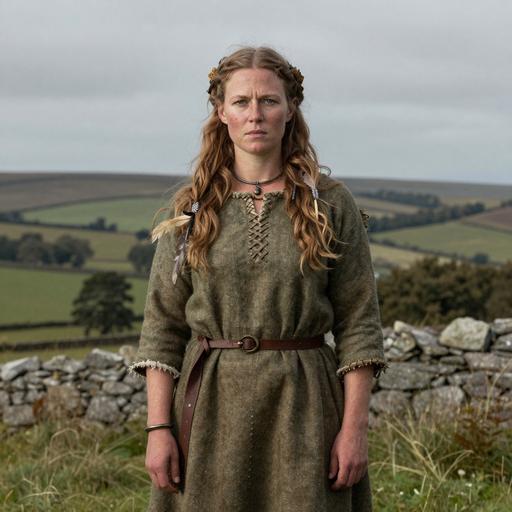
Portrait of ancient individual I26718 from Croatia, dated 100 CE - 400 CE
I26718
Croatia Late Imperial Roman Croatia 100 CE - 400 CE Late Imperial Roman V16 Direct
Portrait of ancient individual I32304 from Serbia, dated 100 CE - 300 CE
I32304
Serbia Roman Serbia 100 CE - 300 CE Roman Provincial V+@72 Direct
Portrait of ancient individual PCA0483 from Poland, dated 100 CE - 300 CE
PCA0483
Poland Wielbark Culture 100 CE - 300 CE Wielbark V3c Direct
Portrait of ancient individual PCA0488 from Poland, dated 100 CE - 300 CE
PCA0488
Poland Wielbark Culture 100 CE - 300 CE Wielbark V3c Direct
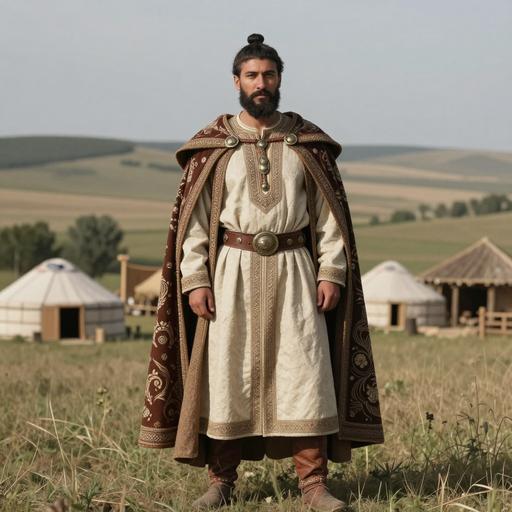
Portrait of ancient individual L7999 from Uzbekistan, dated 150 BCE - 50 CE
L7999
Uzbekistan Iron Age Rabat Culture of Surxondaryo 150 BCE - 50 CE Rabat Culture V2a Direct
Portrait of ancient individual I11713 from Slovakia, dated 190 BCE - 1 BCE
I11713
Slovakia The La Tene Culture in Slovakia 190 BCE - 1 BCE La Tene Culture V18a Direct
Portrait of ancient individual I11715 from Slovakia, dated 190 BCE - 1 BCE
I11715
Slovakia The La Tene Culture in Slovakia 190 BCE - 1 BCE La Tene Culture V Direct
Portrait of ancient individual PCA0113 from Poland, dated 200 CE - 400 CE
PCA0113
Poland Wielbark Culture 200 CE - 400 CE Wielbark V Direct
Portrait of ancient individual I15533 from Serbia, dated 246 CE - 365 CE
I15533
Serbia Roman Serbia 246 CE - 365 CE Roman Provincial V1a1 Direct
Portrait of ancient individual I21314 from United Kingdom, dated 342 BCE - 51 BCE
I21314
United Kingdom Middle to Late Iron Age England 342 BCE - 51 BCE Late Iron Age British V23 Direct

Chapter VI

Carrier Distribution Map

Geographic distribution of 100 ancient DNA samples carrying haplogroup V1A1

Time Period Filter
All Time Periods
Showing all samples
Each marker represents an ancient individual
Chapter VII

Temporal Distribution

Distribution of carriers across archaeological periods

Chapter VIII

Geographic Distribution

Distribution of carriers by country of origin

Chapter IX

Country × Era Distribution

Cross-tabulation of carrier countries and archaeological periods

Data

Data & Provenance

Source information and data quality

Last Updated 2026-02-16
Confidence Score 50/100
Coverage Low
Data Source

We use the latest phylotree for MTDNA haplogroup classification and data.