The Story
The journey of Y-DNA haplogroup O1B1A1A1
Origins and Evolution
Haplogroup O1B1A1A1 is a downstream branch of O1B1A1A, itself part of the broader O1b lineage common in East and Southeast Asia. Based on the phylogenetic position of O1B1A1A and its geographic affinities, O1B1A1A1 most likely arose in the coastal margins of southern China or Taiwan in the mid- to late-Holocene (several hundred to a few thousand years after the parent clade). Its emergence is best understood in the context of Neolithic coastal/fisher-forager populations that adopted maritime economies and played a central role in the early stages of Austronesian expansions.
Mutational differences that define O1B1A1A1 mark a more restricted paternal lineage compared with its parent clade; like many downstream Y-lineages associated with maritime expansions, it would have proliferated through a combination of population growth in coastal centers and founder effects during island colonization.
Subclades (if applicable)
O1B1A1A1 is an intermediate terminal clade in many published trees and may contain further sub-branches that are geographically structured (for example, island-specific lineages within the Philippines, eastern Indonesia, or the Ryukyus). Where high-resolution sequencing has been done, downstream subclades often show reduced diversity consistent with serial founder events — a pattern expected where small groups colonize islands or coastal archipelagos.
Geographical Distribution
The distribution of O1B1A1A1 is centered on the western Pacific and maritime Southeast Asia. Highest frequencies and diversity tend to appear among Austronesian-speaking and related coastal populations, reflecting both origin and expansion routes. Typical geographical observations include:
- Indigenous Taiwanese and coastal southern Chinese communities (notably Fujian) show presence of the broader O1B1A1A lineage and detectable O1B1A1A1 sublineages.
- Philippine populations (many ethnolinguistic groups) commonly carry O1b-derived lineages including O1B1A1A1 or closely related branches.
- Eastern Indonesia and parts of maritime Southeast Asia (e.g., Sulawesi, Maluku, Lesser Sunda islands) show moderate-to-low frequencies corresponding to later island colonization.
- Ryukyuan and some southwestern Japanese islands often carry low-to-moderate levels, consistent with prehistoric contacts and limited gene flow.
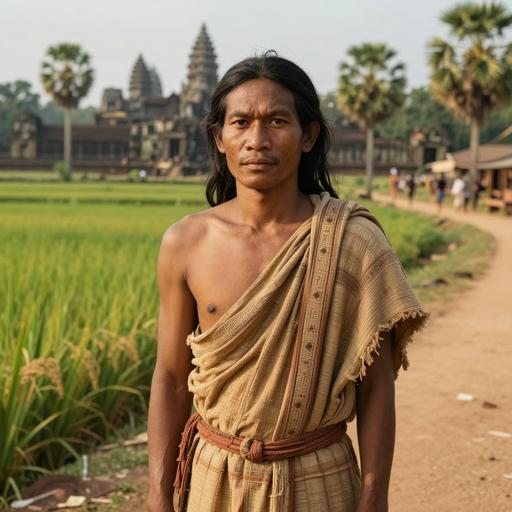
- Coastal mainland Southeast Asia (Vietnamese, Khmer, some Thai groups) can show occasional occurrences, reflecting either ancient coastal exchanges or recent gene flow.
Historical and Cultural Significance
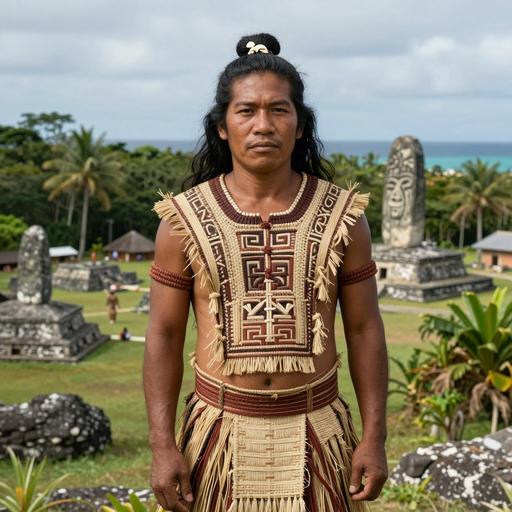
Because of its coastal and island distribution, O1B1A1A1 is best interpreted as part of the paternal signature associated with Austronesian expansions — the set of demographic movements that spread languages, maritime technology, and agricultural innovations across island Southeast Asia and into the Pacific. In the archaeological record, male lineages like O1B1A1A1 would have accompanied material cultures tied to seafaring, coastal foraging, and later horticulture.
Connections with archaeological phenomena include:
- Austronesian Neolithic processes along the Taiwan–Fujian coast that predate and seed broader dispersals.
- Lapita-associated movements into parts of Near Oceania (where O1b-derived lineages appear at low frequencies) during the later phases of Austronesian expansion.
The haplogroup therefore contributes to reconstructing male-mediated migration routes, founder events on islands, and patterns of admixture between incoming maritime groups and resident mainland or island populations.
Conclusion
O1B1A1A1 is a geographically informative subclade that refines the story told by its parent O1B1A1A: it highlights coastal and island demographic processes in the Holocene, is most strongly associated with Austronesian-linked populations in Taiwan, the Philippines, and maritime Southeast Asia, and helps trace the paternal pathways of seafaring expansion and localized founder effects. Future high-resolution sequencing and denser regional sampling will further clarify its internal branching, precise age estimates, and island-specific histories.
Key Points
- Origins and Evolution
- Subclades (if applicable)
- Geographical Distribution
- Historical and Cultural Significance
- Conclusion