The Story
The journey of Y-DNA haplogroup O2A2B1A1A1A4A1
Origins and Evolution
O2A2B1A1A1A4A1 is a downstream terminal branch of the broader O-M95 (also designated O2a2) lineage, a Y-chromosome clade long associated with Austroasiatic-speaking populations in Mainland Southeast Asia and parts of South Asia. Given its position as a very recent subclade of O2A2B1A1A1A4A, O2A2B1A1A1A4A1 most likely formed through a recent mutation and subsequent local expansion or drift within the last few centuries (on the order of 0.1–0.3 kya). Such recent terminal branches often reflect localized founder effects, genealogical expansions, or socially mediated male-lineage propagation within specific ethnic groups or communities.
Subclades (if applicable)
As a terminal or near-terminal SNP-defined branch (O2A2B1A1A1A4A1), this haplogroup currently has limited or no well-differentiated downstream subclades reported in public phylogenies; it is best treated as a recent and narrowly-distributed lineage. Continued high-resolution sequencing of male samples from Southeast Asia may discover further downstream branches or reveal that some samples presently classified here belong to very closely related SNPs forming a small cluster.
Geographical Distribution
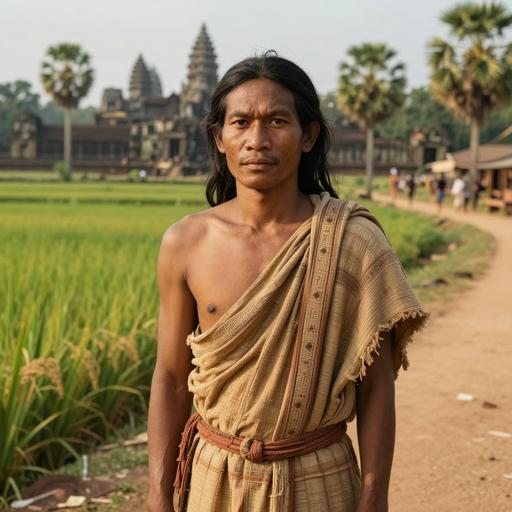
The geographic footprint of O2A2B1A1A1A4A1 is concentrated in Mainland Southeast Asia and adjacent southern China, where the parent O-M95 lineage is common. Empirical observations and population surveys indicate the haplogroup occurs primarily among Austroasiatic-speaking groups (for example Khmer and some Vietic populations), with lower-frequency appearances in nearby Tai-speaking populations (Thai, Lao) and some southern Han/ethnic minorities in southern China. Sporadic occurrences in Munda-speaking groups in eastern and central India likely reflect historical gene flow or ancient contacts between South and Southeast Asia that brought O-M95 sublineages into the Indian subcontinent. Low and variable occurrences among Austronesian-speaking groups in Island Southeast Asia and Taiwan are consistent with later admixture and migration dynamics.
The haplogroup has been identified in a small number of ancient DNA samples (five in the referenced database), indicating occasional preservation in archaeological contexts but reinforcing its recent and localized expansion pattern.
Historical and Cultural Significance
Because O2A2B1A1A1A4A1 is so recent, its primary significance is in microevolutionary and historical demographic terms rather than in deep prehistoric movements. Its distribution aligns with areas influenced by Austroasiatic language spread, later historical polities (for example regions incorporated into early Khmer polities and adjacent mainland states), and localized social processes such as patrilineal clan expansion or elite transmission. Low-frequency presence in Munda groups of India reflects historical contacts along coastal and inland routes between South and Southeast Asia rather than a major demographic replacement.
From a genealogical perspective, detection of this terminal branch in modern men can be informative about recent paternal ancestry and ancestry connections to specific Mainland Southeast Asian populations or communities that experienced recent male-line expansions.
Conclusion
O2A2B1A1A1A4A1 is best understood as a very recent, geographically circumscribed descendant of the O-M95/O2a2 haplogroup complex. Its pattern—highly localized high frequency in some Austroasiatic contexts, low-level presence in neighboring groups, and a handful of archaeological detections—matches expectations for a lineage that arose in historic times and spread through localized demographic processes (founder effects, social structure, and admixture). Broader population-level sequencing and targeted sampling in mainland Southeast Asia and southern China will clarify its detailed internal structure and recent demographic history.
Key Points
- Origins and Evolution
- Subclades (if applicable)
- Geographical Distribution
- Historical and Cultural Significance
- Conclusion