The Story
The journey of mtDNA haplogroup D4B2B
Origins and Evolution
mtDNA haplogroup D4B2B is a downstream branch of D4B2, itself part of the larger D4 radiation that is characteristic of northern and eastern Asia. Based on the phylogenetic position of D4B2B relative to D4B2 and the distribution of closely related lineages, the clade most likely arose in the early to mid-Holocene (~8 kya) on the North Pacific margin. Its emergence fits the pattern of regional diversification after the Last Glacial Maximum, when coastal and inland hunter-gatherer populations expanded and differentiated across northeastern Asia.
Subclades
D4B2B is a terminal or near-terminal branch in many published datasets (i.e., it is observed as a discrete branch under D4B2); where further internal diversity exists, it is generally low relative to older D4 subclades. Because sampling of complete mitochondrial genomes from remote parts of the Russian Far East, northern Japan, and some Siberian groups is still incomplete, additional minor subbranches of D4B2B may be discovered with expanded mitogenome sequencing.
Geographical Distribution
The observed distribution of D4B2B is concentrated along the North Pacific margin with highest prevalence in northeastern Asian populations and lower, scattered occurrences elsewhere in East and Central Asia. Key population contexts where D4B2B is reported include:
- Indigenous Siberian and Russian Far East groups (e.g., Yakut, Evenk, Chukchi and other regional groups).
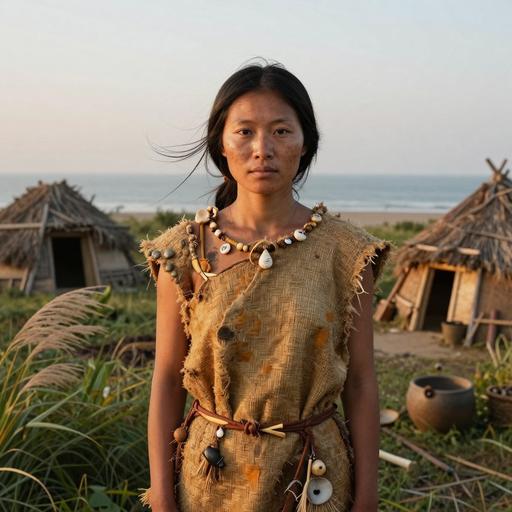
- Japanese populations, particularly in contexts related to Jomon and Ainu lineages where maternal continuity from the Holocene is evident.
- Korean and northern Chinese groups at low-to-moderate frequencies in some regional surveys.
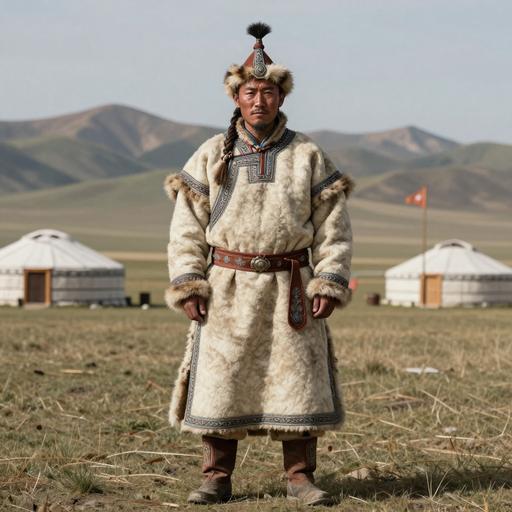
- Some Mongolic and Turkic groups in adjacent Central Asian regions at low frequency, reflecting historic gene flow and steppe contact.
Ancient DNA occurrences of D4B2-derived lineages in Holocene coastal and island contexts support continuity between ancient hunter-gatherers (including Jomon-associated individuals) and present-day populations in the region.
Historical and Cultural Significance
Because D4B2B lies within a clade commonly found among North Pacific coastal hunter-gatherers, it is informative in archaeological and anthropological studies that examine maternal continuity across the Jomon period into modern Ainu and some Japanese populations. The haplogroup also helps trace later population interactions between indigenous Siberian peoples and expanding East Asian groups: its presence in some Central Asian and mainland East Asian populations appears to reflect historical northeast Asian admixture rather than primary origin in those regions.
D4B2B is not typically associated with the major agricultural expansions out of the Yellow River or Yangtze basins; instead, it is more closely tied to forager and maritime resource-based societies of the North Pacific rim during the Holocene.
Conclusion
mtDNA D4B2B is a regional Northeast Asian maternal lineage that developed after the Pleistocene-Holocene transition and remains a marker of Holocene population structure along the North Pacific margin. While generally low in frequency at a continental scale, its concentrated presence in the Russian Far East, northern Japan, Korea and parts of northeastern China makes it a useful genetic signature for studies of postglacial population continuity, coastal hunter-gatherer demography, and historic northeast Asian gene flow. Continued mitogenome sequencing, particularly from under-sampled indigenous groups and ancient remains, will refine the internal structure and chronology of D4B2B.
Key Points
- Origins and Evolution
- Subclades
- Geographical Distribution
- Historical and Cultural Significance
- Conclusion