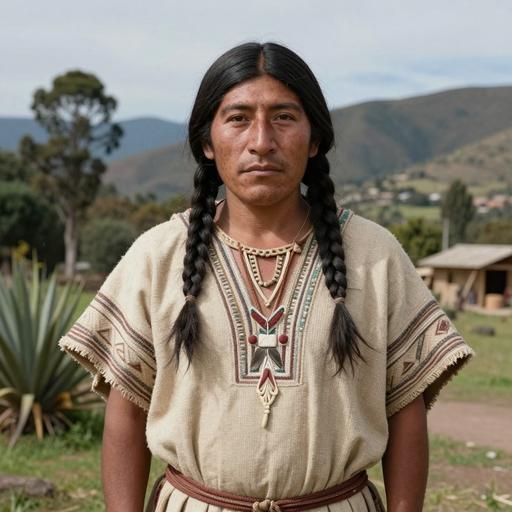
The Story
The journey of mtDNA haplogroup D4H3A1A
Origins and Evolution
mtDNA haplogroup D4H3A1A is a downstream subclade of D4h3a → D4H3A1, a lineage long associated in population genetics with coastal Northeast/East Asia and with early coastal routes into the Americas. The parent clade D4h3a has a Late Pleistocene–Early Holocene time depth (~12 kya in many estimates) and a clear coastal phylogeographic signal; D4H3A1A likely split from its parent during the Early Holocene (on the order of ~9 kya by coalescent estimates for this local subclade), reflecting further population structure among coastal and riverine groups after the Last Glacial Maximum.
Genetically, D4H3A1A carries the diagnostic mutations that place it within the D4h3a macro-lineage; its presence in both ancient and a small number of modern samples permits reconstruction of migration pathways and demographic events tied to maritime resource use and movement along littoral corridors.
Subclades (if applicable)
As a relatively deep but narrow terminal subclade, D4H3A1A may itself include very localized downstream branches in particular indigenous populations of the Americas and adjacent Siberian/NE Asian coastal groups. Where high-resolution mitogenomes are available, researchers can sometimes resolve population-specific sub-branches; however, many published datasets lump samples at the D4h3a or D4h3a1 level, so the internal structure of D4H3A1A remains incompletely sampled and may be refined with expanded whole-mitogenome sequencing.
Geographical Distribution
The geographic pattern for D4H3A1A is consistent with the broader D4h3a story: it is principally a coastal/riverine lineage with low-to-moderate frequency in particular localities rather than broad continental prevalence. Modern and ancient occurrences concentrate in:
- Northeast and East Asian coastal groups at low frequency (reflecting the region where the broader lineage diversified).
- Indigenous Siberian and Arctic coastal/riverine peoples at sporadic low frequency, showing retention of coastal ancestries in northern Eurasia.
- Several Indigenous populations in the Americas, especially along Pacific coastal regions of North, Central, and South America, where D4h3a-derived lineages have been documented in both ancient and present-day samples.
Because D4H3A1A is uncommon overall, its geographic signal is most informative where it appears repeatedly in local archaeological or ethnographic contexts (for example, in ancient coastal human remains and in extant coastal indigenous groups), supporting hypotheses of maritime-focused dispersal and localized persistence.
Historical and Cultural Significance
D4H3A and its downstream branches (including D4H3A1 and D4H3A1A) are frequently discussed in the literature on early human settlement of the Americas because of their association with ancient coastal remains and with early Holocene samples that predate or are contemporaneous with inland Paleoindian contexts. The presence of D4h3a-lineages in ancient coastal assemblages and in some early New World genomes supports a model in which at least some founding or early-arriving groups used coastal and riverine routes.
In Northeast Asia, sporadic occurrences of D4H3A1A in archaeological contexts such as Early Holocene hunter-gatherer (including Jomon-related) materials reflect coastal demographic continuity and interaction. In the Americas, the lineage's presence—while not numerically dominant—has been particularly informative as a marker of migration pathways and founder effects in Pacific coastal populations.
Conclusion
Although D4H3A1A is not a high-frequency haplogroup across broad regions, its phylogenetic position and geographic occurrences make it disproportionately valuable for reconstructing coastal population movements between Northeast Asia and the Americas during the Late Pleistocene–Early Holocene transition. Continued whole-mitogenome sampling, especially from understudied coastal and ancient remains, will clarify its internal structure, precise age, and role in regional demographic histories.
Key Points
- Origins and Evolution
- Subclades (if applicable)
- Geographical Distribution
- Historical and Cultural Significance
- Conclusion