The Story
The journey of mtDNA haplogroup D4J13
Origins and Evolution
mtDNA haplogroup D4J13 is a descendant subclade of the D4J1 lineage within the broader East/Northeast Asian macro-haplogroup D4. D4 lineages are a long-established component of the maternal gene pool in East Asia and neighboring Siberia; D4J1 has been dated to the early Holocene (approximately 9 kya), and D4J13 likely diversified later in the Holocene as a more localized branch. The estimated origin of D4J13 around ~4 kya reflects a pattern of regional maternal diversification after the initial post-glacial expansions in Northeast Asia.
Subclades (if applicable)
At present, D4J13 is recognized as a specific terminal or near-terminal branch under D4J1 in published phylogenies and databases. Because it is a relatively rare and recently characterized subclade, internal substructure for D4J13 is limited or not well resolved; future high-resolution mitogenomes may reveal further downstream branches or local variants.
Geographical Distribution
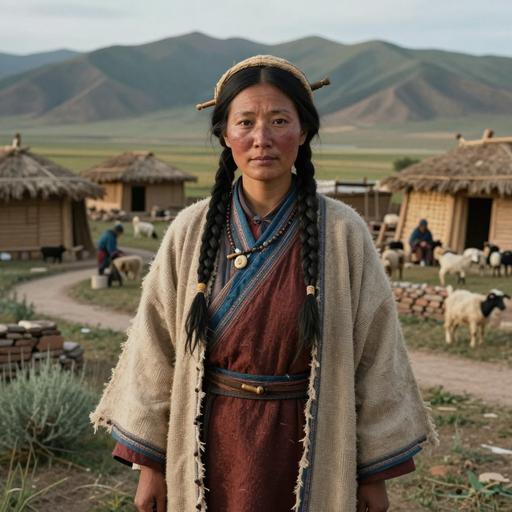
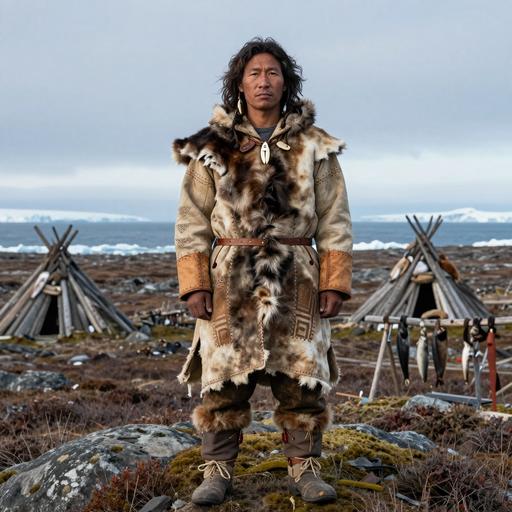
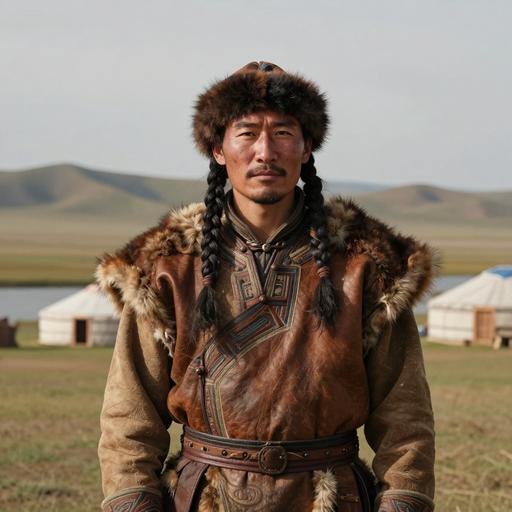
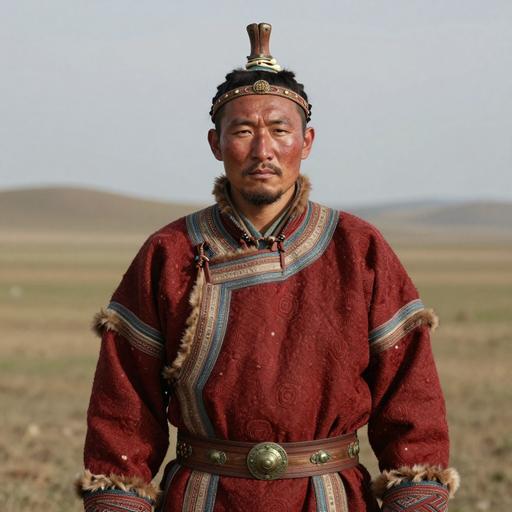
D4J13 shows a geographically focused distribution centered on Northeast Asia with low overall frequency. Detected occurrences (modern and ancient) cluster among populations of East and Northeast Asian affinity — including Han Chinese (regionally), Japanese (including contexts related to Jomon and later populations), Koreans, and several indigenous Siberian/Tungusic groups. Occasional low-frequency reports from Mongolic- and Turkic-speaking groups of East-Central Asia are consistent with regional contact and gene flow. In ancient DNA, D4J13-type lineages are rare but have been observed in at least one documented archaeological sample from Northeast Asian Holocene contexts.
Historical and Cultural Significance
Because D4J13 is low-frequency and regionally localized, its primary significance lies in illuminating fine-scale maternal population structure and demographic events within Northeast Asia during the Holocene. It likely reflects local continuity and micro-differentiation among coastal and inland hunter-gatherer and early agrarian communities rather than representing a pan-regional migration. Associations with archaeological contexts in the Amur/Primorye region and occasional presence in Jomon-related material suggest it may have been part of the maternal diversity of prehistoric coastal and riverine communities that contributed ancestry to modern Northeast Asian populations.
Conclusion
D4J13 is best interpreted as a localized Holocene branch of the D4 maternal radiation in Northeast Asia. Its low frequency and limited ancient occurrences make it most useful for fine-scale phylogeographic studies and for tracing localized maternal continuity and micro-migrations across northeastern East Asia and adjacent Siberia. Ongoing mitogenome sequencing and ancient DNA sampling will improve resolution of its age, internal structure, and precise historical dynamics.
Key Points
- Origins and Evolution
- Subclades (if applicable)
- Geographical Distribution
- Historical and Cultural Significance
- Conclusion