The Story
The journey of mtDNA haplogroup D4J21
Origins and Evolution
mtDNA haplogroup D4J21 derives from the broader D4J2 branch of mitochondrial haplogroup D4, a lineage characteristic of East and Northeast Asia. Given the parent clade D4J2 has been dated to the early Holocene (~8 kya) in Northeast Asia, D4J21 most plausibly arose later during the mid- to late-Holocene (we estimate ~5 kya), as a regional sublineage defined by private mutations within D4J2. Its emergence fits a pattern seen across many East Asian maternal lineages: diversification and local differentiation following postglacial population stabilization and Neolithic cultural processes in the Amur–Primorye and adjacent archipelagic zones.
Subclades (if applicable)
At present, D4J21 is best treated as a downstream subclade within D4J2 with limited reported internal diversification in public datasets. Where reported, D4J21 may include a few closely related haplotypes found in geographically proximate populations, indicating localized micro-expansions rather than wide-ranging radiation. Further sequencing of complete mitogenomes from Northeast Asia will refine whether D4J21 splits into multiple named subclades or remains a small terminal branch.
Geographical Distribution
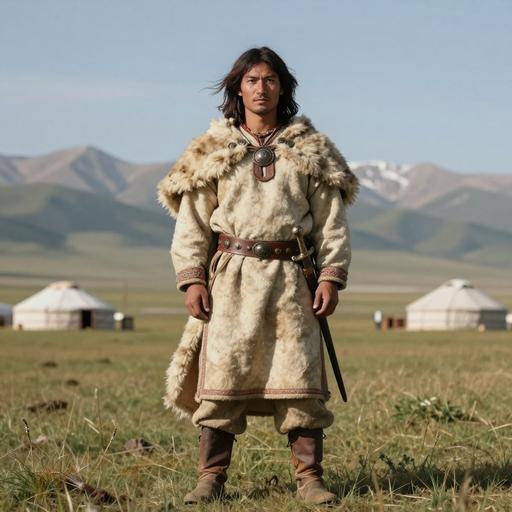
D4J21 shows a concentrated distribution in Northeast Asia, with occurrences principally in the Amur/Primorye region, the Japanese archipelago, the Korean Peninsula, and adjacent parts of northeastern China and southern Siberia. Frequencies are generally low to moderate compared with major East Asian haplogroups but are elevated in some northeastern provincial Han samples and in particular Tungusic-speaking or Evenk-associated groups, reflecting regional continuity. The lineage is sometimes found in ancient Holocene archaeological samples from the Amur basin and coastal Primorye contexts, supporting a multi-millennial presence in the region.
Historical and Cultural Significance
Although not a high-frequency pan-East-Asian marker, D4J21 is informative for studies of postglacial population structure and local demographic processes in Northeast Asia. Its presence in modern Han (especially northeastern provinces), Koreans, Japanese (including occasional links to prehistoric archipelago peoples), and certain Indigenous Siberian groups suggests that D4J21 tracked mixtures of forager and early farmer or pastoralist networks in the Holocene. Archaeologically, the haplogroup is most relevant to the Amur Neolithic / Primorye contexts and to Jomon/prehistoric Japanese population studies where localized maternal lineages illuminate continuity and interaction across the Sea of Japan.
Conclusion
D4J21 is a regional mtDNA subclade of D4J2 reflecting mid-Holocene diversification in Northeast Asia. It is useful for fine-scale reconstructions of maternal ancestry in the Amur–Primorye area, the Japanese archipelago, and neighboring Northeast Asian populations. Continued sampling of complete mitogenomes—especially from archaeological contexts—will clarify its internal structure, temporal depth, and role in regional demographic events.
Key Points
- Origins and Evolution
- Subclades (if applicable)
- Geographical Distribution
- Historical and Cultural Significance
- Conclusion