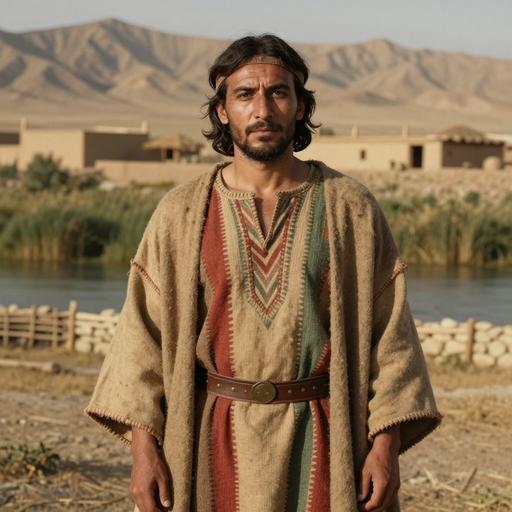
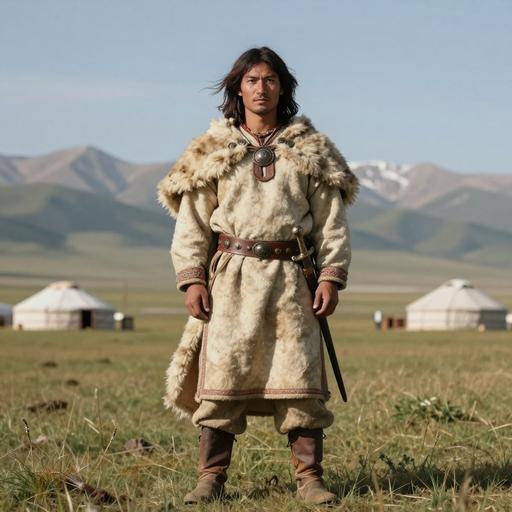
The Story
The journey of mtDNA haplogroup D4J2
Origins and Evolution
Haplogroup D4J2 is a downstream branch of mtDNA haplogroup D4J, itself a daughter of the East Asian macro-haplogroup D4. The parent D4J is estimated to have formed in the early Holocene in Northeast/East Asia (around 12 kya); D4J2 plausibly split from D4J later in the early Holocene, with a best-estimate time depth on the order of ~8 kya. Like other D4-derived lineages, D4J2 reflects postglacial population structure and local demographic processes in temperate Northeast Asia rather than being a widespread pan-continental lineage.
D4-derived lineages are defined by coding- and control-region mutations visible in whole mitochondrial genomes; D4J2 is recognized by a specific motif of downstream mutations within the D4J cluster. Because many published surveys rely on HVR or partial sequencing, confident assignment to D4J2 typically requires near-complete mitogenome data.
Subclades (if applicable)
At present D4J2 shows limited, but detectable, internal diversity in published datasets. Some full-mitogenome studies and high-resolution surveys have identified further subdivisions (provisionally named D4J2a, D4J2b etc. in research notes), but those subclades are often rare and not yet uniformly or consistently named across databases. The fine-scale phylogeny of D4J2 remains incompletely resolved: expanded sampling and additional full mitogenomes are needed to clarify internal branching, geographic structure, and coalescence times for subordinate clades.
Geographical Distribution
D4J2 is principally associated with Northeast and East Asia, appearing at low-to-moderate frequencies in a range of modern populations and occasionally in ancient remains. Modern occurrences are most reliably observed among:
- Han Chinese, with regional heterogeneity and higher visibility in northeastern provinces.
- Japanese populations, including occasional signals in Jomon-related and some modern samples.
- Koreans, at low frequencies consistent with regional continuity and exchange.
- Indigenous Siberian and Tungusic-speaking groups, where D-lineages in general are common.
- Mongolic- and some Turkic-speaking groups of East-Central Asia at low frequency, reflecting limited east–west gene flow and admixture.
In ancient DNA datasets D4J2-level assignments are rare but have been identified in at least a small number of Holocene Northeast Asian contexts (Amur/Primorye-type and related coastal/riverine assemblages), consistent with the early-Holocene origin and regional persistence of D4J lineages.
Historical and Cultural Significance
The distribution of D4J2 fits a broader pattern of postglacial recolonization and local continuity in Northeast Asia. Rather than marking a major continental migration, D4J2 likely reflects:
- Local maternal continuity across the Amur–Primorye region and adjacent parts of northern East Asia during the Holocene.
- Contributions to the maternal pool of the Japanese archipelago, where D-derived lineages (including some D4J branches) are part of the mixed ancestry visible in Jomon and later populations.
- Low-frequency dispersal into neighboring regions (Korea, parts of Mongolia and Central Asia) through millennia of small-scale mobility, trade, and gene flow.
In archaeological terms D4J2 aligns best with Neolithic/early-Holocene coastal and riverine forager-farmer communities of Northeast Asia and with the later cultural transformations that shaped the populations of historic Tungusic- and Mongolic-speaking groups. It is not typically linked to large steppe-origin Bronze Age demographic turnovers, which involved different dominant maternal and paternal lineages.
Conclusion
mtDNA haplogroup D4J2 is a regional Northeast/East Asian maternal lineage that emerged within the D4J branch during the early Holocene and survives today as a low-to-moderate frequency component of East Asian and some Siberian maternal gene pools. Its study benefits from whole-mitogenome sequencing and targeted ancient DNA sampling to clarify its internal structure, precise age, and the ways it contributed to the maternal ancestry of modern Northeast Asian peoples.
(Detection and phylogenetic resolution of D4J2 are contingent on full mitogenome data; frequency estimates are limited by sampling density in many parts of northeastern Asia.)
Key Points
- Origins and Evolution
- Subclades (if applicable)
- Geographical Distribution
- Historical and Cultural Significance
- Conclusion