The Story
The journey of mtDNA haplogroup D4J7
Origins and Evolution
mtDNA haplogroup D4J7 is a downstream branch of the D4J lineage, itself a daughter of the widespread East Asian macro-haplogroup D4. Given the parent D4J is estimated to have arisen in Northeast/East Asia in the early Holocene (~12 kya), D4J7 most likely split from other D4J lineages more recently during the mid-to-late Holocene (we estimate ~4.5 kya). Its emergence fits a pattern seen in many regional mtDNA subclades: diversification within a broadly distributed East Asian maternal background during the late Neolithic to Bronze Age periods, often driven by local population structure and demographic events.
Because D4J7 is relatively rare in published modern and ancient datasets, inferences about its exact phylogenetic branching and age carry uncertainty and are contingent on further sequencing of mitogenomes from Northeast Asian and adjacent populations.
Subclades
At present D4J7 is treated as a terminal (or near-terminal) subclade within D4J in many published phylogenies, with limited or no well-documented internal substructure. If additional complete mitogenomes belonging to D4J7 are sampled, internal subclades may be defined; however, current data suggest D4J7 is a low-frequency, geographically localized lineage rather than a deeply diversified clade.
Geographical Distribution
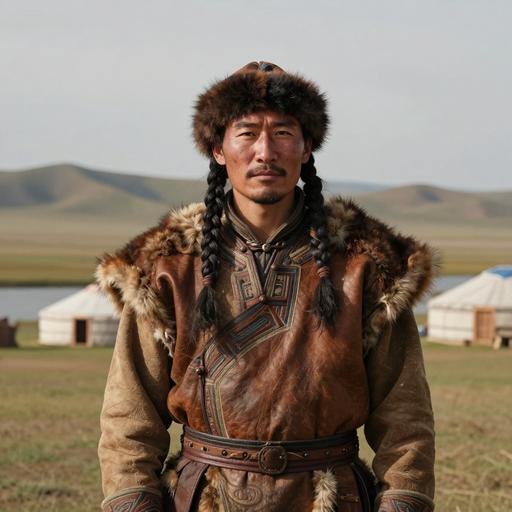
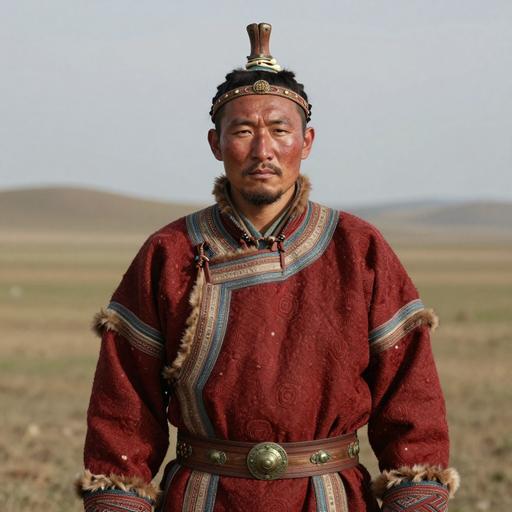
D4J7 is concentrated in Northeast and East Asia with low-to-moderate occurrences across populations that share East Eurasian maternal ancestry. Modern detections (or close relatives within D4J) occur among Han Chinese (regional variation), Japanese (including lineages related to Jomon and later Japanese populations), Korean samples, Tungusic-speaking groups, and some Mongolic/Turkic groups at low frequency. Small numbers of occurrences appear in indigenous Siberian populations (e.g., Evenks, Yakut-associated contexts) and in a limited number of ancient Northeast Asian archaeological samples. Overall, the distribution is consistent with a Northeast Asian origin and subsequent local persistence and limited dispersal into neighboring East Asian and Central Asian groups.
Historical and Cultural Significance
Because D4J7 is not a high-frequency lineage, its significance is mostly as a marker of regional maternal ancestry rather than a driver of large-scale demographic change. Where it appears in ancient contexts, it can help identify localized maternal continuity or gene-flow events in Northeast Asia. Possible associations include:
- Jomon-period and other ancient coastal/Amur-region populations in the northern Japanese archipelago and the Russian Far East, where related D4 subclades are commonly found.
- Late Neolithic to Bronze Age communities of Northeast Asia, where diversification of regional mtDNA lineages occurred.
D4J7 should be interpreted together with autosomal and Y-chromosome evidence: as a single maternal haplogroup it indicates maternal ancestry components but does not alone demonstrate broad migrations or cultural replacements.
Conclusion
D4J7 is a recently defined, low-frequency mtDNA subclade of D4J with a probable Northeast/East Asian origin during the mid-to-late Holocene (~4.5 kya). Its presence in modern Han, Japanese, Korean and certain Siberian and Mongolic/Turkic groups—and occasional appearance in ancient Northeast Asian contexts—reflects local maternal lineage diversification in Northeast Asia. Further whole-mitogenome sampling from underrepresented populations and additional ancient DNA discoveries will be necessary to refine its phylogeny, age estimate, and detailed geographic history.
Key Points
- Origins and Evolution
- Subclades
- Geographical Distribution
- Historical and Cultural Significance
- Conclusion