Menu
mtDNA Haplogroup • Maternal Lineage

D4O2A

mtDNA Haplogroup D4O2A

~8,000 years ago
Northeast Asia
1 subclades
8 ancient samples
Scroll to explore
Chapter I

The Story

The journey of mtDNA haplogroup D4O2A

Origins and Evolution

mtDNA haplogroup D4O2A sits as a downstream branch of the D4O2 clade, itself a minor sublineage within the broader East/Northeast Asian haplogroup D4. Haplogroup D4 diversified widely across East Asia after the Last Glacial Maximum, and D4O2 likely represents a localized Holocene diversification in the Russian Far East / Northeast Asia. D4O2A, by phylogenetic position, appears to have arisen after the initial split of D4O2 and probably during the early to mid-Holocene (several thousand years after the end of the Pleistocene), consistent with regional maternal lineage turnover and micro-differentiation as hunter-gatherer groups expanded and adapted to post-glacial environments.

Genetic evidence to date indicates D4O2A is rare and geographically restricted, with low-frequency occurrences in modern and a small number of ancient samples. Its limited distribution and low diversity suggest either a localized origin with subsequent limited dispersal or a once-wider distribution that became fragmented over the Holocene.

Subclades (if applicable)

At present, D4O2A is described as a defined downstream subclade of D4O2. Public and research databases report limited downstream branching for D4O2A itself; in other words, D4O2A shows limited recorded internal substructure, though this may reflect undersampling. Deep sequencing and broader sampling across Northeast Asia and neighboring regions may uncover further sublineages (e.g., hypothetical D4O2A1, D4O2A2) and clarify its internal phylogeny.

Geographical Distribution

D4O2A is detected at low to very low frequency in a scattered set of populations across Northeast and East Asia and into adjacent parts of Central Asia and Siberia. Recorded occurrences include Han Chinese, Japanese and Korean samples at very low rates in some studies, indigenous Siberian groups (e.g., Yakut, Evenk and neighboring Tungusic-speaking peoples), and populations with Jomon/Okhotsk-related ancestry such as the Ainu or ancient island/coastal samples. Sporadic reports exist from northeastern Mongolia and select Central Asian datasets. The pattern is consistent with a Northeast Asian origin and subsequent limited dispersal along coastal and inland routes during the Holocene.

Historical and Cultural Significance

Although D4O2A is not a major lineage in any large, widespread archaeological culture, its presence in both modern groups and a small number of Holocene ancient samples makes it valuable for studies of post-glacial population structure, local continuity of maternal lineages, and interactions between coastal (Jomon/Okhotsk-related) hunter-gatherers and later continental groups. In regions like northern Japan and the Russian Far East, D4O2A and related D4 subclades can help trace maternal continuity across the Mesolithic–Neolithic transition and through subsequent cultural turnovers.

Because it is uncommon and patchily distributed, D4O2A can act as a marker of localized maternal ancestry and micro-migration events, rather than of major continental expansions. It may therefore be most informative in fine-scale regional studies and in the interpretation of ancient DNA from Northeast Asia.

Conclusion

D4O2A is a low-frequency, regionally centered mtDNA lineage descended from D4O2, reflecting Holocene maternal diversification in Northeast Asia. Current data indicate restricted distribution and low internal diversity, but as sampling and ancient DNA coverage expand, D4O2A could provide clearer resolution on small-scale population movements and continuity in the Russian Far East, northern Japan, and neighboring areas of East Asia and Central Asia.

Key Points

  • Origins and Evolution
  • Subclades (if applicable)
  • Geographical Distribution
  • Historical and Cultural Significance
  • Conclusion
Chapter II

Tree & Relationships

Phylogenetic context and subclades

Evolution Path

This haplogroup's evolutionary journey from its earliest ancestor to the present.

Steps Haplogroup Age Estimate Archaeology Era Time Passed Immediate Descendants Tested Modern Descendants Ancient Connections
1 D4O2A Current ~8,000 years ago 🌾 Neolithic 8,000 years 1 1 8
2 D4O2 ~12,000 years ago 🌾 Neolithic 12,000 years 1 1 0
3 D4O ~12,000 years ago 🌾 Neolithic 12,000 years 2 2 5
4 D4 ~25,000 years ago 🦴 Paleolithic 25,000 years 12 276 19
5 D ~45,000 years ago 🦴 Paleolithic 45,000 years 7 398 137
6 M ~60,000 years ago 🦴 Paleolithic 60,000 years 11 1,200 41
7 L3 ~70,000 years ago 🦴 Paleolithic 70,000 years 11 17,621 6
8 L ~160,000 years ago 🦴 Paleolithic 160,000 years 7 18,987 5
Chapter III

Where in the World

Geographic distribution and modern presence

Place of Origin

Northeast Asia

Modern Distribution

The populations where MTDNA haplogroup D4O2A is found include:

  1. Han Chinese, Japanese and Korean populations (reported at very low frequencies in some datasets)
  2. Indigenous Siberian groups (e.g., Yakut, Evenk and neighboring Tungusic-speaking populations)
  3. Northeast Asian island and coastal groups with Jomon/Okhotsk-related ancestry (e.g., Ainu and related ancient samples)
  4. Mongolic-speaking populations in northeastern Mongolia (low frequency)
  5. Turkic and other Central Asian groups at sporadic, low frequencies
  6. Ancient Holocene hunter-gatherer contexts in the Russian Far East and northern Japan (limited ancient occurrences)
  7. Scattered, low-frequency reports in peripheral East Asian datasets and mixed populations
CHAPTER IV

When in Time

Your haplogroup in the context of human history

~10k years ago

Neolithic Revolution

Agriculture begins, settled communities form

~8k years ago

Haplogroup D4O2A

Your mtDNA haplogroup emerged in Northeast Asia

Northeast Asia
~5k years ago

Bronze Age

Metalworking, writing, and early civilizations

~3k years ago

Iron Age

Iron tools, expanded trade networks

~2k years ago

Classical Antiquity

Greek and Roman civilizations flourish

Present

Present Day

Modern era

Your Haplogroup
Historical Era
Chapter IV-B

Linked Cultures

Ancient cultures associated with mtDNA haplogroup D4O2A

Cultural Heritage

These ancient cultures have been linked to haplogroup D4O2A based on matching ancient DNA samples from archaeological excavations. The presence of this haplogroup in these cultures provides insights into the migrations and population movements of populations carrying this haplogroup.

Boisman Chinese Neolithic Devil's Cave Culture Dongtalede Culture Late Medieval Mongolian Medieval Kazakh Turkic Nomadic Culture Yana Culture
Culture assignments are based on archaeological context of ancient DNA samples and may represent regional associations during specific time periods.
Chapter V

Sample Catalog

Top 8 ancient DNA samples directly related to haplogroup D4O2A or parent clades

8 / 8 samples
Portrait Sample Country Era Date Culture mtDNA Match
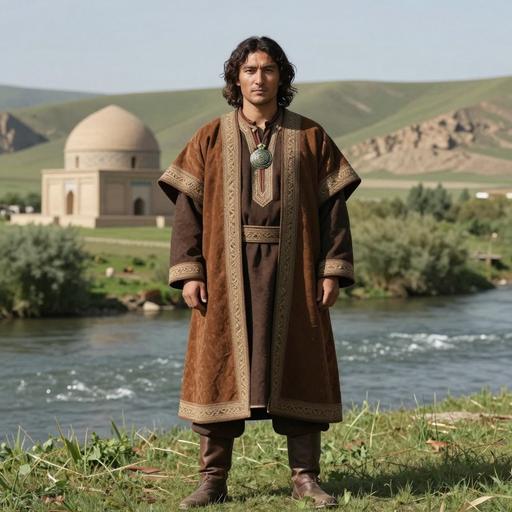
Portrait of ancient individual KLK002 from Kazakhstan, dated 700 CE - 1100 CE
KLK002
Kazakhstan Medieval Kazakhstan 700 CE - 1100 CE Medieval Kazakh D4o2a Direct
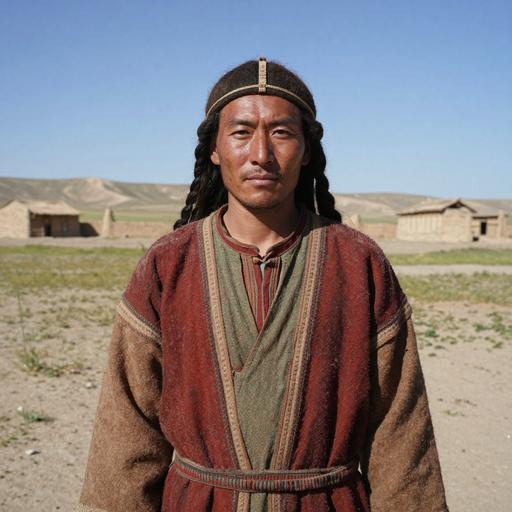
Portrait of ancient individual C1710 from China, dated 755 BCE - 420 BCE
C1710
China Iron Age Dongtalede, Xinjiang, China 755 BCE - 420 BCE Dongtalede Culture D4o2a Direct
Portrait of ancient individual TSA002 from Mongolia, dated 1000 CE - 1500 CE
TSA002
Mongolia Late Medieval Mongolia 1000 CE - 1500 CE Late Medieval Mongolian D4o2a Direct
Portrait of ancient individual DA128 from Kazakhstan, dated 1224 CE - 1284 CE
DA128
Kazakhstan Medieval Nomad, Kazakhstan 1224 CE - 1284 CE Turkic Nomadic Culture D4o2a Direct
Portrait of ancient individual DA128 from Kazakhstan, dated 1224 CE - 1284 CE
DA128
Kazakhstan Medieval Steppe Nomads 1224 CE - 1284 CE D4o2a Direct
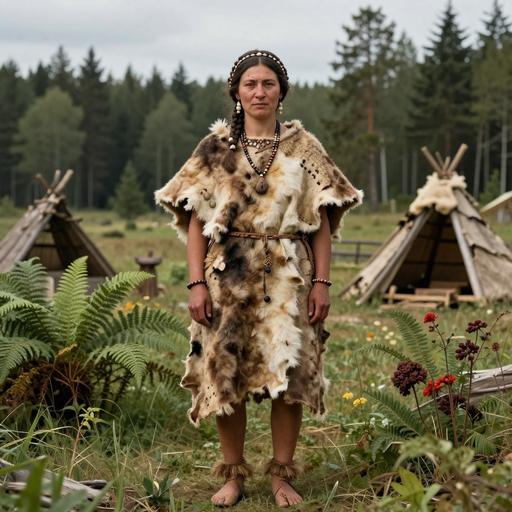
Portrait of ancient individual I14308 from Russia, dated 4841 BCE - 4706 BCE
I14308
Russia Boisman Culture in Russia's Middle Neolithic 4841 BCE - 4706 BCE Boisman D4o2a Direct
Portrait of ancient individual I14308 from Russia, dated 4841 BCE - 4706 BCE
I14308
Russia Middle Neolithic Mongolia 4841 BCE - 4706 BCE D4o2a Direct
Portrait of ancient individual I14307 from Russia, dated 4900 BCE - 4650 BCE
I14307
Russia Boisman Culture in Russia's Middle Neolithic 4900 BCE - 4650 BCE Boisman D4o2a Direct
Chapter VI

Carrier Distribution Map

Geographic distribution of 8 ancient DNA samples carrying haplogroup D4O2A

Time Period Filter
All Time Periods
Showing all samples
Each marker represents an ancient individual
Chapter VII

Temporal Distribution

Distribution of carriers across archaeological periods

Chapter VIII

Geographic Distribution

Distribution of carriers by country of origin

Chapter IX

Country × Era Distribution

Cross-tabulation of carrier countries and archaeological periods

Data

Data & Provenance

Source information and data quality

Last Updated 2026-02-16
Confidence Score 50/100
Coverage Low
Data Source

We use the latest phylotree for MTDNA haplogroup classification and data.