Menu
mtDNA Haplogroup • Maternal Lineage

D5A1

mtDNA Haplogroup D5A1

~9,000 years ago
East / Northeast Asia
0 subclades
Scroll to explore
Chapter I

The Story

The journey of mtDNA haplogroup D5A1

Origins and Evolution

mtDNA haplogroup D5A1 (D5a1) is a downstream descendant of haplogroup D5 (itself a branch of macro-haplogroup D, under M). Haplogroup D5 likely diversified in East/Northeast Asia during the late Upper Paleolithic to early Holocene (~15 kya for the broader D5 clade). D5A1 represents a younger daughter lineage that most population-genetic evidence places in the early-to-mid Holocene (plausibly ~8–11 kya), reflecting regional diversification after the Last Glacial Maximum and during the period of increased sedentism and population growth in East Asia.

The phylogenetic position of D5A1 within D5 indicates it evolved from the D5a stem and then gave rise to further sublineages (recorded in modern sequencing as D5a1a, D5a1b, etc.). Its emergence is consistent with localized demographic processes — small founder events, regional continuity, and later expansions tied to Neolithic population growth and coastal/riverine exploitation.

Subclades

Researchers recognize several named sublineages branching from D5A1 in high-resolution mtDNA trees (for example, D5a1a, D5a1b and downstream variants defined in mitogenome studies). These subclades often show geographically structured distributions (some more common in Japan, others in mainland China or Korea), which is typical for Holocene maternal lineages that diversified through founder effects and localized migration.

Geographical Distribution

D5A1 is predominantly an East/Northeast Asian maternal lineage. It is observed at moderate to high frequencies in many Han Chinese populations, and it is well represented among Japanese and Korean maternal lineages. It also occurs at lower or sporadic frequencies among Tibetans and other Sino-Tibetan groups, Mongolic and Tungusic peoples, some northern Siberian groups, and scattered Southeast Asian populations where east–west gene flow has occurred.

Ancient DNA studies have identified D5 and D5-derived lineages in Jomon-era and other Holocene East Asian samples, supporting continuity for some maternal lineages in island and coastal contexts (particularly in the Japanese archipelago). The pattern is consistent with a long-standing East Asian presence with later regional shifts in frequency due to demic expansions (e.g., Neolithic and later historical movements).

Historical and Cultural Significance

While mtDNA lineages do not map one-to-one to archaeological cultures, the presence and persistence of D5A1 in regions associated with Jomon, early Yellow River and coastal Neolithic contexts indicate that this haplogroup was part of the maternal genetic substrate of prehistoric East Asian populations. In modern populations, its distribution mirrors major cultural and linguistic zones of East Asia: high representation among Han Chinese, substantial presence in Japan and Korea, and lower-frequency presence among steppe or northern groups that have experienced admixture with East Asian populations.

Because mtDNA traces only maternal ancestry, D5A1 is most informative when combined with autosomal and Y-DNA data to reconstruct population movements — for example, D5A1 lineages occurring together with Y-haplogroups common in East Asia (such as O lineages) support scenarios of regional population continuity and expansion rather than wholesale replacement.

Conclusion
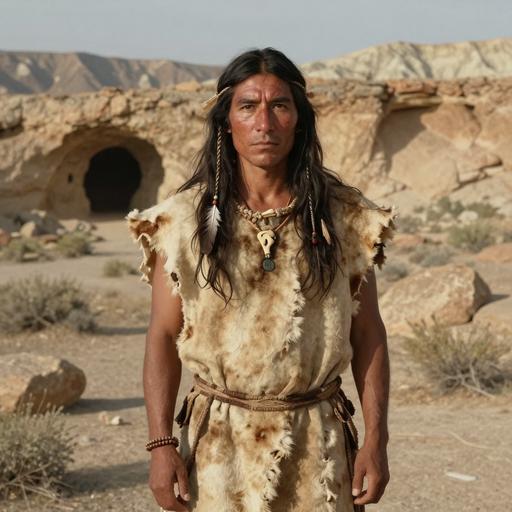
D5A1 is a regionally important East/Northeast Asian maternal lineage that arose as a subclade of D5 during the Holocene and today helps trace maternal continuity and localized demographic events across China, Japan, Korea and neighboring areas. Its phylogenetic structure and geographic pattern underscore typical processes in Holocene East Asia: diversification from a common Paleolithic/early Holocene stock, local founder effects, and later expansions tied to Neolithic and historical population dynamics.

Key Points

  • Origins and Evolution
  • Subclades
  • Geographical Distribution
  • Historical and Cultural Significance
  • Conclusion

Chapter II

Tree & Relationships

Phylogenetic context and subclades

Evolution Path

This haplogroup's evolutionary journey from its earliest ancestor to the present.

Steps Haplogroup Age Estimate Archaeology Era Time Passed Immediate Descendants Tested Modern Descendants Ancient Connections
1 D5A1 Current ~9,000 years ago 🌾 Neolithic 9,000 years 0 0 0
2 D5A ~15,000 years ago 🏹 Mesolithic 15,000 years 3 33 3
3 D5 ~30,000 years ago 🦴 Paleolithic 30,000 years 3 60 4
4 D ~45,000 years ago 🦴 Paleolithic 45,000 years 7 398 137
5 M ~60,000 years ago 🦴 Paleolithic 60,000 years 11 1,200 41
6 L3 ~70,000 years ago 🦴 Paleolithic 70,000 years 11 17,621 6
7 L ~160,000 years ago 🦴 Paleolithic 160,000 years 7 18,987 5

Subclades (0)

Terminal branch - no known subclades

Siblings (2)

Other branches from the same parent haplogroup

Chapter III

Where in the World

Geographic distribution and modern presence

Place of Origin

East / Northeast Asia

Modern Distribution

The populations where MTDNA haplogroup D5A1 is found include:

  1. Han Chinese (various regions of China)
  2. Japanese (including lineages connected to Jomon and later Yayoi-era populations)
  3. Koreans
  4. Tibetan and other Sino-Tibetan speaking groups (lower frequencies)
  5. Mongolic and Tungusic peoples (e.g., Mongolians, Evenk) at lower-moderate frequencies
  6. Southeast Asian populations (sporadic occurrences in coastal and admixed groups)
  7. Ancient Jomon-era and other archaeological East Asian samples
  8. Low-frequency occurrences in parts of Central Asia and Siberia
CHAPTER IV

When in Time

Your haplogroup in the context of human history

~10k years ago

Neolithic Revolution

Agriculture begins, settled communities form

~9k years ago

Haplogroup D5A1

Your mtDNA haplogroup emerged in East / Northeast Asia

East / Northeast Asia
~5k years ago

Bronze Age

Metalworking, writing, and early civilizations

~3k years ago

Iron Age

Iron tools, expanded trade networks

~2k years ago

Classical Antiquity

Greek and Roman civilizations flourish

Present

Present Day

Modern era

Your Haplogroup
Historical Era
Chapter IV-B

Linked Cultures

Ancient cultures associated with mtDNA haplogroup D5A1

Cultural Heritage

These ancient cultures have been linked to haplogroup D5A1 based on matching ancient DNA samples from archaeological excavations. The presence of this haplogroup in these cultures provides insights into the migrations and population movements of populations carrying this haplogroup.

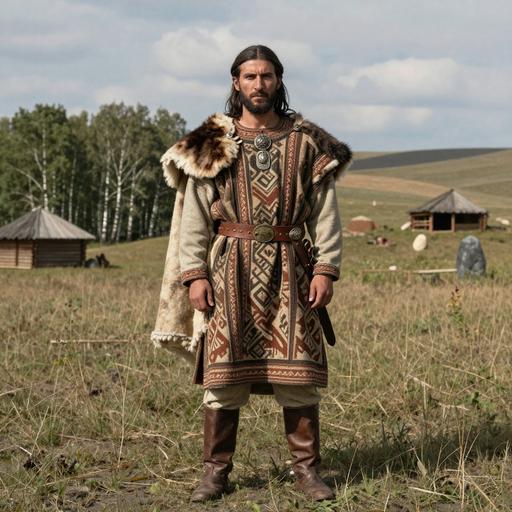
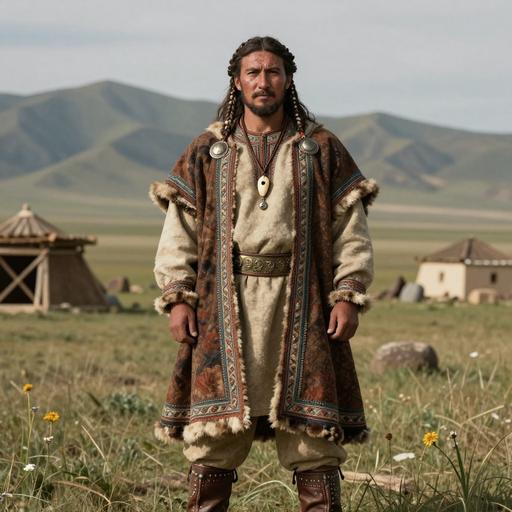
Khovsgol Culture Khuvsgul Multi-Period Magyar Elite Culture Spirit Cave Sukhbaatar Multi-Period Sumidouro Wuzhuangguoliang Culture Yellow River Culture
Culture assignments are based on archaeological context of ancient DNA samples and may represent regional associations during specific time periods.
Chapter V

Sample Catalog

Top 50 ancient DNA samples directly related to haplogroup D5A1 or parent clades

50 / 50 samples
Portrait Sample Country Era Date Culture mtDNA Match
Portrait of ancient individual I3727 from Taiwan, dated 1 CE - 800 CE
I3727
Taiwan Iron Age Taiwan 1 CE - 800 CE Taiwanese Iron D6a2 Direct
Portrait of ancient individual I15156 from Taiwan, dated 1 CE - 800 CE
I15156
Taiwan Iron Age Taiwan 1 CE - 800 CE Taiwanese Iron D6a2 Direct
Portrait of ancient individual R78 from Italy, dated 1 CE - 200 CE
R78
Italy Imperial Rome 1 CE - 200 CE Roman Empire D4j11 Direct
Portrait of ancient individual Lovelock2 from USA, dated 26 CE - 207 CE
Lovelock2
USA Lovelock Cave, Nevada, USA 1,850 Years Ago 26 CE - 207 CE Lovelock D1 Direct
Portrait of ancient individual Lovelock2 from USA, dated 26 CE - 207 CE
Lovelock2
USA The First Peoples of North America 26 CE - 207 CE D1 Direct
Portrait of ancient individual L8619 from Uzbekistan, dated 39 BCE - 88 CE
L8619
Uzbekistan Iron Age Rabat Culture of Surxondaryo 39 BCE - 88 CE Rabat Culture D4b2b Direct
Portrait of ancient individual I6228 from Mongolia, dated 40 BCE - 109 CE
I6228
Mongolia Early Iron Age Xiongnu Culture 7, Mongolia 40 BCE - 109 CE Xiongnu Culture D4j12a* Direct
Portrait of ancient individual I11287 from USA, dated 41 BCE - 106 CE
I11287
USA Chumash Culture 41 BCE - 106 CE Chumash D1 Direct
Portrait of ancient individual DUU001 from Mongolia, dated 43 BCE - 64 CE
DUU001
Mongolia Late Medieval Xiongnu 43 BCE - 64 CE Late Xiongnu D4b1a2a1 Direct
Portrait of ancient individual Lovelock1 from USA, dated 49 BCE - 110 CE
Lovelock1
USA Lovelock Cave, Nevada, USA 1,850 Years Ago 49 BCE - 110 CE Lovelock D1 Direct
Chapter VI

Carrier Distribution Map

Geographic distribution of 100 ancient DNA samples carrying haplogroup D5A1

Time Period Filter
All Time Periods
Showing all samples
Each marker represents an ancient individual
Chapter VII

Temporal Distribution

Distribution of carriers across archaeological periods

Chapter VIII

Geographic Distribution

Distribution of carriers by country of origin

Chapter IX

Country × Era Distribution

Cross-tabulation of carrier countries and archaeological periods

Data

Data & Provenance

Source information and data quality

Last Updated 2026-02-16
Confidence Score 50/100
Coverage Low
Data Source

We use the latest phylotree for MTDNA haplogroup classification and data.