Menu
mtDNA Haplogroup • Maternal Lineage

D5A3

mtDNA Haplogroup D5A3

~8,000 years ago
East / Northeast Asia
1 subclades
Scroll to explore
Chapter I

The Story

The journey of mtDNA haplogroup D5A3

Origins and Evolution

mtDNA haplogroup D5A3 is a downstream lineage of haplogroup D5A (D5a), itself part of the broader haplogroup D clade common across East and Northeast Asia. Based on its phylogenetic position beneath D5A — which has a late Upper Paleolithic to early Holocene origin (~15 kya) — D5A3 is best interpreted as a Holocene diversification of regional maternal lineages, likely arising around the early Neolithic (roughly 8 kya, with uncertainty on the order of a few thousand years). Its emergence reflects local branching within established East Asian maternal pools after Last Glacial Maximum population expansions and during the period of increasing sedentism and regional cultural differentiation.

Subclades (if applicable)

D5A3 is a subclade of D5A; any named downstream sub-branches of D5A3 are comparatively rare in published datasets and often represented by private or population-specific lineages. Where finer-resolution sequencing has been performed, D5A3 may split into localized sub-haplotypes characteristic of particular geographic or ethnic groups (for example, regional Han populations or island communities in Japan). Because D5A3 is not among the most common mtDNA D subclades, many published studies report it only when whole mitogenomes are available; targeted HVR-I/II typing can under-detect its presence.

Geographical Distribution

D5A3 is concentrated in East and Northeast Asia, with highest occurrences in populations that otherwise carry D5A and related D sublineages. Modern populations reporting D5A3 or closely related sequences include:

  • Han Chinese across multiple provinces (variable frequency by region)
  • Japanese populations, including contexts with Jomon/Yayoi ancestry components
  • Koreans at low-to-moderate frequency
  • Some Tibetans and other Sino-Tibetan-speaking groups (sporadic)
  • Mongolic and Tungusic groups in Mongolia and adjacent Siberian regions (lower-frequency)
  • Scattered occurrences in Southeast Asia and parts of Central Asia and Siberia

Ancient DNA evidence — although limited — has identified D5A-lineage sequences in Jomon-era and other East Asian archaeological samples; a small number of ancient mitogenomes assigned to D5A-type lineages indicate regional continuity of related maternal lineages through the Holocene.

Historical and Cultural Significance

Because D5A3 is nested within a lineage common in East Asia, its presence sheds light on maternal ancestry patterns associated with both forager and early farming communities in the region. The lineage's timing and distribution are compatible with several demographic processes documented in population genetics and archaeology:

  • Regional continuity: Presence in ancient Jomon-associated samples and in modern Japanese and neighboring populations suggests some degree of local continuity of maternal lineages in parts of the Japanese archipelago.
  • Neolithic/early Holocene diversification: The estimated age of D5A3 corresponds to periods of increasing sedentism and the spread of regional cultural traditions in East Asia (e.g., coastal foraging, early millet agriculture), which likely structured maternal genetic variation.
  • Admixture and dispersal: The occurrence of D5A3 in diverse East Asian groups (Han, Koreans, Tibetans, Mongolic and Tungusic populations) is consistent with later demographic movements and gene flow across East and Northeast Asia, producing geographic overlap of multiple East Asian mtDNA haplogroups.

Conclusion
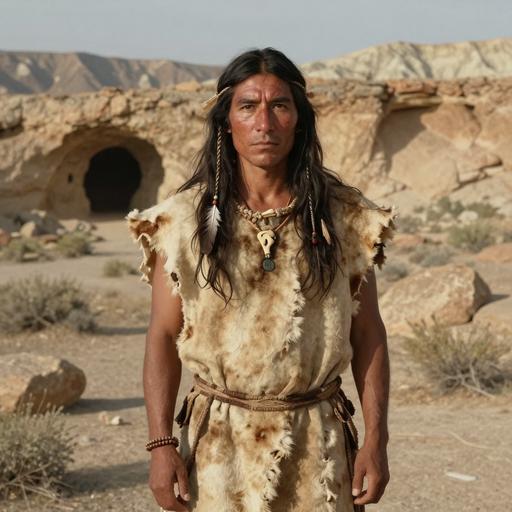
D5A3 represents a localized Holocene branch of the D5A maternal lineage in East/Northeast Asia. It is not one of the most frequent mtDNA lineages overall, but its detection in both modern populations and a small number of ancient samples makes it useful for tracing maternal continuity and regional diversification in East Asia. Improved mitogenome sampling and ancient DNA recovery will refine its substructure, precise age, and patterns of geographic spread.

Key Points

  • Origins and Evolution
  • Subclades (if applicable)
  • Geographical Distribution
  • Historical and Cultural Significance
  • Conclusion

Chapter II

Tree & Relationships

Phylogenetic context and subclades

Evolution Path

This haplogroup's evolutionary journey from its earliest ancestor to the present.

Steps Haplogroup Age Estimate Archaeology Era Time Passed Immediate Descendants Tested Modern Descendants Ancient Connections
1 D5A3 Current ~8,000 years ago 🌾 Neolithic 8,000 years 1 4 0
2 D5A ~15,000 years ago 🏹 Mesolithic 15,000 years 3 33 3
3 D5 ~30,000 years ago 🦴 Paleolithic 30,000 years 3 60 4
4 D ~45,000 years ago 🦴 Paleolithic 45,000 years 7 398 137
5 M ~60,000 years ago 🦴 Paleolithic 60,000 years 11 1,200 41
6 L3 ~70,000 years ago 🦴 Paleolithic 70,000 years 11 17,621 6
7 L ~160,000 years ago 🦴 Paleolithic 160,000 years 7 18,987 5

Siblings (2)

Other branches from the same parent haplogroup

Chapter III

Where in the World

Geographic distribution and modern presence

Place of Origin

East / Northeast Asia

Modern Distribution

The populations where MTDNA haplogroup D5A3 is found include:

  1. Han Chinese (various regions of China)
  2. Japanese (including populations with Jomon and Yayoi ancestry)
  3. Koreans
  4. Tibetan and other Sino-Tibetan speaking groups
  5. Mongolic and Tungusic peoples (e.g., Mongolians, Evenk) at lower-moderate frequencies
  6. Southeast Asian populations (sporadic and certain subpopulations)
  7. Ancient Jomon-era and other archaeological East Asian samples
  8. Low-frequency occurrences in parts of Central Asia and Siberia
CHAPTER IV

When in Time

Your haplogroup in the context of human history

~10k years ago

Neolithic Revolution

Agriculture begins, settled communities form

~8k years ago

Haplogroup D5A3

Your mtDNA haplogroup emerged in East / Northeast Asia

East / Northeast Asia
~5k years ago

Bronze Age

Metalworking, writing, and early civilizations

~3k years ago

Iron Age

Iron tools, expanded trade networks

~2k years ago

Classical Antiquity

Greek and Roman civilizations flourish

Present

Present Day

Modern era

Your Haplogroup
Historical Era
Chapter IV-B

Linked Cultures

Ancient cultures associated with mtDNA haplogroup D5A3

Cultural Heritage

These ancient cultures have been linked to haplogroup D5A3 based on matching ancient DNA samples from archaeological excavations. The presence of this haplogroup in these cultures provides insights into the migrations and population movements of populations carrying this haplogroup.

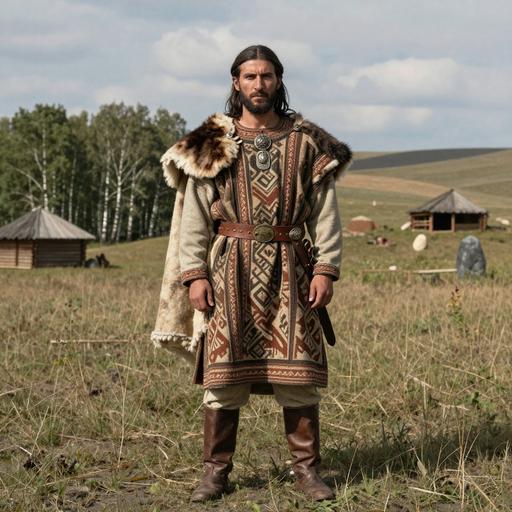
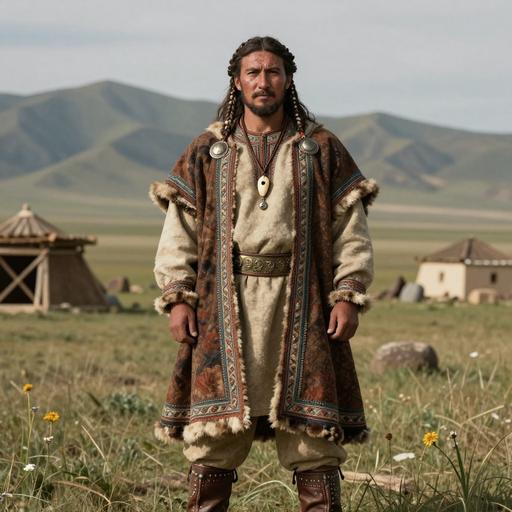
Keqikesubutai Culture Khovsgol Culture Khuvsgul Multi-Period Magyar Elite Culture Spirit Cave Sukhbaatar Multi-Period West Liao River Culture Wuzhuangguoliang Culture Yellow River Culture
Culture assignments are based on archaeological context of ancient DNA samples and may represent regional associations during specific time periods.
Chapter V

Sample Catalog

Top 50 ancient DNA samples directly related to haplogroup D5A3 or parent clades

50 / 50 samples
Portrait Sample Country Era Date Culture mtDNA Match
Portrait of ancient individual I3727 from Taiwan, dated 1 CE - 800 CE
I3727
Taiwan Iron Age Taiwan 1 CE - 800 CE Taiwanese Iron D6a2 Direct
Portrait of ancient individual I15156 from Taiwan, dated 1 CE - 800 CE
I15156
Taiwan Iron Age Taiwan 1 CE - 800 CE Taiwanese Iron D6a2 Direct
Portrait of ancient individual R78 from Italy, dated 1 CE - 200 CE
R78
Italy Imperial Rome 1 CE - 200 CE Roman Empire D4j11 Direct
Portrait of ancient individual Lovelock2 from USA, dated 26 CE - 207 CE
Lovelock2
USA Lovelock Cave, Nevada, USA 1,850 Years Ago 26 CE - 207 CE Lovelock D1 Direct
Portrait of ancient individual Lovelock2 from USA, dated 26 CE - 207 CE
Lovelock2
USA The First Peoples of North America 26 CE - 207 CE D1 Direct
Portrait of ancient individual L8619 from Uzbekistan, dated 39 BCE - 88 CE
L8619
Uzbekistan Iron Age Rabat Culture of Surxondaryo 39 BCE - 88 CE Rabat Culture D4b2b Direct
Portrait of ancient individual I6228 from Mongolia, dated 40 BCE - 109 CE
I6228
Mongolia Early Iron Age Xiongnu Culture 7, Mongolia 40 BCE - 109 CE Xiongnu Culture D4j12a* Direct
Portrait of ancient individual I11287 from USA, dated 41 BCE - 106 CE
I11287
USA Chumash Culture 41 BCE - 106 CE Chumash D1 Direct
Portrait of ancient individual DUU001 from Mongolia, dated 43 BCE - 64 CE
DUU001
Mongolia Late Medieval Xiongnu 43 BCE - 64 CE Late Xiongnu D4b1a2a1 Direct
Portrait of ancient individual Lovelock1 from USA, dated 49 BCE - 110 CE
Lovelock1
USA Lovelock Cave, Nevada, USA 1,850 Years Ago 49 BCE - 110 CE Lovelock D1 Direct
Chapter VI

Carrier Distribution Map

Geographic distribution of 100 ancient DNA samples carrying haplogroup D5A3

Time Period Filter
All Time Periods
Showing all samples
Each marker represents an ancient individual
Chapter VII

Temporal Distribution

Distribution of carriers across archaeological periods

Chapter VIII

Geographic Distribution

Distribution of carriers by country of origin

Chapter IX

Country × Era Distribution

Cross-tabulation of carrier countries and archaeological periods

Data

Data & Provenance

Source information and data quality

Last Updated 2026-02-16
Confidence Score 50/100
Coverage Low
Data Source

We use the latest phylotree for MTDNA haplogroup classification and data.