The Story
The journey of mtDNA haplogroup D5A3A1
Origins and Evolution
Haplogroup D5A3A1 is a downstream branch of the D5 clade, itself part of the larger mtDNA haplogroup D which has deep roots in East Asia and is one of the principal maternal lineages in northern and eastern Eurasia. Based on phylogenetic position and molecular-clock estimates for sibling and parent lineages, D5A3A1 most likely arose in East–Northeast Asia in the mid-to-late Holocene (approximately ~6 thousand years ago). Its emergence represents continued diversification of the D5 sublineage within regional maternal gene pools after the Last Glacial Maximum and during the period of Holocene population expansions and local differentiation.
Subclades (if applicable)
D5A3A1 is a terminal or near-terminal subclade beneath D5A3A. As a fine-scale mtDNA branch, it may contain additional micro-subclades detectable only with full mitochondrial genomes; published population surveys and ancient DNA studies currently identify D5A3A1 at low-to-moderate frequencies and as one of several localized D5-derived lineages in Northeast Asia. Continued sequencing of complete mitogenomes will refine internal structure and reveal any geographically restricted daughter clades.
Geographical Distribution
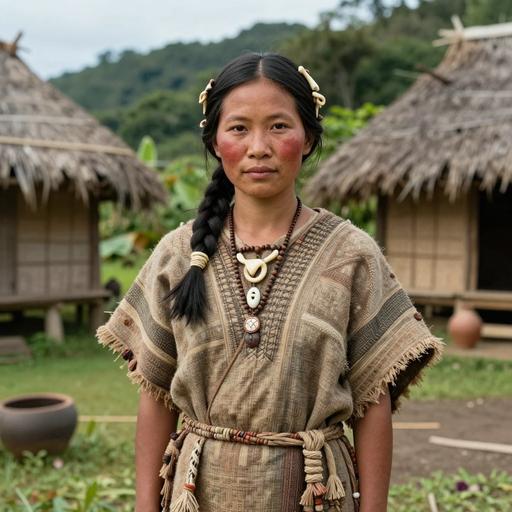
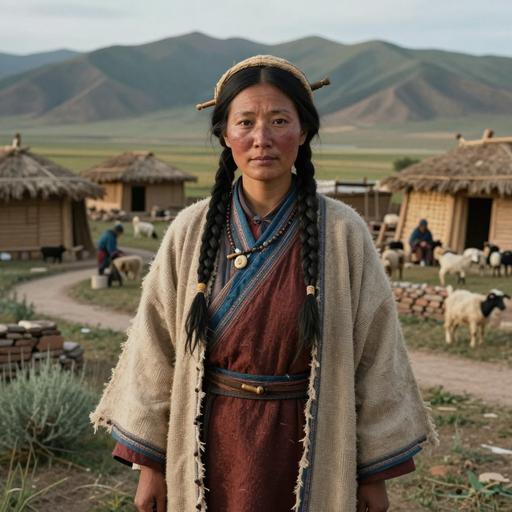
Observed distributions of D5A3A1 concentrate in East and Northeast Asia. Modern carriers are reported among Han Chinese, Japanese, Koreans, some Tibeto-Burman groups, and at lower frequencies among Mongolic and Tungusic populations. Sporadic occurrences appear in parts of Southeast Asia, Central Asia and southern Siberia, consistent with historical mobility and gene flow across East Asian frontiers. The haplogroup is also present in several ancient archaeological samples (including Jomon-era contexts), supporting cases of long-term regional maternal continuity in parts of the Japanese archipelago and neighboring coastal regions.
Historical and Cultural Significance
Because D5A3A1 is a relatively recent, regionally concentrated mtDNA lineage, its main anthropological significance lies in tracing local maternal continuity, micro-demographic events (founder effects, drift), and female-mediated population structure in Northeast Asia. Its presence in Jomon and other archaeological samples suggests it was part of the pre-agricultural/early agricultural maternal landscape of the region. In later periods (e.g., the Yayoi transition in Japan and Holocene expansions on the mainland), D5A3A1 likely persisted through a combination of continuity and admixture with incoming populations, making it informative for studies on migration, assimilation, and sex-biased gene flow.
Conclusion
D5A3A1 is a mid-Holocene maternal subclade of D5A3A centered on East–Northeast Asia, found today at low-to-moderate frequencies across several East Asian populations and observed in multiple ancient contexts. It provides a useful marker for fine-scale studies of regional maternal ancestry, demographic continuity in the Jomon and neighboring populations, and the local diversification of East Asian mitochondrial lineages. Further full mitogenome sampling and ancient DNA recovery will clarify its internal branching and precise temporal and geographic history.
Key Points
- Origins and Evolution
- Subclades (if applicable)
- Geographical Distribution
- Historical and Cultural Significance
- Conclusion