The Story
The journey of mtDNA haplogroup D5C
Origins and Evolution
mtDNA haplogroup D5C is a subclade nested within haplogroup D5, itself a branch of macro-haplogroup M that is characteristic of East and Northeast Asian maternal lineages. Based on its phylogenetic position beneath D5, D5C most likely diversified after the initial emergence of D5 (commonly dated ~30 kya) during the Late Upper Paleolithic to Early Holocene (we estimate ~14 kya for D5C). The clade is defined by diagnostic mutations on the mitochondrial genome that mark a lineage branching from other D5 subclades. Its time depth and distribution suggest survival through Late Pleistocene climatic fluctuations followed by localized Holocene expansions.
Subclades (if applicable)
D5C may include further downstream branches in high-resolution mtDNA trees identified in regional sequencing studies; these downstream branches tend to be geographically localized and show shallow time depth consistent with Holocene demographic processes. Where sample sizes permit, sublineages of D5C can resolve very recent maternal founder events within populations (for example, islands, highland valleys, or culturally endogamous groups). High-coverage mitogenomes and phylogenetic analysis are required to fully resolve and name internal D5C subclades.
Geographical Distribution
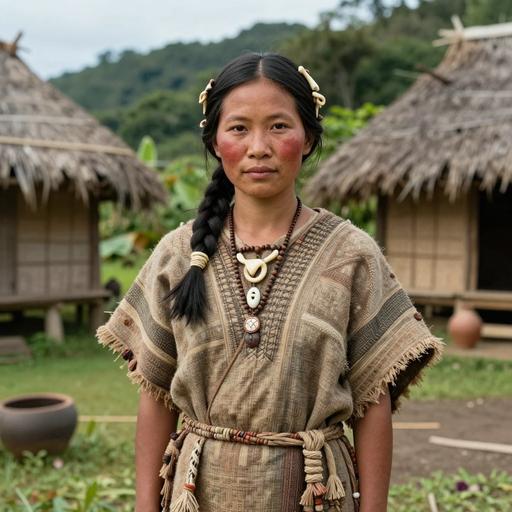
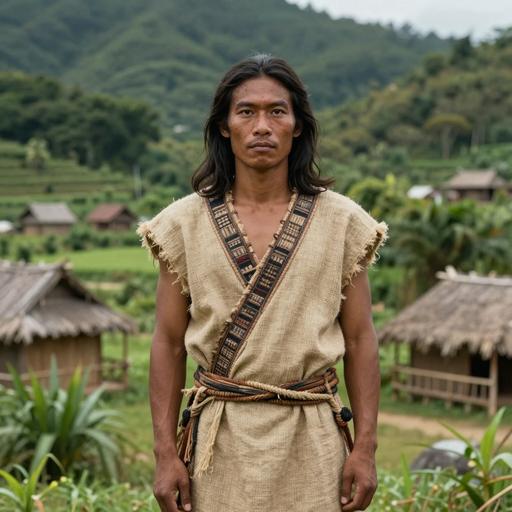
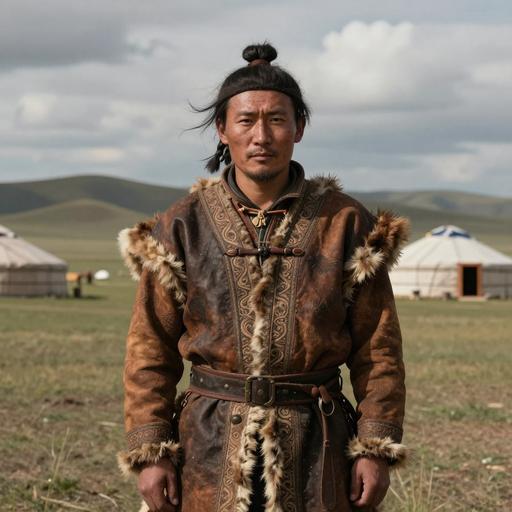
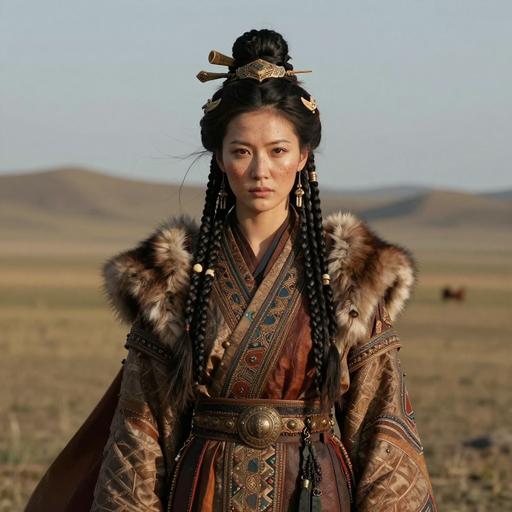
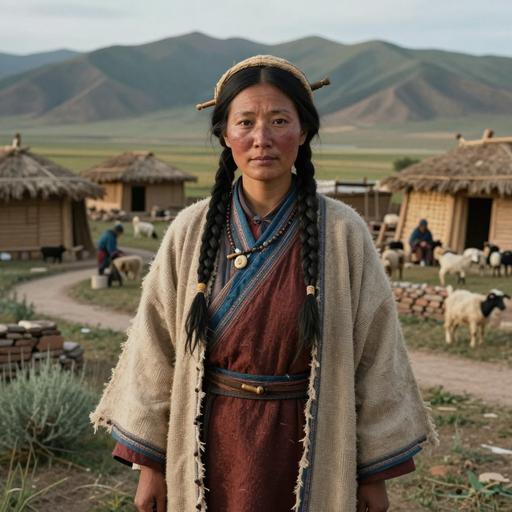
D5C is primarily an East/Northeast Asian lineage found across a spectrum of populations at low to moderate frequencies. It appears in diverse groups including Han Chinese across multiple regions, Japanese (including individuals and some ancient Jomon/Yayoi-era samples), Koreans, various Tibeto-Burman and highland East Asian groups, and among some Mongolic and Tungusic peoples at lower frequencies. Sporadic occurrences are reported in parts of Southeast Asia, Siberia, and Central Asia, reflecting either ancient movements or later gene flow. Overall, the strongest signal for D5C is within East and Northeast Asia with decreasing frequency toward peripheral regions.
Historical and Cultural Significance
While D5C is not typically a marker of a single expansive archaeological culture, its presence in both ancient and modern East Asian samples links it to long-term regional continuity. Where D5 and its subclades appear in ancient Jomon and other archaeological remains, they provide evidence for maternal line continuity in some islands and coastal regions of Japan and parts of coastal East Asia. In continental contexts, D5C lineages may have been incorporated into Neolithic farmer and forager communities during the Holocene, contributing to the maternal genetic makeup of populations that later participated in historical movements (e.g., expansions associated with agricultural dispersals or highland-lowland interactions).
Conclusion
D5C is a regionally informative mtDNA subclade within D5 that documents part of the maternal legacy of East and Northeast Asia. Its moderate geographic breadth and relatively shallow subclade structure make it useful for reconstructing local demographic histories, especially when combined with full mitogenome sequencing and archaeological data. Continued ancient DNA sampling and deeper mitogenomic surveys will further clarify the timing, internal structure, and migration dynamics of D5C.
Key Points
- Origins and Evolution
- Subclades (if applicable)
- Geographical Distribution
- Historical and Cultural Significance
- Conclusion