The Story
The journey of mtDNA haplogroup D5C1
Origins and Evolution
Haplogroup D5C1 is a downstream subclade of D5C, itself part of the broader mtDNA haplogroup D5 within macro-haplogroup D. Based on the phylogenetic position of D5C and published coalescence estimates for D5 sublineages, D5C1 likely arose in East / Northeast Asia during the Late Pleistocene–Early Holocene (~14 kya). Its emergence fits a pattern of post-glacial regional diversification of maternal lineages as hunter-gatherer populations expanded, restructured, and later interacted with incoming Neolithic farming groups across East Asia.
Like many D5-derived clades, D5C1 appears to have formed through accumulation of one or more private mutations on the D5C backbone; these downstream mutations define D5C1 in high-resolution mitogenome studies. The lineage shows limited deep branching compared with some other D clades, consistent with a regional expansion and persistence rather than a massive continent-wide radiation.
Subclades
D5C1 is an intermediate/terminal-level clade in many published trees; some mitogenome surveys have detected small, geographically localized downstream branches within D5C1, while other studies recover D5C1 as a relatively shallow clade with few named sub-branches. Where subclades are reported, they typically reflect geographic microstructure (for example, variants enriched in Japan versus mainland China or northern populations). Because sampling density and sequencing depth vary between studies, attribution of stable subclade names within D5C1 is still developing and benefits from additional complete mitogenome sequencing across East Asian populations.
Geographical Distribution
D5C1 is primarily an East / Northeast Asian lineage with the following broad distributional patterns observed in population- and ancient-DNA studies:
- China (Han and other groups): Low-to-moderate frequencies across multiple regions, more common in northern and northeastern samples in some surveys.
- Japan: Present among modern Japanese and detected in multiple Jomon-era ancient samples, indicating at least partial continuity from Paleolithic/mesolithic hunter-gatherers into later periods.
- Korea: Detected at low-to-moderate frequency in modern Korean mitogenome datasets.
- Tibet and Sino-Tibetan groups: Occurs sporadically among Tibetan and other Sino-Tibetan-speaking populations.
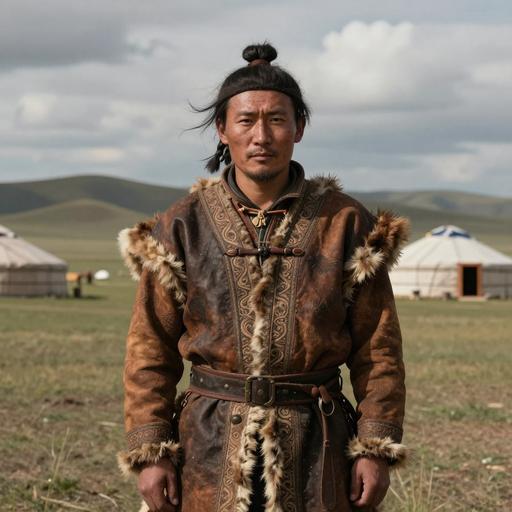
- Mongolic and Tungusic peoples: Present at lower frequencies in Mongolian and Tungusic groups, consistent with broader northeastern Asian maternal links.
- Southeast Asia and Siberia/Central Asia: Sporadic low-frequency occurrences, reflecting either ancient dispersals, later gene flow, or sampling of peripheral populations.
These patterns point to D5C1 as a regional lineage with both continuity in some areas (e.g., Japan/Jomon) and wider, lower-frequency presence consistent with prehistoric mobility across East Asia.
Historical and Cultural Significance
The presence of D5C1 in Jomon archaeological samples links the lineage to pre-Neolithic coastal and inland hunter-gatherer populations of the Japanese archipelago and suggests continuity of maternal ancestry in parts of Japan. Its detection among modern Han, Korean, Tibetan, and northern Asian groups indicates that D5C1 also participated in later demographic processes: the spread and local admixture of Neolithic farmers, Bronze Age movements, and ongoing interregional gene flow.
D5C1's overall low-to-moderate frequency profile implies it was not the major driver of large pan-East Asian demographic shifts, but instead reflects a mosaic of maternal ancestry where some clades persisted at regional levels while others expanded more widely. Its occurrence in both ancient and modern samples makes D5C1 useful for studies of population continuity, migration routes in northern East Asia, and the maternal contribution to the genetic makeup of the Japanese archipelago and neighboring regions.
Conclusion
mtDNA haplogroup D5C1 is a geographically focused East / Northeast Asian subclade of D5C that arose around the transition from the Pleistocene to the Holocene. It is most informative at regional scales — for tracing maternal continuity in areas like Japan and detecting subtle signals of inter-regional contact across East Asia. Continued mitogenome sequencing, especially of ancient samples, will refine the internal structure of D5C1 and clarify its temporal and spatial dynamics within East Asian prehistory.
Key Points
- Origins and Evolution
- Subclades
- Geographical Distribution
- Historical and Cultural Significance
- Conclusion