The Story
The journey of mtDNA haplogroup D6
Origins and Evolution
Haplogroup D6 is a downstream branch of mtDNA haplogroup D, itself a major East Eurasian lineage that emerged from macro-haplogroup M in the Upper Paleolithic. Based on its phylogenetic position relative to other D subclades and available coalescent estimates for similar D lineages, D6 most likely arose after the main diversification of D in East/Northeast Asia, probably during the Late Pleistocene to early Holocene (roughly around ~20 kya, with uncertainty). Its emergence represents one of several regional differentiations within D that produced localized maternal lineages across northern and eastern Eurasia.
Subclades
D6 contains one or more downstream sublineages (often labeled in the literature as D6a, D6b, etc., depending on the study and marker resolution). Those subclades show different geographic footprints: some trace to Central Asian and South Asian populations, while others are restricted to Northeast Asian or Siberian groups. The internal diversity of D6 is relatively limited compared with the major D subclades (e.g., D4), which is consistent with a history of founder events, drift in small populations, and regionally restricted dispersals.
Geographical Distribution
D6 has a patchy, low-to-moderate frequency distribution. It is detected at low but consistent levels across several regions of Eurasia rather than being concentrated in a single high-frequency core. Observed occurrences include:
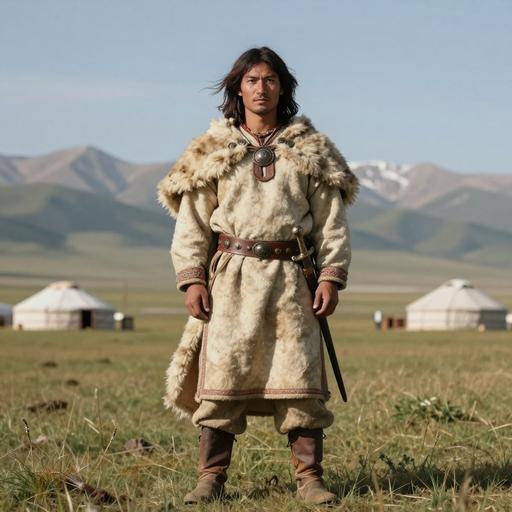
- Northeast Asia and adjacent Siberia (sporadic presence among indigenous northern groups).
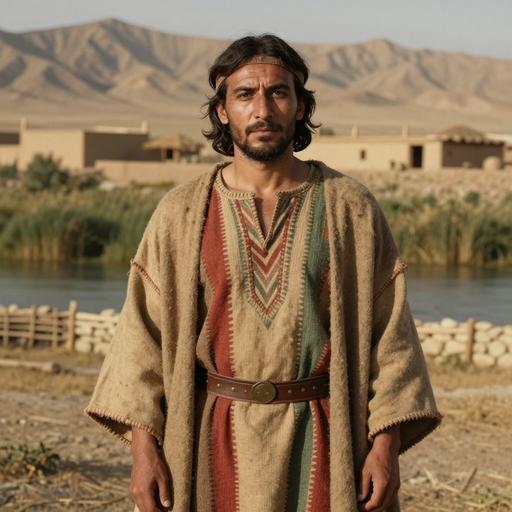
- Central Asia, where D6 appears in some Turkic and sedentary populations at low to moderate frequencies, likely reflecting prehistoric east–west gene flow.
- South Asia, where isolated D6 lineages are found in both northeastern and some western populations, interpreted as the result of Holocene dispersals or earlier Pleistocene contacts.
- Southeast Asia, where occasional detections indicate limited southward spread or secondary contact.
Overall, the distribution pattern of D6 is consistent with a lineage that originated in East/Northeast Asia and spread irregularly across Eurasia through a combination of prehistoric migrations, trade, and local founder effects.
Historical and Cultural Significance
Because D6 is relatively rare and scattered, its primary significance is as a marker of small-scale maternal migrations and localized founder events rather than as a signature of a single large demographic expansion. In archaeological contexts, D6 (like other minor D subclades) can provide evidence for east–west connections during the Late Pleistocene and Holocene — for example, movement of people or maternal lineages into Central and South Asia from eastern sources during the early Holocene, and contacts between Siberian hunter-gatherers and neighboring agricultural groups. D6 has been reported at low frequencies in modern populations that participate in historically documented exchanges (steppe corridors, riverine trade routes) and in some ancient DNA samples consistent with northern East Asian ancestry.
Conclusion
mtDNA haplogroup D6 is best understood as a regional, derived branch of the broader D family: it arose in East/Northeast Asia after the main D diversification and subsequently spread in a scattered pattern across adjacent regions. Its current geographic mosaic reflects a history of limited migrations, genetic drift in small populations, and multiple episodes of contact between East Asian, Siberian, Central Asian and South/Southeast Asian groups. As genomic sampling expands, the fine-scale structure and timing of D6 subclades will become clearer, helping to trace specific prehistoric maternal movements in Eurasia.
Key Points
- Origins and Evolution
- Subclades
- Geographical Distribution
- Historical and Cultural Significance
- Conclusion