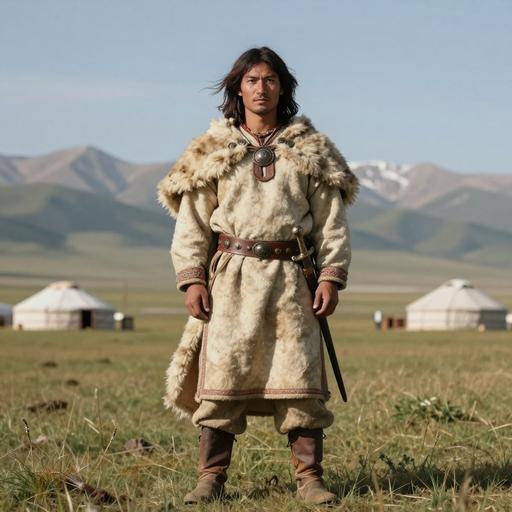
The Story
The journey of mtDNA haplogroup DN
Origins and Evolution
Haplogroup DN is understood as a derived lineage within the broader mtDNA haplogroup D, which itself descends from macro-haplogroup M. While haplogroup D likely originated in East/Northeast Asia during the Upper Paleolithic (around 40–50 kya), DN represents a later split that most population-genetic evidence and phylogenetic inference place in the Late Pleistocene (roughly ~20–25 kya). The divergence of DN plausibly occurred in glacial or immediate post-glacial environments of Northeast Asia and adjacent Siberian regions, where founder effects and population structure produced distinct maternal sublineages.
DN lineages show the patterns expected of a regional mtDNA clade: localized high frequency in specific groups, multiple downstream subclades with shallow coalescence times, and phylogeographic structure consistent with repeated episodes of range contraction and expansion driven by climatic changes and human mobility.
Subclades
As with many mtDNA subclades of D, DN would be expected to contain further internal branches (e.g., DN1, DN2 in nomenclatures used in detailed phylogenies) that reflect regional expansions or isolation. Some DN subclades are typically restricted to particular linguistic or ethnographic groups in northeastern Eurasia, while others show wider dispersal possibly linked to late Pleistocene/Holocene movements. Precise naming and resolution of DN subclades relies on complete mitogenomes and high-resolution phylogenetic studies; therefore specific subclade labels and ages are subject to revision as more ancient and modern full mitogenomes are published.
Geographical Distribution
DN is primarily observed in Northeast Asian and Siberian populations, where it often reaches its highest frequencies and displays the greatest haplotype diversity — a signal of long-term local presence. Secondary occurrences are reported at moderate to low frequencies across parts of Central Asia and, more sporadically, in Southeast Asia and among some Arctic groups. Compared with other D-derived lineages implicated in the peopling of the Americas (for example, D1 and D4h3a), DN appears to be largely an East Eurasian/Siberian lineage; if present in Native American samples it is typically rare and likely reflects later contacts or low-frequency founding events rather than being a primary American founding haplogroup.
Historical and Cultural Significance
The phylogeographic fingerprint of DN aligns it with prehistoric hunter-gatherer populations of Northeast Asia and with archaeological contexts such as Jomon-related populations in the Japanese archipelago and various Palaeo-Siberian groups on the mainland. Where DN subclades occur in later-period contexts, they can reflect continuity from Pleistocene inhabitants through Holocene local expansions and interactions (for example, with Okhotsk and other coastal hunter-fisher groups). In general, DN contributes to our understanding of maternal population structure in regions that served as refugia and as staging areas for postglacial re-expansion and east–west gene flow across northern Eurasia.
Conclusion
DN represents a regionally important mtDNA lineage nested within haplogroup D. It exemplifies how subclades of widespread Paleolithic haplogroups can become geographically structured through isolation, founder effects, and later demographic events. Continued recovery of ancient mitogenomes from northeastern Eurasia, higher-resolution sampling of modern populations, and careful phylogenetic analysis will refine the internal structure, age estimates, and historical roles of DN and its descendant branches.
Key Points
- Origins and Evolution
- Subclades
- Geographical Distribution
- Historical and Cultural Significance
- Conclusion