The Story
The journey of mtDNA haplogroup G3A
Origins and Evolution
mtDNA haplogroup G3A is a downstream branch of haplogroup G3, itself a subclade of macro-haplogroup G, which coalesced in Northeast/East Asia during the Late Pleistocene to Early Holocene. Based on the parent clade's time depth (approximately 12 kya) and observed diversity within G3 subbranches, a plausible coalescence for G3A is in the Early Holocene (~9 kya). G3A likely arose as part of the post-glacial demographic processes that reshaped maternal lineages in northern East Asia and adjacent Siberia, reflecting continuity of local hunter-gatherer populations and subsequent regional differentiation.
Subclades (if applicable)
G3A is a named subclade within G3; internal diversity within G3A is currently limited in published datasets, consistent with a regional clade that expanded locally rather than undergoing continent-scale radiation. Some internal branches appear to be enriched in the Japanese archipelago and the Russian Far East, suggesting substructure associated with island and coastal populations. Because sampling of ancient and modern mtDNA in parts of Siberia and coastal Northeast Asia remains incomplete, further sequencing and ancient DNA retrieval are expected to reveal more fine-scale subclades and geographic structuring within G3A.
Geographical Distribution
Today G3A is most frequently reported from Northeast Asia and the Russian Far East, with notable occurrences in modern Japanese populations (including Ainu and some Ryukyuan groups), Koreans and northeastern Han Chinese, and various indigenous Siberian groups (e.g., Yakut, Evenk, Koryak). The clade is also observed at lower frequencies in some Mongolic and Central Asian groups (for example among Buryat and Mongol samples) and occasionally in circumpolar communities; rare detections in the Americas have been reported and are plausibly due to historic or prehistoric circumpolar connections rather than major colonizing events. Ancient DNA evidence for G3A is limited but present (one recorded ancient sample in the referenced database), consistent with a regional but not ubiquitous ancient distribution.
Historical and Cultural Significance
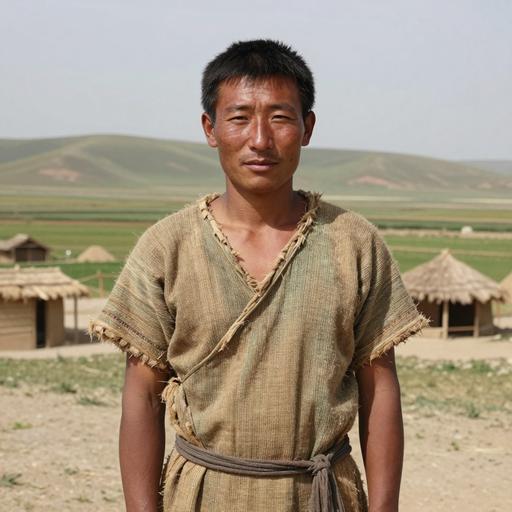
G3A is most plausibly associated with post-glacial hunter-gatherer populations of Northeast Asia and the early Holocene coastal and inland communities that later contributed to the genetic makeup of Jomon-era Japan, indigenous Siberian groups, and neighboring continental populations. In archaeological terms, G3A fits the profile of lineages that persisted through the Holocene in northern East Asia rather than lineages tied primarily to large-scale Neolithic farming expansions from the Yellow River or Yangtze regions. Where present in the Japanese archipelago, G3A may reflect genetic continuity with pre-agricultural Jomon populations and later admixture with continental migrants during the Yayoi and subsequent periods.
Conclusion
mtDNA haplogroup G3A is a regional Northeast/East Asian maternal lineage that emerged in the Early Holocene and today marks continuity and local expansion of northern East Asian and Siberian maternal ancestries, with particular representation in Japan, the Russian Far East, and adjacent continental populations. Continued high-resolution mtDNA sequencing and more ancient DNA sampling across Northeast Asia and Siberia will clarify the subclade structure, migration chronology, and the role of G3A-bearing populations in broader Holocene demographic events.
Key Points
- Origins and Evolution
- Subclades (if applicable)
- Geographical Distribution
- Historical and Cultural Significance
- Conclusion