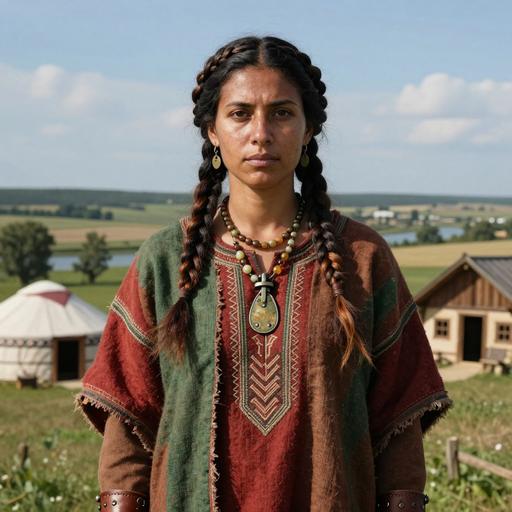
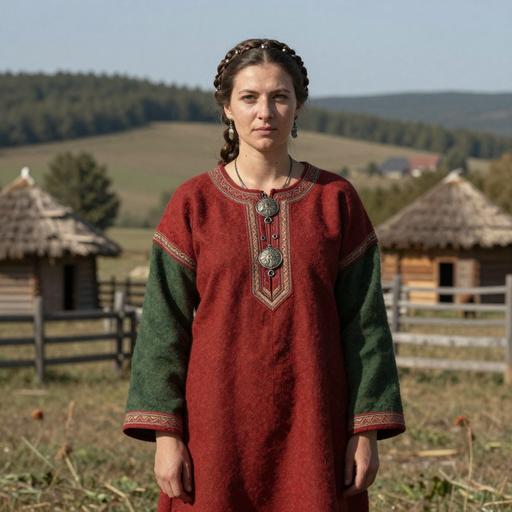
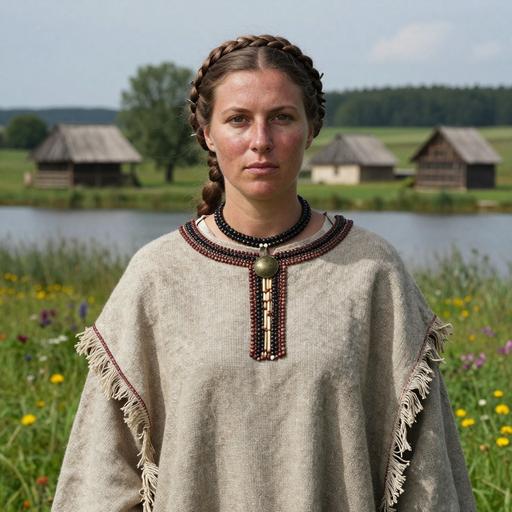
The Story
The journey of mtDNA haplogroup H11B
Origins and Evolution
mtDNA haplogroup H11B is a downstream subclade of haplogroup H11, itself a branch of the widespread macro-haplogroup H. H11 likely formed in the Near East/Caucasus in the early Holocene and H11B represents a later diversification within that regional H11 lineage. Based on the parent clade's time depth and the distribution of H11B in modern and ancient samples, H11B most plausibly arose during the early to mid‑Holocene (roughly 7–8 kya), a period of post‑glacial population reorganization and the spread of early farming from western Anatolia and the Near East into southeastern Europe.
H11B carries the defining derived variants that place it within H11 but distinguishes itself from sibling subclades by additional mutations accumulated after the H11 ancestor. As a minor lineage, H11B's internal diversity is modest in modern samples, consistent with a relatively localized expansion rather than a widespread continent‑scale radiation.
Subclades
As a named subclade (H11B) of H11, H11B may contain further downstream branches in high-resolution mitogenome trees, but it remains a relatively small clade in published datasets. Close relatives include other H11 sublineages (for example H11A and other unresolved H11* lineages). Where high-coverage mitogenomes have been studied, H11B can be separated from sister clades by a small number of private mutations; additional sampling and full mitogenomes are required to resolve its internal branching more fully.
Geographical Distribution
Modern distribution: H11B is most commonly observed at low-to-moderate frequencies in the Near East, Anatolia, the Caucasus and the Balkans, with sporadic occurrences in eastern Europe and Central Asia. Its modern footprint mirrors that of parent H11 but is more localized and less frequent overall. Population surveys and targeted mitogenome studies report H11/H11B occurrences in Armenians and Georgians, Turkish and Anatolian populations, and in parts of the Balkans (Greece, Albania, Bulgaria and adjacent areas).
Ancient DNA: H11 and some of its subclades, including H11B, have been observed in a small number of ancient mitogenomes from the Holocene period in the Near East and southeastern Europe, indicating continuity of maternal lineages in these regions through the Neolithic and later periods. The limited number of archaeological occurrences suggests H11B was present but not dominant in ancient burial populations sampled so far.
Historical and Cultural Significance
Because H11B is concentrated in the Near East, Anatolia and the Balkans and dates to the early–mid Holocene, it is consistent with maternal lineages that were involved in post‑glacial reexpansion and the early Neolithic demic processes that spread farming and associated cultural packages from Anatolia into southeastern Europe. H11B's presence in modern Caucasus and Anatolian populations points to long‑term regional continuity, while low‑frequency occurrences in eastern Europe and Central Asia may reflect later mobility and contacts (trade, migration, and small‑scale gene flow) rather than large‑scale demographic replacement.
H11B has not been linked to any single archaeological culture as a defining lineage; instead, it should be seen as one of several minor maternal markers that together trace the complex tapestry of Near Eastern and southeastern European maternal ancestry through the Neolithic and Bronze Age periods.
Conclusion
H11B is a geographically informative, low‑frequency maternal lineage derived from H11, reflecting regional maternal continuity centered on the Near East/Caucasus and Anatolia with extensions into the Balkans and episodic presence further afield. Its modest diversity and limited ancient DNA representation make it a useful—but not dominant—marker for studies of post‑glacial and early farming era population structure in southeastern Europe and neighboring regions. Increased mitogenome sampling in the Near East, Anatolia and the Balkans will help clarify H11B's internal structure and historical movements.
Key Points
- Origins and Evolution
- Subclades
- Geographical Distribution
- Historical and Cultural Significance
- Conclusion