The Story
The journey of mtDNA haplogroup H14B
Origins and Evolution
H14B is a downstream branch of mtDNA haplogroup H14, placing it within the broader West Eurasian haplogroup H clade. H14 itself is thought to have arisen in the Near East or the Caucasus region after the Last Glacial Maximum (LGM), with the parent H14 commonly dated to roughly ~12 kya. As a subclade, H14B likely coalesced somewhat later (we estimate ~10 kya), during the late Paleolithic to early Neolithic period, when populations in West Asia and the Caucasus were undergoing demographic growth and regional dispersals.
H14B is defined by one or more private mutations downstream of the H14 defining mutations; because it is relatively rare and geographically patchy, much of the observable diversity within H14B appears to be local and recent compared with deeper, more common H subclades.
Subclades (if applicable)
There is limited published evidence for deeply branching, widely distributed subclades under H14B. Most reported H14B sequences form a small number of closely related lineages, suggesting recent regional expansion or persistence of small maternal lineages rather than broad continent-wide radiation. As additional mitogenomes are sequenced from the Caucasus, Anatolia and the Balkans, it is possible that further internal structure within H14B will be resolved.
Geographical Distribution
H14B shows a patchy distribution concentrated in the Near East and Caucasus with secondary occurrences across the Mediterranean and sporadic findings in parts of Central and South Asia. Modern and ancient DNA sampling places H14B most consistently in:
- The South Caucasus (Armenia, Georgia) and adjacent parts of northeastern Anatolia.
- Anatolia and the broader Near East, often at low-to-moderate frequency in local samples.
- The Balkans and parts of southern Italy and the central Mediterranean, typically at low frequency.
- Occasional, low-frequency occurrences reported in Central Asia and South Asia, likely reflecting long-distance mobility or small-scale historical gene flow.
A small number of ancient DNA occurrences attributable to H14 lineages (parent clade) and a few likely assignable to H14B indicate that this lineage has been present in archaeological contexts from the Neolithic to later periods in West Asia and nearby regions.
Historical and Cultural Significance
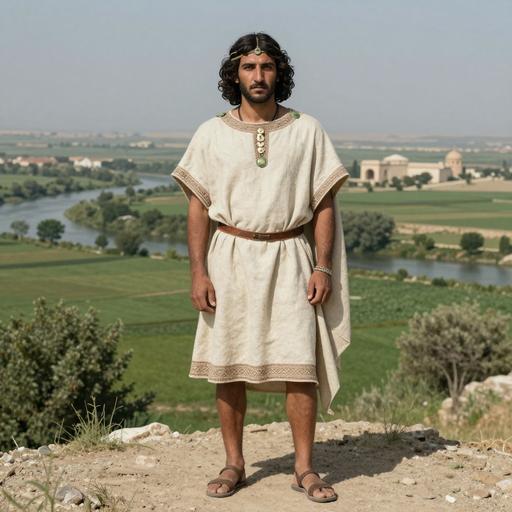
Given its geographic pattern, H14B is best interpreted as a Near Eastern/Caucasus maternal lineage that spread locally with Neolithic farming communities and persisted in mountainous and coastal refugia. Its presence in the Balkans and southern Italy is consistent with Neolithic and later maritime or overland movements from Anatolia and the eastern Mediterranean into Europe. During the Bronze Age and later historical periods, additional mobility and population contacts (trade, migration, empire-scale movements) could have caused the sporadic appearances of H14B farther afield, including Central and South Asia.
Because H14B is rare, it does not appear to have been associated with large, continent-spanning demographic expansions (unlike some other H subclades). Instead, it is informative for fine-scale population history: the maintenance of regional maternal lineages in the Caucasus and Anatolia, and the occasional diffusion of those lineages into neighboring European and Asian populations.
Conclusion
H14B is a low-frequency, regionally concentrated subclade of H14 that likely arose in the Near East / Caucasus during the late Pleistocene–early Holocene transition and expanded primarily through Neolithic and subsequent local movements. Its patchy modern distribution and limited internal diversity point to local persistence and periodic, small-scale dispersal rather than large-scale demographic replacement. Continued mitogenome sequencing in undersampled regions (Caucasus, eastern Anatolia, and the Balkans) will improve resolution of H14B's internal phylogeny and historical dynamics.
Key Points
- Origins and Evolution
- Subclades (if applicable)
- Geographical Distribution
- Historical and Cultural Significance
- Conclusion