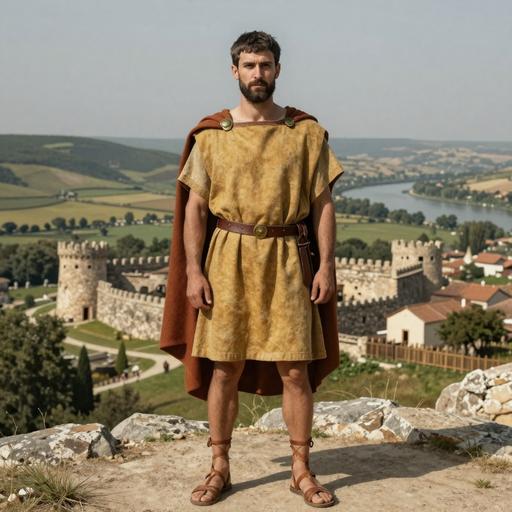
The Story
The journey of mtDNA haplogroup H1CF2
Origins and Evolution
H1CF2 is a downstream lineage within the H1CF branch of haplogroup H1, itself a major western Eurasian maternal clade. H1CF was likely established on the Atlantic/Iberian façade in the later Neolithic to Chalcolithic (around 5.5 kya), and H1CF2 represents a more recent split from that parental diversity. The clade is defined by one or more private mutations nested within H1CF (i.e., it is a terminal subclade), and its time to most recent common ancestor (TMRCA) is consistent with a Chalcolithic–Bronze Age origin in southwestern Europe (estimated here at roughly 4.0 kya).
The evolutionary history of H1CF2 is best understood in the context of post‑glacial western European re‑expansion of H1 lineages and later coastal and maritime movements during the Chalcolithic and Bronze Age. These processes redistributed H1 sublineages from Iberia across the western Mediterranean and into northwest Africa through both prehistoric seafaring and subsequent historic contacts.
Subclades (if applicable)
As a terminal or relatively young branch of H1CF, H1CF2 currently has limited recognized substructure in published datasets; it is treated as a distinct subclade beneath H1CF. With additional high‑coverage mitogenomes and broader sampling, further internal subclades of H1CF2 may be identified, which would refine its geographic and temporal history.
Geographical Distribution
H1CF2 is concentrated in the areas where its parent H1CF is best represented but at generally lower frequencies. Observed patterns include:
- Iberian Peninsula: the highest relative frequencies and greatest haplotype diversity, consistent with a local origin and persistence.
- Western Mediterranean islands and coastal regions (e.g., Sardinia, Sicily, parts of Italy, southern France): low to sporadic presence, reflecting maritime contacts and island settlement dynamics.
- Northwest Africa (Morocco, Algeria, Berber groups): detectable at low frequencies, likely the result of prehistoric cross‑Mediterranean exchanges and later historic gene flow.
- Atlantic fringe of Europe (Britain, Ireland, parts of France): rare occurrences consistent with long‑distance coastal contacts and later mobility.
Only a small number of ancient DNA instances have been reported for H1CF/H1CF2 in published datasets; the presence of at least one aDNA sample associated with coastal Iberian archaeological contexts supports the prehistoric antiquity of the lineage in that region.
Historical and Cultural Significance
The distribution and age of H1CF2 tie it to demographic processes that shaped Atlantic and western Mediterranean populations after the Neolithic:
- Post‑glacial and Neolithic legacies: H1 lineages generally expanded in western Europe after the Last Glacial Maximum; H1CF2 represents a more localized later branching within that broader pattern.
- Chalcolithic / Atlantic exchange networks: the timing and coastal concentration are compatible with increased seafaring, exchange of goods and people, and the spread of cultural complexes along the Atlantic façade during the late Neolithic and Chalcolithic.
- Bronze Age and later maritime mobility: continued low‑level dispersal during the Bronze Age and into historic times (Phoenician, Greek, Roman, Islamic Mediterranean movements) likely redistributed H1CF2 beyond Iberia, explaining its presence in the wider Mediterranean and northwest Africa.
Cultural associations are best viewed as correlative—mtDNA lineages track maternal ancestry and demographic processes rather than specific cultural identities—so H1CF2 should be interpreted as a marker of regional maternal continuity and mobility rather than proof of membership in any single archaeological culture.
Conclusion
H1CF2 is a rare, regionally concentrated mtDNA subclade that most likely originated on the Iberian/Atlantic façade in the late Chalcolithic to early Bronze Age (circa 4.0 kya). Its present-day distribution—centered on Iberia with low-frequency occurrences across the western Mediterranean, northwest Africa and peripheral Atlantic Europe—reflects a combination of prehistoric coastal re‑expansion and subsequent maritime and historic contacts. Future mitogenome sequencing and denser ancient DNA sampling across Iberia and the western Mediterranean will refine the phylogeny and timing of H1CF2 and clarify its microgeographic history.
Key Points
- Origins and Evolution
- Subclades (if applicable)
- Geographical Distribution
- Historical and Cultural Significance
- Conclusion