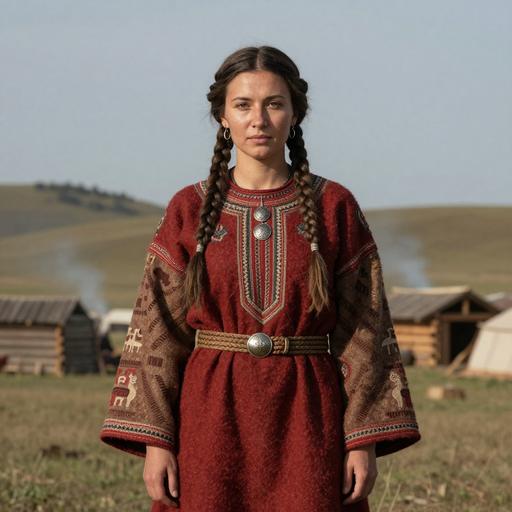
The Story
The journey of mtDNA haplogroup H1I2
Origins and Evolution
H1I2 is a subclade of mtDNA haplogroup H1I, itself derived from the widespread Western European lineage H1. H1 lineages are widely interpreted as having expanded from an Iberian/Atlantic post‑glacial refuge after the Last Glacial Maximum. Given the parent clade H1I is estimated around ~11 kya in the Iberian region, H1I2 is plausibly a later offshoot that arose during the Neolithic to Chalcolithic timeframe (on the order of ~6 kya in our estimate). Its evolution reflects localized diversification of maternal lineages in southwestern Europe followed by limited dispersal across the western Mediterranean and into adjacent regions.
Subclades (if applicable)
At present H1I2 appears to be a relatively small, terminal branch within H1I with limited documented downstream substructure. Published population surveys and available ancient DNA (aDNA) records report only a few H1I‑derived lineages (including three identified ancient H1I samples in the user's dataset), and specific internal subclades of H1I2 have not been widely characterized in the literature. Further complete mitogenome sequencing of modern and archaeological samples would be required to resolve finer subclade structure and internal branching order.
Geographical Distribution
H1I2 is most characteristic of the Iberian Peninsula and adjacent Western Mediterranean areas. Observations in modern populations place it at low to moderate frequencies in Iberia (including Basque groups), and at lower frequencies across western France, the British Isles, parts of Italy and Mediterranean islands (Sardinia, Sicily, Balearics, Corsica), as well as sporadically in northwest Africa (Maghreb Berber groups) and the eastern Mediterranean (Anatolia, Levant). The pattern is consistent with a southwestern European origin followed by limited coastal and maritime spread — likely a combination of post‑glacial re‑expansion, Neolithic farmer dispersal, and later historic mobility across Mediterranean trade and migration routes.
Historical and Cultural Significance
Maternal lineages within H1 (including H1I and its subclades) are frequently interpreted in population genetic studies as markers of post‑LGM re‑colonization of Europe from Atlantic/Iberian refugia, and H1I2 fits this broader narrative at a more localized scale. Its continued presence through the Neolithic, Chalcolithic and Bronze Age in the western Mediterranean suggests it was carried by farming and coastal communities as well as by later regional networks (e.g., Chalcolithic Iberian societies, Bronze Age Atlantic contacts, and Mediterranean seafaring). The haplogroup's low to moderate frequencies and spotty geographic distribution also reflect genetic drift, founder effects on islands, and later admixture with incoming groups.
Ancient DNA evidence is currently sparse (the user's dataset lists three archaeological instances), which limits confident cultural attributions. Where present, H1I2 and related H1 sublineages have been recovered from Iberian and nearby contexts dating to post‑glacial and Neolithic–Chalcolithic periods, supporting a long‑term regional continuity of some maternal lineages.
Conclusion
H1I2 represents a localized derivative of the H1 maternal radiation centered on the Iberian/Atlantic refugium, with an estimated origin in the mid Holocene and a distribution concentrated in the western Mediterranean and adjacent parts of Europe and northwest Africa. It is low frequency and shows limited substructure in current datasets; expanding mitogenome sampling of both modern and ancient remains will improve resolution of its phylogeny, timing, and the relative importance of Neolithic versus later movements in shaping its modern distribution.
Note: age estimates and geographic inferences are based on the phylogenetic position of H1I2 relative to H1/H1I and on patterns observed in population genetics and ancient DNA studies; they should be treated as working hypotheses subject to refinement with more data.
Key Points
- Origins and Evolution
- Subclades (if applicable)
- Geographical Distribution
- Historical and Cultural Significance
- Conclusion