The Story
The journey of mtDNA haplogroup J1B4
Origins and Evolution
Haplogroup J1b4 is a derived subclade of mtDNA haplogroup J1b, itself nested within macro-haplogroup J. J1b likely arose in or near the Near East during the Late Glacial / early post‑glacial period (the parent J1b is often dated to ~17 kya). J1b4 appears to have arisen later, plausibly in the early Holocene (Neolithic or immediate post‑glacial reexpansion period), reflecting a deeper Near Eastern maternal substrate that contributed to subsequent population movements into Europe, the Caucasus and North Africa.
Phylogenetically, J1b4 carries the defining mutations that place it as a distinct terminal branch within the J1b clade. As a downstream lineage, its diversity and geographical pattern are shaped both by the earlier expansion of J1b and by regionally localized demographic events (Neolithic farmer dispersals, later historic migrations and founder effects).
Subclades
At present J1b4 is treated as a terminal subclade in many published mtDNA phylogenies or has only a small number of downstream branches identified; sequencing of complete mitogenomes from diverse populations may reveal additional internal structure. Compared with sibling subclades of J1b, J1b4 is relatively rare, and when present tends to be geographically scattered rather than forming a wide, high‑diversity center that would indicate a major regional origin separate from the broader J1b signal.
Geographical Distribution
J1b4 is observed at low to moderate frequency in populations with historical connections to the Near East and Mediterranean basin. Modern occurrences are reported in:
- The Near East and Anatolia (reflecting its likely origin and persistence)
- Southern Europe and parts of Western Europe, especially along Mediterranean coastal regions
- North Africa (likely reflecting prehistoric and historic gene flow across the Mediterranean)
- The Caucasus (regionally localized occurrences)
- Jewish communities (Ashkenazi and Sephardi), where Near Eastern maternal lineages are often preserved
- Scattered reports from parts of Central Asia, consistent with long‑range connections via trade and migration
Ancient DNA (aDNA) evidence for the broader J1b clade exists but is limited; J1b4 specifically is infrequent in published aDNA datasets so far, which may reflect sampling bias, rarity of the lineage, or underrepresentation of certain regions in ancient genomic studies.
Historical and Cultural Significance
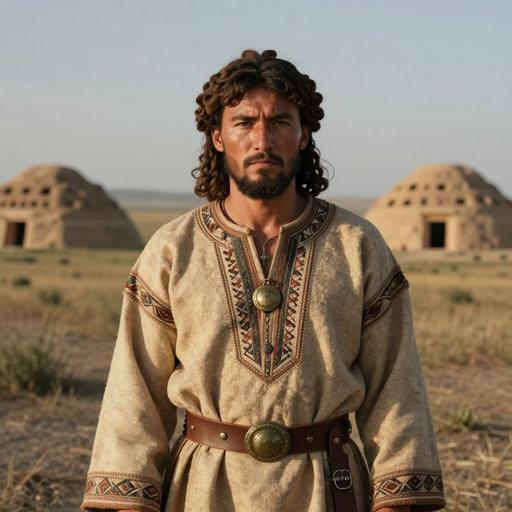
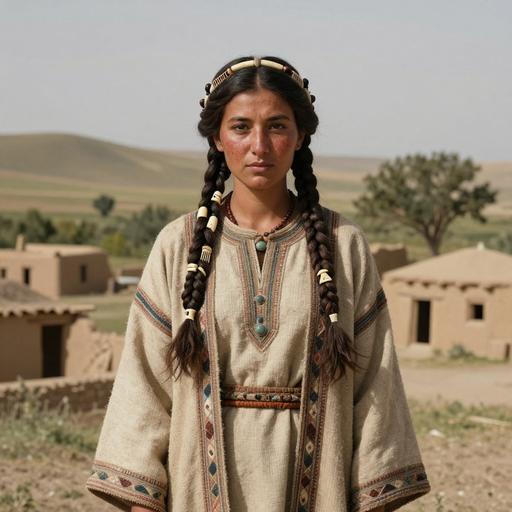
Because J1b4 is nested within a haplogroup (J1b) that is linked to post‑glacial re‑expansions and Neolithic farmer dispersals from the Near East, J1b4 serves as a marker for maternal ancestry connected with those events on a finer scale. It is commonly interpreted in population genetic studies as part of the Neolithic and post‑Neolithic maternal substrate that contributed to the genetic makeup of Mediterranean Europe, the Caucasus and parts of North Africa.
Associations with archaeological cultures are indirect: J1b4 likely rode along with Anatolian/Levantine Neolithic farmer expansions (the demographic processes behind the spread of agriculture into Europe) and subsequently entered local demographic networks shaped by Bronze Age and later movements. In modern contexts, the presence of J1b4 in Jewish and Mediterranean populations reflects both ancient Near Eastern origins and later historical population structure and founder effects.
Conclusion
J1b4 is a low‑to‑moderate frequency maternal lineage derived from the Near Eastern J1b clade, with a time depth in the early Holocene. It is most informative when combined with complete mitogenome data and population context (archaeology, autosomal profiles and Y‑DNA) to reconstruct regional maternal histories tied to Neolithic dispersals, Mediterranean contacts and later historical movements. Continued mitogenome sequencing and better sampling of ancient remains in the Near East and Mediterranean will clarify J1b4's internal structure and precise migratory history.
Key Points
- Origins and Evolution
- Subclades
- Geographical Distribution
- Historical and Cultural Significance
- Conclusion