The Story
The journey of mtDNA haplogroup J1B5
Origins and Evolution
mtDNA haplogroup J1B5 is a downstream lineage of parent clade J1b, which itself is derived from haplogroup J1. While J1b likely formed in or near the Near East during the Late Glacial or early post‑glacial period (the parent node is dated to roughly ~17 kya), J1B5 represents a later split that most plausibly coalesced in the early Holocene (on the order of ~9 kya). Its origin in the Near East / Anatolian region fits a pattern seen across many J-derived subclades: formation in a Near Eastern refugium followed by dispersal with expanding populations during the Neolithic and subsequent Holocene movements.
Subclades
As a relatively deep subclade of J1b, J1B5 may contain further downstream branches in modern and ancient datasets, though these sub-branches are often rare and sparsely sampled compared with major mtDNA clades like H or U. When present, downstream lineages within J1B5 typically demonstrate localized geographic structure (for example, small clusters in the eastern Mediterranean or North Africa), reflecting founder effects and regional demographic events after the initial split.
Geographical Distribution
J1B5 is characteristically low-frequency but geographically widespread in a band stretching from the Near East into the Mediterranean and parts of Europe and North Africa. The strongest signals are generally observed in Anatolia, the Levant and adjacent regions, with lower but detectable frequencies in Southern Europe (especially Mediterranean coastal areas), the Caucasus, and North Africa. The distribution pattern is consistent with maternal lineages moving with early farming communities and maintaining pockets of higher frequency where local founder events or demographic continuity occurred.
Historical and Cultural Significance
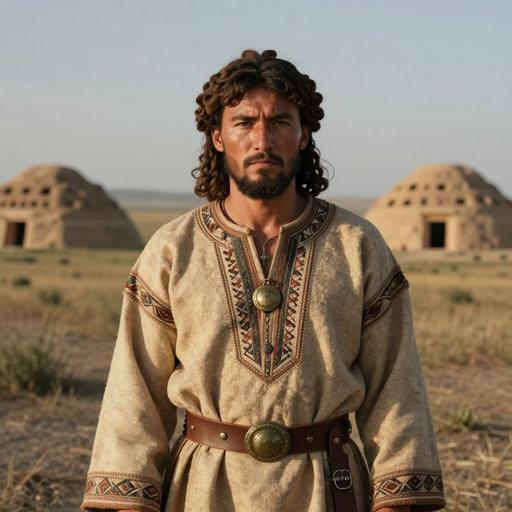
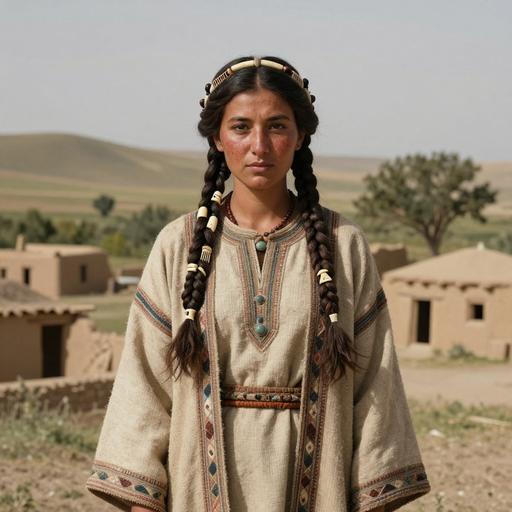
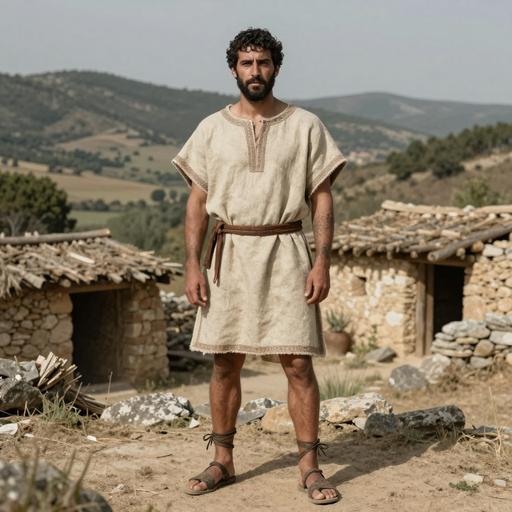
Because J1B5 sits within a clade associated with Near Eastern post‑glacial re‑expansions and Neolithic farmer dispersals, it is informative for studies of the spread of agriculture and the demographic changes of the Holocene. Its presence in Mediterranean Europe and North Africa is compatible with contributions from Anatolian and Levantine farmer groups during the Early and Middle Neolithic, and later population movements (trade, coastal contacts, historic migrations) may have redistributed small numbers of carriers. In some modern communities with documented Near Eastern ancestry (including several Jewish and Levantine populations), J1B5 can appear as a minor constituent of the maternal gene pool.
Conclusion
mtDNA J1B5 is a specialized, low‑to‑moderate frequency subclade of J1b that illustrates the Near Eastern roots of several maternal lineages that contributed to the peopling of the Mediterranean Basin and neighboring regions during the Holocene. While not a high-frequency haplogroup, its phylogenetic placement and geographic footprint make it a useful marker for fine-scale studies of Neolithic dispersal, regional continuity, and localized founder events in the eastern Mediterranean and adjacent areas.
Key Points
- Origins and Evolution
- Subclades
- Geographical Distribution
- Historical and Cultural Significance
- Conclusion