The Story
The journey of mtDNA haplogroup J1C6
Origins and Evolution
mtDNA haplogroup J1C6 is a subclade nested within J1C, itself a branch of haplogroup J. Given the parent clade J1C's inferred diversification in the Near East / Caucasus around the onset of the Holocene (~12 kya), J1C6 most plausibly arose later during the early to mid-Holocene (we estimate ~6 kya). Its origin in the Near East/Caucasus region is consistent with the broader pattern for many J sublineages that expanded with post‑glacial demographic growth and the spread of early farming populations.
The evolution of J1C6 should be understood in the context of maternal lineages that diversified as human groups stabilized and expanded after the Last Glacial Maximum. Mutations defining J1C6 mark a relatively shallow branch of the J phylogeny, implying a Holocene origin and regional expansions rather than a deeply ancient refugial lineage.
Subclades (if applicable)
At present, J1C6 is treated as a fine-scale terminal or near-terminal branch beneath J1C in published and community-curated phylogenies. Depending on sampling density, small internal substructure may exist (local variants defined by additional private mutations), but no widely recognized major downstream subclade has been established in the literature as of current sampling. Continued high-resolution sequencing in the Near East, Mediterranean and Europe may reveal further sublineages that clarify migration routes and local expansions.
Geographical Distribution
Modern distribution: J1C6 appears at low to moderate frequencies across the Mediterranean and adjacent regions. It is most reliably reported in Southern European populations (e.g., Iberia, Italy, the Balkans), in Western Europe at lower frequencies, and in the Near East and Caucasus where the parent clade is common. Occurrences have also been documented in North Africa and sporadically in Central Asia. The haplogroup is present in some Jewish communities (both Ashkenazi and Sephardi), consistent with historical connections between the Levant, Mediterranean, and diasporic communities.
Ancient DNA evidence: J1C6 (or closely related J1C lineages) has been observed in a small number of archaeological samples—your database indicates six identifications—supporting a Holocene presence in archaeological contexts. These occurrences are compatible with a scenario of early farmer dispersal and subsequent localized continuity and movement during later periods (Bronze Age, Iron Age, historic migrations).
Historical and Cultural Significance
Because J1C6 is nested in a maternal clade strongly associated with Neolithic and post‑Neolithic expansions, its cultural associations largely reflect the demographic processes of the Holocene:
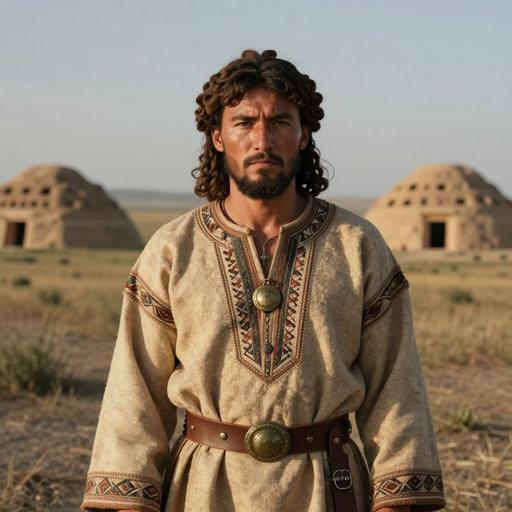
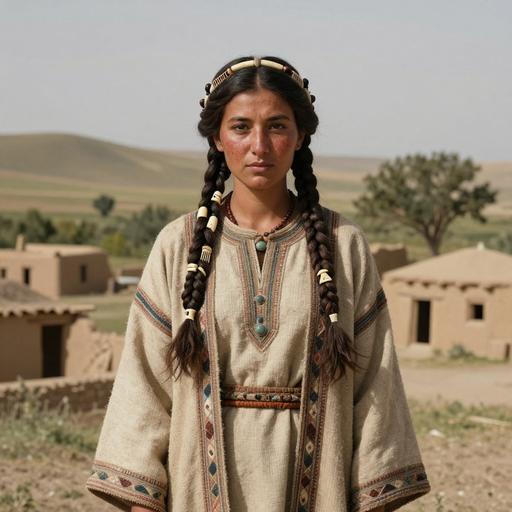
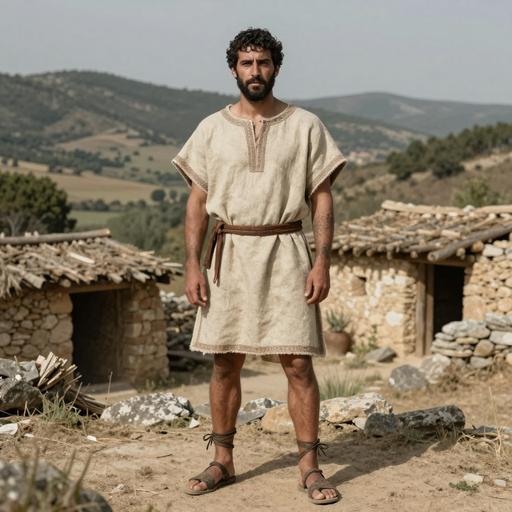
- Neolithic farming expansions: J lineages in general are frequently associated with the spread of early agriculturalists from the Near East into Europe and the Mediterranean. J1C6 may have been carried by maritime and inland Neolithic communities (e.g., Cardial/Impressed‑Ware and Linearbandkeramik related networks) and later integrated into regional gene pools.
- Bronze Age and later movements: The Holocene demographic history of the Near East and Europe saw multiple population movements (trade, colonization, steppe interactions, and classical‑period mobility). J1C6’s patchy distribution is consistent with both Neolithic dispersal and later, more localized transmissions during Bronze Age and historic times.
- Diasporic and regional continuity: Detection in Jewish populations and continuity in Mediterranean locales suggests the lineage was integrated into networks of long‑distance contact (trade, migration) and local maternal continuity.
While J1C6 is not typically a high‑frequency diagnostic marker for any single archaeological culture, its presence across Neolithic and later contexts makes it a useful signal of Near Eastern maternal ancestry moving into and persisting within Europe and the Mediterranean.
Conclusion
mtDNA J1C6 represents a Holocene maternal sublineage of J1C that originated in the Near East / Caucasus and subsequently contributed to the maternal genetic landscape of the Mediterranean, parts of Europe, North Africa and adjacent regions. Its modest but geographically widespread presence—supported by modern sampling and a handful of ancient DNA hits—reflects the complex tapestry of Neolithic expansion, later demographic shifts, and historical movements linking the Near East with Europe and North Africa. Increased sampling and full mitogenome sequencing in undersampled regions will refine the phylogeny and clarify the timing and routes of J1C6 dispersal.
Key Points
- Origins and Evolution
- Subclades (if applicable)
- Geographical Distribution
- Historical and Cultural Significance
- Conclusion