The Story
The journey of mtDNA haplogroup J1D
Origins and Evolution
mtDNA haplogroup J1d is a downstream lineage of haplogroup J1, itself a branch of macro-haplogroup J that likely expanded from a Near Eastern source during the Late Paleolithic to early Holocene. Based on its phylogenetic position beneath J1 and comparative coalescent estimates for nearby J1 subclades, J1d most plausibly arose in the early Holocene (~9 kya) in the Near East or adjacent Anatolian-Levantine corridor. Its emergence fits the period of increasing population densities, localized expansions after the Last Glacial Maximum, and the beginnings of Neolithic demography and mobility in Southwest Asia.
As an mtDNA lineage, J1d records strictly maternal inheritance and its geographic pattern reflects both prehistoric female-mediated migrations (for example, early farmers and post-glacial recolonizations) and later processes such as drift, founder effects, and historical movements.
Subclades (if applicable)
J1d is a defined terminal or near-terminal subclade within J1 in current phylogenies, with only limited documented downstream branching in published datasets to date. Where substructure exists, it tends to be regionally restricted, reflecting local diversification after dispersal from a Near Eastern source. The relative paucity of well-sampled, high-resolution complete mitogenomes for many regions means additional subclades of J1d may be discovered as sequencing of modern and ancient samples increases.
Geographical Distribution
J1d is primarily detected at low to moderate frequencies across a swath of the Mediterranean and adjacent regions. Modern occurrences are concentrated in the Levant, Anatolia, the southern Balkans and Mediterranean Europe, parts of the Caucasus and North Africa, and in diaspora communities (including some Jewish maternal lineages). Ancient DNA evidence for J1d is currently limited (six archaeological samples in the referenced database), but these occurrences are consistent with a pattern of Holocene-era dispersal tied to Neolithic and later historic movements.
Regional prevalence is highest in parts of the Near East and eastern Mediterranean, with lower, patchy representation in southern and western Europe and North Africa—consistent with female-mediated spread of farming and later gene flow across the Mediterranean basin.
Historical and Cultural Significance
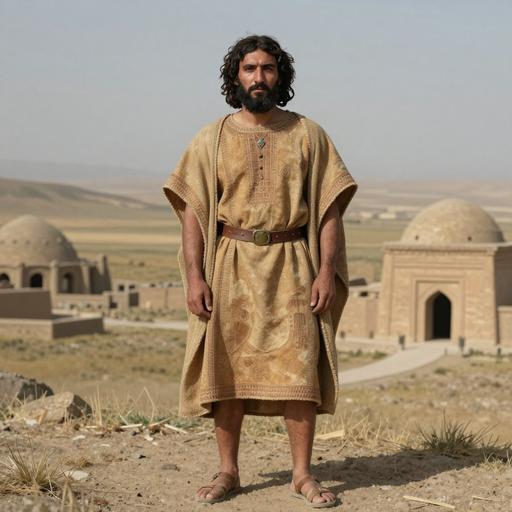
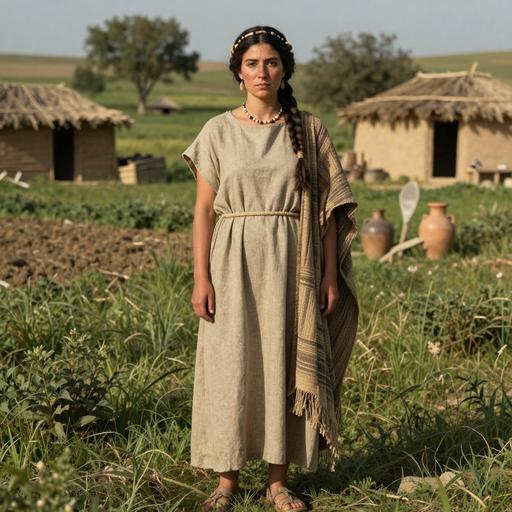
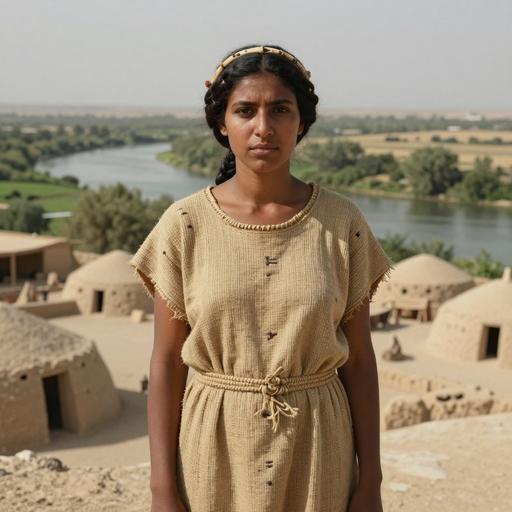
Because of its temporal and geographic origin, J1d is best understood as part of the maternal signature of early Holocene/Neolithic populations that spread agriculture and sedentism from Anatolia and the Levant into Europe and North Africa. It likely traveled with Anatolian-derived farming groups, and subsequently mixed into local hunter-gatherer and later populations. Instances of elevated frequency in specific modern communities can reflect later founder effects, endogamy, or historic migrations (for example, within some Jewish diaspora maternal lineages and localized Mediterranean populations).
The low number of ancient carriers documented so far prevents strong claims tying J1d to a single archaeological culture; instead, it appears as one of several Near Eastern maternal lineages that contributed to the genetic landscape of the Neolithic and post-Neolithic Mediterranean and adjacent regions.
Conclusion
mtDNA haplogroup J1d represents a Near Eastern-derived maternal lineage that arose in the early Holocene and contributed to the maternal gene pools of the eastern Mediterranean, parts of Europe, North Africa, and neighboring regions. Its distribution today reflects a combination of prehistoric dispersals (notably Neolithic farmer movements), localized diversification, and later historical processes. Continued sampling of complete mitochondrial genomes from both modern populations and ancient remains will refine the internal structure, age estimates, and precise migration episodes associated with J1d.
Key Points
- Origins and Evolution
- Subclades (if applicable)
- Geographical Distribution
- Historical and Cultural Significance
- Conclusion