The Story
The journey of mtDNA haplogroup M10A1A1
Origins and Evolution
mtDNA haplogroup M10A1A1 is a downstream subclade of M10A1A, itself nested within the broader M10 branch, a lineage with deep roots in eastern Eurasia. Based on the phylogenetic position of M10A1A and the observed geographic patterning of daughter lineages, M10A1A1 most likely formed on the eastern Eurasian steppe or adjacent northern East Asian zones during the mid-to-late Holocene (several thousand years ago). Its emergence fits a pattern of regional differentiation among maternal lineages that accompanied local demographic shifts and frequent mobility across the steppe.
Like many East Eurasian mtDNA subclades, M10A1A1 appears as an intermediate clade that connects earlier M10 diversity to more recent localized lineages. The clade's age and distribution are consistent with formation during or just after the Bronze Age as pastoralist societies intensified mobility and interaction across the steppe corridor.
Subclades (if applicable)
M10A1A1 is itself a terminal or intermediate subclade within M10A1A in current published trees; additional downstream diversity is possible but under-sampled. Where denser mitogenome sequencing has been performed on steppe and neighboring East Asian populations, investigators sometimes find further substructure within M10A1A1 pointing to localized expansions. Continued whole-mitogenome sampling in Mongolic, Turkic, Siberian and Tibetan populations may reveal additional named sub-branches.
Geographical Distribution
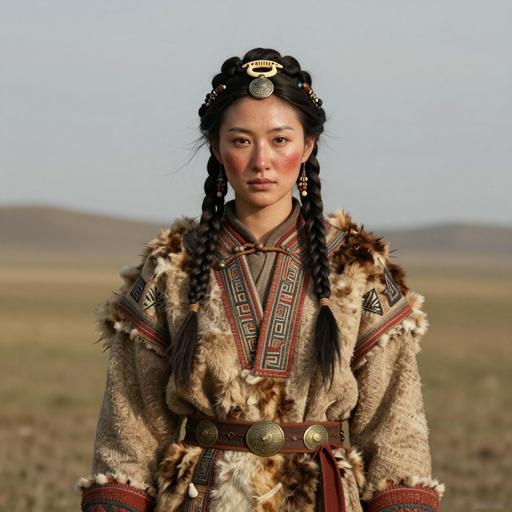
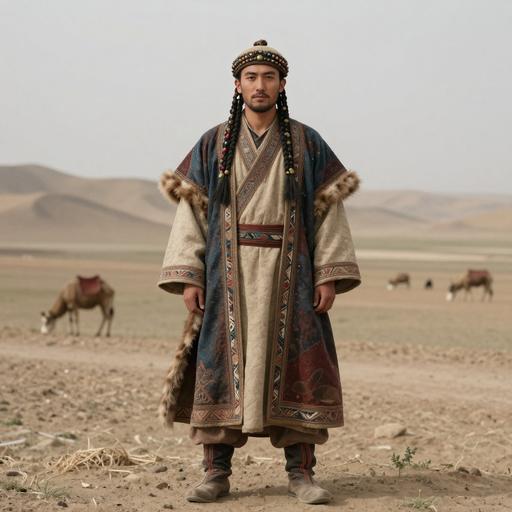
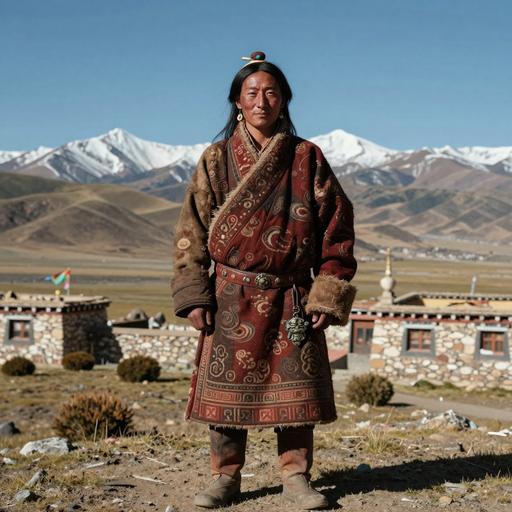
M10A1A1 is principally associated with northern East Asia and the Eurasian steppe. It shows its highest relative representation among Mongolic and some Siberian groups, and moderate presence in Turkic-speaking populations of the Altai and adjacent Central Asia. The haplogroup is also observed at low frequencies among northern Han Chinese, Koreans and occasional Japanese regional samples, and sporadically on the Tibetan Plateau. Ancient DNA from eastern steppe Bronze Age and Iron Age burials contains instances of M10-lineage mtDNA, supporting a long-standing presence in steppe populations.
Because mtDNA is maternally inherited and sensitive to drift and founder events, local frequencies can vary widely between neighboring populations; therefore, low-frequency occurrences in more southerly populations often reflect episodic gene flow or more ancient shared ancestry.
Historical and Cultural Significance
The temporal and geographic profile of M10A1A1 ties it to steppe-associated demographic processes in the later Holocene. The lineage is consistent with maternal ancestry that moved with, or remained within, pastoralist and mobile communities across the eastern steppe during the Bronze and Iron Ages, and which later admixed into neighboring agricultural and highland groups. Its presence in Iron Age nomadic horizons and subsequent medieval populations of the steppe region suggests continuity of some maternal lines across successive cultural complexes (for example, Slab-Grave and later nomadic federations), while sporadic occurrences in Tibet, northern China, Korea and Japan reflect either small-scale migrations or the long tail of steppe-derived maternal diversity.
For genealogical and population studies, M10A1A1 can be informative about maternal connections to northeastern Eurasian steppe ancestries, but should be interpreted in the context of other genetic markers (autosomal, Y-DNA, and other mtDNA haplogroups) and archaeological evidence.
Conclusion
M10A1A1 is a geographically focused eastern Eurasian maternal lineage that likely arose in the central–northeast Asian steppe region in the mid-to-late Holocene and is most common among Mongolic and Siberian populations, with scattered low-frequency occurrences across adjacent regions. It is useful for tracing maternal links to steppe populations and late-Holocene mobility in northern East Asia, but its low overall frequency and patchy distribution mean conclusions should be drawn cautiously and in combination with broader datasets.
Key Points
- Origins and Evolution
- Subclades (if applicable)
- Geographical Distribution
- Historical and Cultural Significance
- Conclusion