Menu
mtDNA Haplogroup • Maternal Lineage

M10A1A1A

mtDNA Haplogroup M10A1A1A

~2,000 years ago
Central–Northeast Asia (Eastern Eurasian steppe)
0 subclades
2 ancient samples
Scroll to explore
Chapter I

The Story

The journey of mtDNA haplogroup M10A1A1A

Origins and Evolution

mtDNA haplogroup M10A1A1A is a terminal branch of the M10 maternal lineage, nested beneath M10A1A1. The parent clade (M10A1A1) has been estimated to have arisen on the eastern Eurasian steppe in the mid-to-late Holocene (~3.8 kya). M10A1A1A therefore represents a more recent diversification from that steppe-centered maternal gene pool, likely forming during the late Bronze Age to Iron Age transition or in the early historic period (on the order of ~2.2 kya). Its emergence is consistent with localized maternal differentiation within steppe and adjacent highland populations during periods of increased mobility, cultural change and population admixture.

Subclades (if applicable)

As a downstream terminal clade labeled M10A1A1A, this lineage may contain few further branches or private mutations observed in modern and ancient samples; if additional subclades exist they are likely rare and regionally restricted. Current datasets typically treat M10A1A1A as a specific, low-frequency marker rather than a large multi-branch haplogroup. Continued high-resolution mitogenome sequencing in Mongolia, Siberia and surrounding regions could reveal more refined substructure under this haplogroup.

Geographical Distribution

The geographical distribution of M10A1A1A mirrors that of its parent but is often more localized and lower in frequency outside core steppe areas. It is most frequently observed among:

  • Mongolic-speaking groups (e.g., Mongolians, Buryats) and other eastern steppe communities.
  • Turkic-speaking groups of the Altai and adjacent Central Asia (scattered occurrences in Tuvan/Altai populations and some Kazakh samples).
  • Indigenous Siberian peoples (e.g., Yakut/Sakha, Evenks) at low-to-moderate frequencies.
  • Low-frequency occurrences on the Tibetan Plateau, in northern Han Chinese, and sporadically in Korean and Japanese samples.

The haplogroup has also been identified in a small number of archaeological human remains from eastern steppe contexts (Bronze Age/Iron Age and later), indicating a continuity of the maternal lineage in that broad region through historical times.

Historical and Cultural Significance

Although not a high-frequency lineage in any single large modern population, M10A1A1A is informative for studies of steppe population dynamics. Its presence aligns with historical processes that shaped northern East Eurasia: the movement and interaction of pastoralist steppe groups (Scythian/Saka-related traditions, later Xiongnu and Turkic horizons), and subsequent medieval expansions (including Mongolic dispersals). Low-level occurrences on the Tibetan Plateau, northern Han, Korean and Japanese archipelago likely reflect episodic gene flow from steppe sources into neighboring agricultural and highland populations.

When found in ancient burials from the eastern steppe, M10A1A1A can contribute to reconstructing maternal ancestry components within nomadic/confederated cultures and the demographic impact of mobile pastoralism across eastern Eurasia.

Conclusion

M10A1A1A is a regionally-focused mtDNA lineage that exemplifies the fine-scale maternal structure that developed on the eastern Eurasian steppe during the later Holocene. Its distribution among Mongolic, Turkic and Siberian groups, together with low-frequency finds in adjacent East Asian and highland populations, makes it useful for tracing localized maternal continuity and steppe-to-adjacent-region gene flow across the Bronze Age, Iron Age and historical periods. Increased mitogenome sampling in underrepresented steppe and highland groups will refine its age estimate, internal diversity and migratory history.

Key Points

  • Origins and Evolution
  • Subclades (if applicable)
  • Geographical Distribution
  • Historical and Cultural Significance
  • Conclusion
Chapter II

Tree & Relationships

Phylogenetic context and subclades

Evolution Path

This haplogroup's evolutionary journey from its earliest ancestor to the present.

Steps Haplogroup Age Estimate Archaeology Era Time Passed Immediate Descendants Tested Modern Descendants Ancient Connections
1 M10A1A1A Current ~2,000 years ago 🏺 Classical Antiquity 2,200 years 0 1 2
2 M10A1A1 ~4,000 years ago 🔶 Bronze Age 3,800 years 2 13 0
3 M10A1A ~4,000 years ago 🔶 Bronze Age 4,500 years 1 17 2
4 M10A1 ~8,000 years ago 🌾 Neolithic 8,000 years 2 17 0
5 M10A ~12,000 years ago 🌾 Neolithic 12,000 years 2 21 1
6 M10 ~25,000 years ago 🦴 Paleolithic 25,000 years 1 22 0
7 M1 ~26,000 years ago 🦴 Paleolithic 26,000 years 7 119 3
8 M ~60,000 years ago 🦴 Paleolithic 60,000 years 11 1,200 41
9 L3 ~70,000 years ago 🦴 Paleolithic 70,000 years 11 17,621 6
10 L ~160,000 years ago 🦴 Paleolithic 160,000 years 7 18,987 5

Subclades (0)

Terminal branch - no known subclades

Siblings (1)

Other branches from the same parent haplogroup

Chapter III

Where in the World

Geographic distribution and modern presence

Place of Origin

Central–Northeast Asia (Eastern Eurasian steppe)

Modern Distribution

The populations where mtDNA haplogroup M10A1A1A is found include:

  1. Mongolic-speaking groups (Mongolians, Buryats)
  2. Turkic-speaking populations of the Altai and Central Asia (Tuvans, Altaians, some Kazakh samples)
  3. Siberian indigenous peoples (Yakut/Sakha, Evenk and other north Siberian groups)
  4. Tibetan Plateau populations (Tibetans and neighboring highland groups) — low frequency
  5. Northern Han Chinese and ethnic minorities in northern China (low to moderate frequency)
  6. Korean peninsula populations (low frequency)
  7. Japan (sporadic/low frequency in regional samples)
  8. Central Asian groups (Kyrgyz, scattered Uzbek/Kazakh samples at low frequency)
  9. Ancient eastern steppe assemblages (Bronze Age / Iron Age burials associated with nomadic horizons)
  10. Diaspora and admixed East Eurasian communities (scattered occurrences)
CHAPTER IV

When in Time

Your haplogroup in the context of human history

~10k years ago

Neolithic Revolution

Agriculture begins, settled communities form

~5k years ago

Bronze Age

Metalworking, writing, and early civilizations

~3k years ago

Iron Age

Iron tools, expanded trade networks

~2k years ago

Classical Antiquity

Greek and Roman civilizations flourish

~2k years ago

Haplogroup M10A1A1A

Your mtDNA haplogroup emerged in Central–Northeast Asia (Eastern Eurasian steppe)

Central–Northeast Asia (Eastern Eurasian steppe)
Present

Present Day

Modern era

Your Haplogroup
Historical Era
Chapter IV-B

Linked Cultures

Ancient cultures associated with mtDNA haplogroup M10A1A1A

Cultural Heritage

These ancient cultures have been linked to haplogroup M10A1A1A based on matching ancient DNA samples from archaeological excavations. The presence of this haplogroup in these cultures provides insights into the migrations and population movements of populations carrying this haplogroup.

Early Avar Goyet Cave Hunnic Period Indonesian Hunter-Gatherer Culture Medieval Tuv Scythian Sukhbaatar Bronze Culture Tang Culture Three Kingdoms Period Xiongnu Culture
Culture assignments are based on archaeological context of ancient DNA samples and may represent regional associations during specific time periods.
Chapter V

Sample Catalog

Top 2 ancient DNA samples directly related to haplogroup M10A1A1A or parent clades

2 / 2 samples
Portrait Sample Country Era Date Culture mtDNA Match
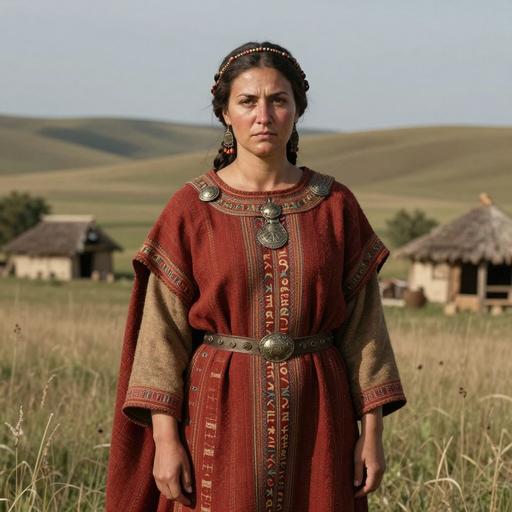
Portrait of ancient individual scy332 from Moldova, dated 250 CE - 411 CE
scy332
Moldova Scythian Period Glinoe, Moldova 250 CE - 411 CE Scythian M10a1a1a Direct
Portrait of ancient individual scy332 from Moldova, dated 250 CE - 411 CE
scy332
Moldova The Scythian Culture 250 CE - 411 CE M10a1a1a Direct
Chapter VI

Carrier Distribution Map

Geographic distribution of 2 ancient DNA samples carrying haplogroup M10A1A1A

Time Period Filter
All Time Periods
Showing all samples
Each marker represents an ancient individual
Chapter VII

Temporal Distribution

Distribution of carriers across archaeological periods

Chapter VIII

Geographic Distribution

Distribution of carriers by country of origin

Chapter IX

Country × Era Distribution

Cross-tabulation of carrier countries and archaeological periods

Data

Data & Provenance

Source information and data quality

Last Updated 2026-02-16
Confidence Score 50/100
Coverage Low
Data Source

We use the latest phylotree for MTDNA haplogroup classification and data.