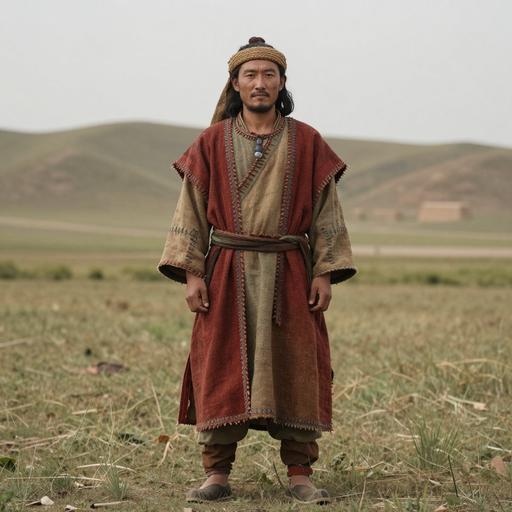
The Story
The journey of mtDNA haplogroup N9A3
Origins and Evolution
mtDNA haplogroup N9A3 is a downstream branch of the East Asian clade N9a, itself nested within macro-haplogroup N. Based on the phylogenetic position beneath N9a and comparative coalescent estimates for related subclades, N9A3 most likely differentiated in the early Holocene (roughly around 9 kya) following Late Pleistocene population re-expansions in East Asia. The lineage appears to have formed as small regional maternal lineages expanded and diversified during the period of climatic amelioration and the spread of early Holocene hunter-gatherer and early farming groups.
Diagnostic mutations that define N9A3 are located in both the mitochondrial coding region and control region; however, resolution of its internal structure remains limited because the clade is relatively rare and under-sampled compared with major East Asian lineages. As additional high-coverage mitogenomes from modern and ancient East Asia are generated, the internal topology and substructure of N9A3 will become clearer.
Subclades
Currently available data indicate that N9A3 is a small, geographically focused subclade with a few minor internal branches reported in mitogenome studies. These internal branches tend to be low-frequency and geographically restricted; therefore, N9A3 is often represented in literature as a terminal branch within N9a rather than a widely diversified cluster. Ongoing sequencing efforts may reveal additional sub-branches associated with particular regional populations or archaeological contexts.
Geographical Distribution
N9A3 is principally an East Asian lineage. Modern occurrences are reported at low to moderate frequencies among populations in eastern China, the Japanese archipelago, and the Korean Peninsula, with sporadic low-frequency appearances in Northeast Asian (Mongolic and Tungusic) groups, parts of Southeast Asia (coastal and southern China-influenced populations), and isolated records in Central Asia likely reflecting historical movement and admixture. Ancient DNA finds are limited but consistent with Holocene presence in East Asia, indicating continuity of some maternal lineages through the Neolithic into later periods.
Historical and Cultural Significance
Although N9A3 is not a high-frequency marker like some major East Asian haplogroups, its presence helps illuminate regional demographic processes. The timing and distribution of N9A3 are compatible with post-glacial re-expansion and subsequent Neolithic demographic events such as the spread of wet-rice agriculture and associated human movements across eastern China, the Korean Peninsula, and into Japan (Yayoi-associated migrations). Its low but persistent frequency across multiple East Asian populations suggests a role as a background maternal lineage carried by a range of prehistoric and historic cultural groups rather than a lineage tied to any single high-profile migration.
Conclusion
mtDNA haplogroup N9A3 is a modestly diverse, regionally focused East Asian maternal lineage that likely arose in the early Holocene and reflects local demographic expansions associated with post-glacial recovery and Neolithic processes in East Asia. Continued mitogenome sampling, especially from underrepresented regions and archaeological remains, will refine estimates of its age, substructure, and precise historical associations.
Key Points
- Origins and Evolution
- Subclades
- Geographical Distribution
- Historical and Cultural Significance
- Conclusion