The Story
The journey of mtDNA haplogroup N9A6
Origins and Evolution
mtDNA haplogroup N9A6 is a downstream subclade of the broadly distributed East Asian lineage N9a, which in turn derives from macro-haplogroup N. While the parent clade N9a likely arose during the Late Pleistocene (~20 kya) and diversified across East Asia, N9A6 appears to represent a Holocene branch that differentiated after the Last Glacial Maximum, probably during the early to mid-Holocene (several thousand years after the origin of N9a). Its time depth and phylogenetic position imply emergence associated with localized post-glacial population growth and subsequent cultural transitions such as the spread of regional Neolithic economies.
Subclades
High-resolution mtDNA sequencing has revealed that many N9a sublineages possess finer branching within East Asia; N9A6 is one such terminal or near-terminal branch detectable in whole-mitogenome studies. Depending on sampling depth, N9A6 may include minor internal branches (e.g., sample-specific or region-specific derivatives) but it is currently characterized as a relatively rare, geographically localized clade rather than a deeply diversified macro-lineage.
Geographical Distribution
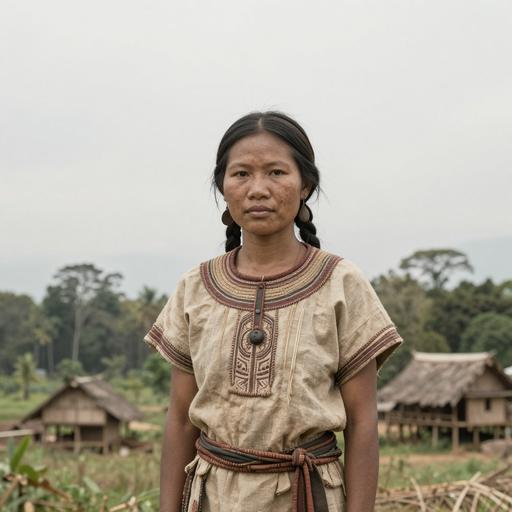
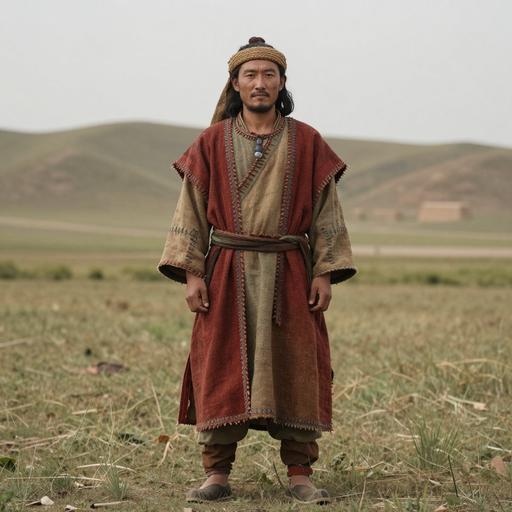
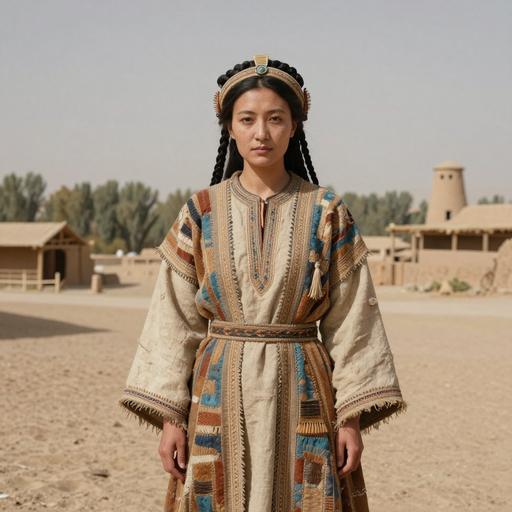
N9A6 is concentrated in East Asia at low to moderate frequencies and is sporadically observed in neighboring regions. Modern occurrences are reported among Han Chinese, Japanese, Koreans, and certain Tungusic-, Mongolic- and Tibeto-Burman-speaking groups, with occasional detections in Southeast and Central Asian populations—often at low frequencies. The clade has also been identified in at least two Holocene ancient DNA samples, confirming its presence in archaeological contexts within East Asia. Its distribution pattern is consistent with a lineage that expanded locally during the Holocene and was carried along regional interaction networks (coastal migration routes, river valleys, and farming expansions).
Historical and Cultural Significance
The demographic history inferred for N9A6 mirrors broader patterns seen in East Asian maternal lineages: a Pleistocene root (via N9a) followed by Holocene diversification and localized expansions. N9A6's presence in populations associated with Neolithic agricultural transitions (rice- and millet-farming regions) suggests it may have been part of the maternal substrate of early farming communities or of forager–farmer admixture events. Its low frequency and patchy appearance also indicate that N9A6 was not a primary driver of regional population expansions but rather one of many maternal lineages persisting through demographic shifts.
Conclusion
N9A6 is best understood as a geographically focused, Holocene-age subclade of N9a that contributes to the maternal genetic diversity of East Asia. Although not a high-frequency or widely expanding lineage, its detection in both contemporary populations and ancient samples makes it useful for fine-scale studies of maternal ancestry, local demographic history, and migration events within East Asia. Continued mitogenome sequencing and broader ancient DNA sampling will clarify its internal structure and more precise population-level dynamics.
Key Points
- Origins and Evolution
- Subclades
- Geographical Distribution
- Historical and Cultural Significance
- Conclusion