The Story
The journey of mtDNA haplogroup N9A9
Origins and Evolution
mtDNA haplogroup N9A9 is a subclade within the broader N9a maternal lineage, itself a branch of macro-haplogroup N. Given the position of N9A9 nested under N9a (which is estimated to have originated around the Late Pleistocene, ~20 kya), N9A9 most plausibly represents a Neolithic (early Holocene) diversification of maternal lineages in East Asia. The estimated time of origin for N9A9 (~8 kya) places it in the period of growing sedentary farming and post-glacial population expansions in East Asia, consistent with the pattern of many regional mtDNA subclades that emerged as human groups expanded and differentiated locally.
Phylogenetically, N9A9 is defined by private/derived control-region and coding-region mutations that distinguish it from other N9a sublineages. As with many fine-scale mtDNA branches, resolution and confidence in the internal structure of N9A9 depend on the availability of full mitogenomes; targeted whole-mitogenome sequencing and ancient DNA are the primary ways this clade's internal topology will be clarified further.
Subclades (if applicable)
Current haplogroup catalogs show that N9A9 is a relatively narrow, derived branch under N9a. Published datasets and public mtDNA tree builds indicate only a small number of recognized downstream branches or private-lineage clusters within N9A9, and some reported sequences may remain provisionally assigned until full mitogenome confirmation. In practice, N9A9 behaves as a localized maternal cluster with limited internal substructure visible in population samples so far; further sequencing of complete mitogenomes and inclusion of ancient samples could reveal additional subclades.
Geographical Distribution
N9A9 is principally an East Asian maternal lineage with its highest frequencies and greatest haplotype diversity within mainland East Asia and the Japanese archipelago. Modern occurrences are concentrated among:
- Han Chinese regional groups (particularly eastern and northeastern provinces)
- Japanese populations (mainland Honshu and some regional groups)
- Korean populations across the peninsula
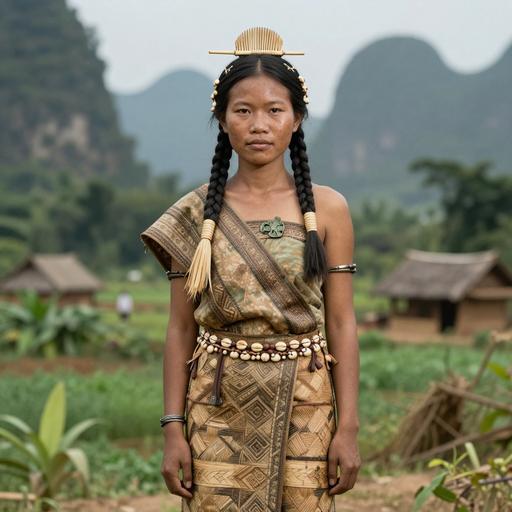
Lower-frequency occurrences extend into nearby regions such as Tibeto-Burman-speaking groups, Mongolic/Tungusic populations of Northeast Asia, parts of Southeast Asia (coastal and southern China-adjacent populations), and sporadically into Central Asian groups with East Asian admixture. The pattern — concentrated in East Asia with scattered peripheral occurrences — is consistent with a lineage that diversified regionally after the Last Glacial Maximum and experienced local expansions connected to Holocene demographic processes.
Historical and Cultural Significance
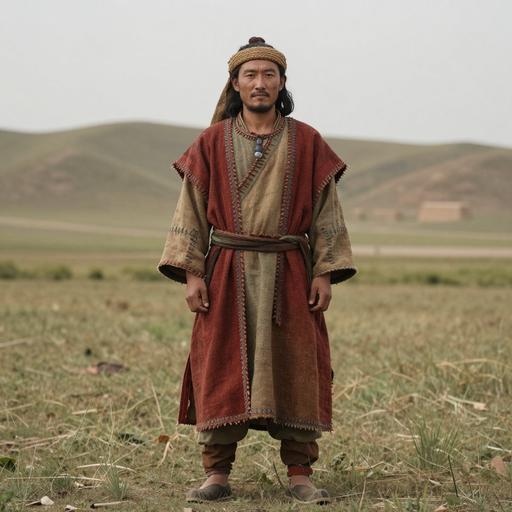
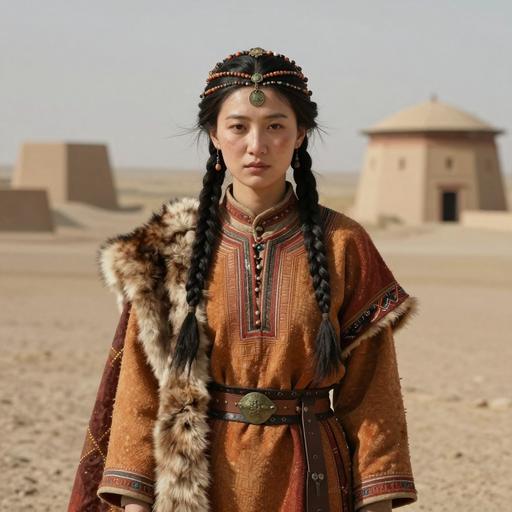
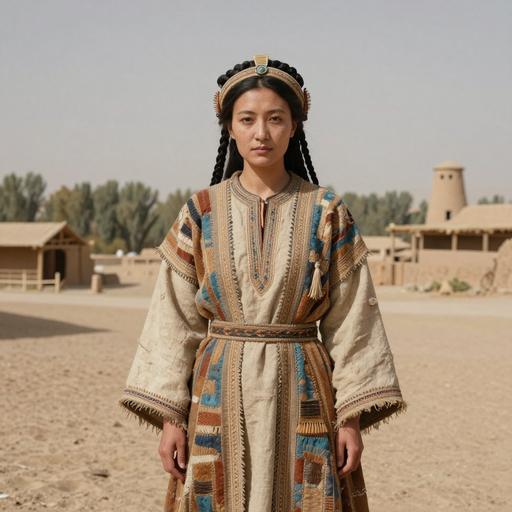
Although N9A9 itself is not associated exclusively with a single major archaeological culture, its inferred Neolithic origin and present-day distribution tie it to the broader story of Holocene population growth and the spread of farming in East Asia. Possible cultural associations include:
- Participation in early Neolithic farmer expansions in the Yellow River and adjacent regions, where maternal lineages related to N9a show increased frequency in Neolithic and post-Neolithic samples.
- Presence in later migratory and contact events, such as movements that contributed to the peopling of the Japanese archipelago in the Yayoi period and gene flow across the Korean peninsula.
Because N9A9 is relatively low-frequency and regionally concentrated, it is most informative when combined with other genetic markers (other mtDNA haplogroups, Y-DNA lineages and autosomal components) and archaeological context to reconstruct demographic history.
Conclusion
N9A9 represents a fine-scale, East Asian-derived maternal lineage that likely arose in the early Holocene and reflects local diversification during Neolithic and post-Neolithic population processes. Current knowledge is limited by the number of complete mitogenomes and ancient samples assigned to this clade; ongoing sequencing and ancient DNA studies in East Asia will improve resolution, clarify subclade structure, and better define its role in past demographic events.
Key Points
- Origins and Evolution
- Subclades (if applicable)
- Geographical Distribution
- Historical and Cultural Significance
- Conclusion