The Story
The journey of mtDNA haplogroup T2B4F
Origins and Evolution
mtDNA haplogroup T2B4F is a downstream lineage of T2B4, itself a branch of the broader haplogroup T2. The parent clade T2B4 is thought to have formed on the Near Eastern / Mediterranean margin during the early postglacial or Neolithic period (around 8 kya), and T2B4F represents a later split within that regional cluster. As with many T2 subclades, T2B4F most likely arose among populations connected to the early farming expansions originating in Anatolia/Levant and subsequently spread along Mediterranean and inland routes during the Neolithic and later periods.
Like other fine-scale mtDNA subclades, T2B4F is defined by one or more private mutations on top of the canonical T2/T2B4 motif; those private variants permit recognition in modern and ancient mitogenomes but also mean that the clade often appears at low absolute frequency in any single population.
Subclades
T2B4F itself is a terminal or near-terminal branch in currently available phylogenies (i.e., it is a relatively deep sublineage of T2B4 but not known to split into many common named subclades). Where further internal diversity exists it is generally rare and geographically localized. Continued mitogenome sequencing of diverse populations may reveal additional downstream branches (T2B4F1, T2B4F2, etc.) that clarify microgeographic structure and migration histories.
Geographical Distribution
The distribution of T2B4F mirrors that of its parent but at lower frequencies: it is most often detected in southern and parts of central Europe (Italy, Iberia, the Balkans), the Near East (Anatolia, Levant) and at lower levels in North Africa and the Caucasus, with sporadic occurrences reported in Central Asia and within certain Jewish maternal lineages (including some Ashkenazi-related samples). Contemporary sampling and ancient DNA evidence remain sparse for this specific subclade; our database indicates T2B4F has been identified in at least one archaeological mitogenome, consistent with a Neolithic or later prehistoric appearance and persistence in the Mediterranean region.
The pattern — focal concentrations in the Mediterranean/Near Eastern fringe with scatterings inland — is consistent with a lineage that expanded during the Neolithic and was subsequently carried by episodic migrations, trade, and population movement (Bronze Age connectivity, historical trade networks, and later diasporas).
Historical and Cultural Significance
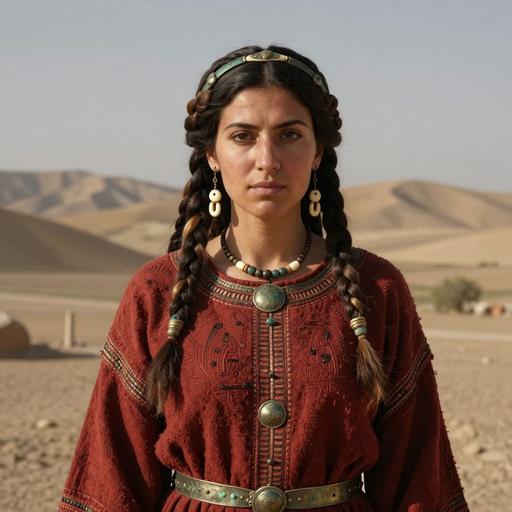
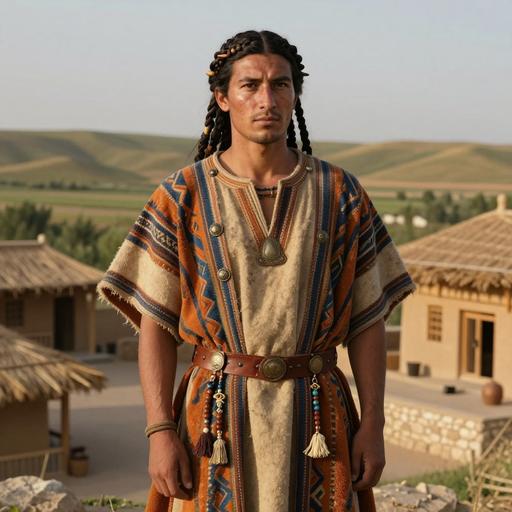
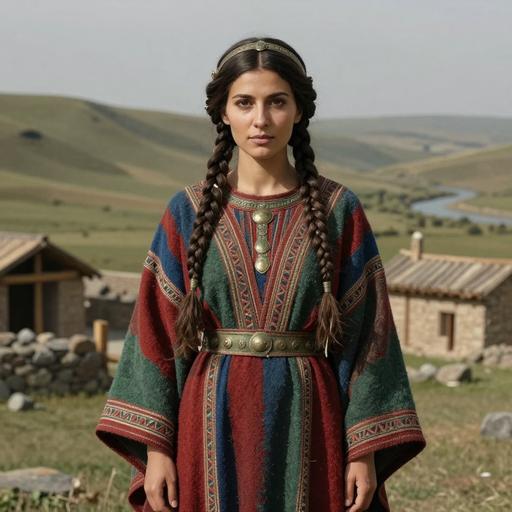
Because T2 and its subclades are frequently associated with early farming communities migrating out of Anatolia into Europe, T2B4F is best interpreted as part of the maternal legacy of Neolithic demographic processes in the Mediterranean and adjacent regions. It is therefore relevant to studies of the spread of agriculture, coastal Neolithic dispersal (e.g., Cardial/Impressed Ware-related movements), and later cultural interactions across the Mediterranean and into the Balkans and central Europe.
The low frequency of T2B4F in most modern populations means it rarely dominates cultural-archaeological narratives, but its presence in both modern and ancient samples can provide useful high-resolution markers for tracing matrilineal connections between archaeological sites and modern communities, and for detecting localized founder events or bottlenecks.
Conclusion
T2B4F is a relatively rare, geographically informative subclade of T2B4 whose origin on the Near Eastern/Mediterranean fringe in the early Holocene links it to Neolithic expansion processes. Its sporadic modern and ancient distribution across southern and central Europe, the Near East and North Africa makes it a useful marker for fine-scale maternal ancestry studies in the Mediterranean-Middle Eastern corridor, and further mitogenome sampling (especially of archaeological remains) will improve resolution of its internal structure and migration history.
Key Points
- Origins and Evolution
- Subclades
- Geographical Distribution
- Historical and Cultural Significance
- Conclusion