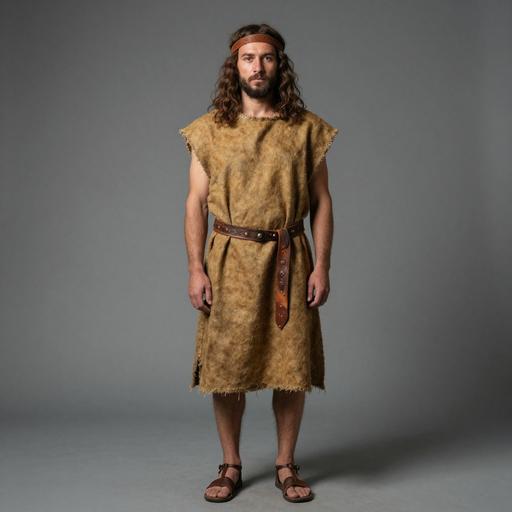
The Story
The journey of mtDNA haplogroup T2D
Origins and Evolution
Haplogroup T2D is a downstream branch of mtDNA haplogroup T2, which itself is nested within the broader JT lineage. T2 likely diversified after the Last Glacial Maximum in or near the Near East, and many of its subclades expanded during the postglacial and Neolithic periods. T2D appears to have arisen after the primary split of T2, probably in the early to mid-Holocene (roughly within the last ~9 thousand years), consistent with an origin centered on Anatolia or nearby regions of the Near East. Its emergence fits the pattern of localized diversification from a Near Eastern maternal gene pool that contributed to the Neolithic spread of agriculture into Europe.
Subclades (if applicable)
T2D is a relatively rare and shallow subclade compared with some other T2 branches (e.g., T2b). Published phylogenies and population surveys indicate limited internal diversity within T2D in present-day and ancient samples, suggesting a comparatively recent origin and localized expansions. Where internal branches exist, they are typically geographically restricted and seen at low frequencies in modern populations; comprehensive resolution often requires full mitogenome sequencing to distinguish sublineages.
Geographical Distribution
T2D is detected primarily in populations with ties to Near Eastern and European Neolithic ancestries. Modern and ancient DNA studies recover T2D at low-to-moderate frequencies across:
- Southern, Central, and Eastern Europe (reflecting Neolithic and later gene flow)
- The Near East and Anatolia (likely origin and persistence)
- North Africa at lower frequencies (coastal and historic contacts)
- The Caucasus and parts of Central Asia (minor presence)
- Some Jewish communities, notably among Ashkenazi lineages where rare maternal T2 subclades are observed
The distribution pattern supports a model in which T2D originated in or near Anatolia and spread with farming communities into Europe, later maintained by local population continuity and subsequent demographic processes.
Historical and Cultural Significance
Because T2D aligns with the broader T2 signal found in many Neolithic contexts, it is often interpreted as part of the mitochondrial legacy of early farmers who expanded from Anatolia into Europe during the Early Neolithic. Archaeogenetic datasets have repeatedly linked T2 and several of its subclades to Neolithic archaeological cultures (for example, Cardial/Impressed Ware and LBK-related contexts), and T2D fits this general association even when it is not one of the most common lineages. Its occasional appearance in Jewish and North African samples also reflects later historical migrations, trade, and population admixture across the Mediterranean and Near Eastern corridors.
Conclusion
T2D is an informative, though uncommon, maternal lineage that illustrates the Near Eastern roots of a portion of European Neolithic maternal ancestry. Its geographic pattern and limited internal diversity are consistent with a Holocene origin tied to the spread of farming out of Anatolia, followed by local persistence and episodic dispersal into adjacent regions. Full mitogenome data and increased ancient DNA sampling will continue to clarify the finer-scale phylogeny and migration history of this subclade.
Key Points
- Origins and Evolution
- Subclades (if applicable)
- Geographical Distribution
- Historical and Cultural Significance
- Conclusion