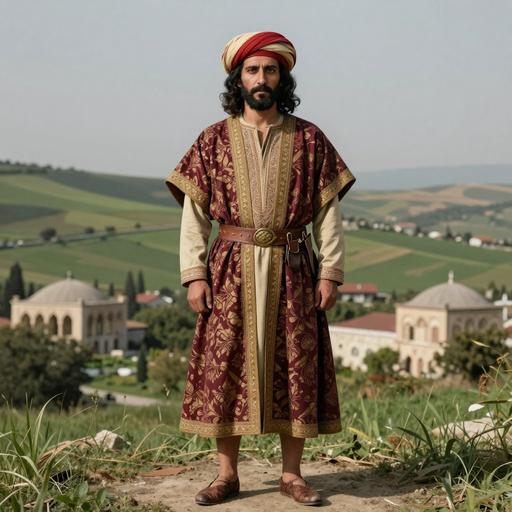
The Story
The journey of mtDNA haplogroup U4A1D
Origins and Evolution
U4A1D is a downstream branch of mtDNA haplogroup U4A1, itself a subclade of U4 — a lineage strongly linked to post‑glacial northern Eurasian maternal ancestry. Based on the phylogenetic position beneath U4A1 and the time depth of its parent clade, U4A1D likely originated in the early Holocene (roughly ~9 kya) within northern or north‑eastern Eurasia. Its emergence fits the pattern of diversification that occurred as Mesolithic hunter‑gatherer groups expanded and re‑established populations across formerly glaciated areas after the Last Glacial Maximum.
Subclades (if applicable)
At present, U4A1D is treated as a defined subclade of U4A1; depending on future full mitogenome surveys and ancient DNA discoveries, finer substructure may be resolved beneath U4A1D. Because U4 lineages have been well sampled in both ancient and modern northern Eurasian populations, additional sequenced mitogenomes could reveal further internal branches specific to geographic pockets (for example, Baltic, Fennoscandian or north Siberian subbranches).
Geographical Distribution
Modern and ancient detections of U4A1D follow the general distribution of U4A1: highest relative frequencies occur in northern and eastern Europe (Scandinavia, Finland, NW Russia), with measurable presence in indigenous Siberian groups and isolated, low‑frequency occurrences in Central Asia and the Caucasus. The haplogroup is therefore informative for tracing maternal continuity among Mesolithic and later populations in the boreal and sub‑arctic belt. Limited ancient DNA hits (two samples in the referenced database) indicate U4A1D occurs in archaeological contexts, consistent with persistence of U4 maternal lineages through the Holocene in northern Eurasia.
Historical and Cultural Significance
U4A1D and related U4 subclades are commonly interpreted as markers of Mesolithic/early Holocene hunter‑gatherer ancestry in northern Europe and parts of Siberia. The lineage's distribution overlaps archaeological horizons associated with post‑glacial recolonization (early Mesolithic) and with later cultural complexes in the northeast Baltic and Fennoscandia (for example, Comb Ceramic/Comb Ware related groups). While U4 lineages are less typical of early Neolithic farmer expansions, they often persist through admixture, so U4A1D can be used to track continuity of indigenous maternal ancestry into Neolithic, Bronze Age, and modern populations in the north. Co‑occurrence with Y‑DNA lineages common among northern Eurasian groups (e.g., I2, R1a, and Uralic‑associated N1c in later contexts) strengthens its value for reconstructing demographic processes in the region.
Conclusion
U4A1D is a northern Eurasian maternal lineage that likely arose in the early Holocene as part of the broader diversification of U4 lineages after the Last Glacial Maximum. Its modern and ancient occurrences—concentrated in northern and eastern Europe with weaker signals in Siberia and Central Asia—make it a useful haplogroup for studies of Mesolithic continuity, post‑glacial recolonization routes, and the maternal genetic landscape of boreal Eurasia. Continued mitogenome sequencing and ancient DNA sampling in underrepresented regions will clarify its internal structure and finer geographic history.
Key Points
- Origins and Evolution
- Subclades (if applicable)
- Geographical Distribution
- Historical and Cultural Significance
- Conclusion