The Story
The journey of mtDNA haplogroup U4A1F
Origins and Evolution
mtDNA haplogroup U4A1F is a downstream branch of U4A1, itself a branch of the broader U4 clade. U4 lineages are strongly associated with post-glacial northern Eurasian maternal ancestry and with Mesolithic hunter-gatherer populations of Europe and western Siberia. Given the parentage (U4A1 ~12 kya) and phylogenetic position, U4A1F most plausibly arose during the Early Holocene (roughly the second half of the Mesolithic) as small, regionally restricted maternal lineages diversified following the Last Glacial Maximum and during the post-glacial recolonization of northern latitudes.
Divergence of U4A1F from sibling lineages would have been driven by population structure in northern Eurasia, founder effects, and local demographic processes (small population sizes, patrilocal residence patterns in some groups) that preserved rare maternal lineages across generations.
Subclades (if applicable)
At present U4A1F appears to be a relatively terminal or low-diversity subclade when compared with higher-level U4 branches. Publicly reported instances are sparse, so documented internal subclades (U4A1F1, etc.) are either rare or not yet robustly resolved in the literature and large databases. As ancient and modern mtDNA sampling expands, new internal branches could be defined; currently it is best treated as an intermediate/rare terminal lineage within U4A1.
Geographical Distribution
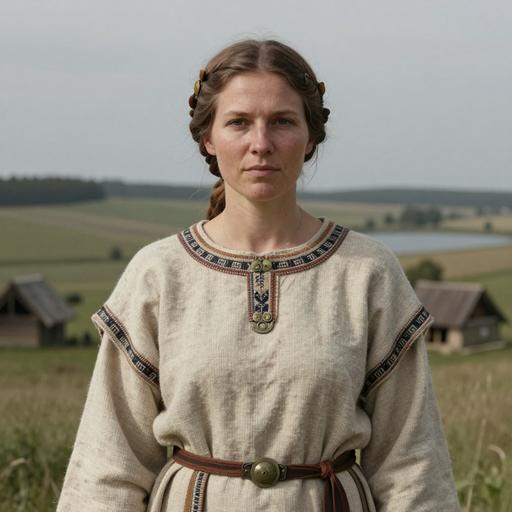
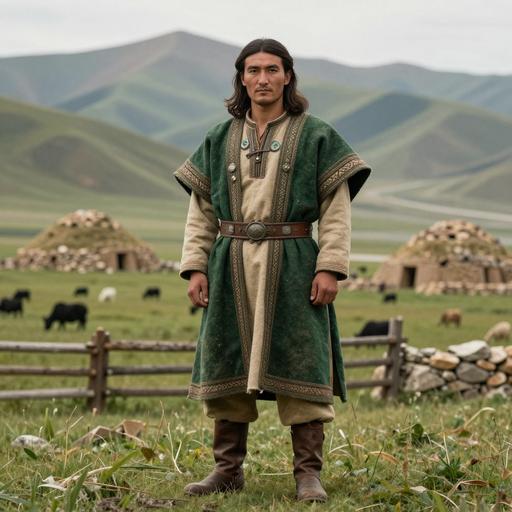
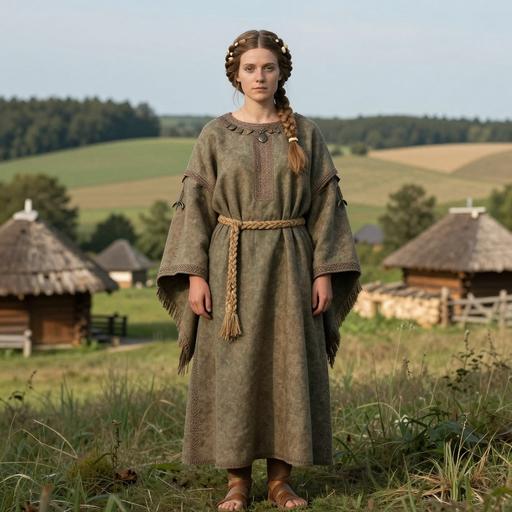
U4A1F is detected at low to moderate frequencies in northern and eastern Europe and at low frequencies in parts of north Asia. The geographic footprint follows the general pattern expected for U4A1-derived lineages: concentration among populations with substantial Mesolithic hunter-gatherer ancestry (e.g., Scandinavia, Finland, northern Russia) with spillover into indigenous Siberian groups and occasional low-frequency finds in Central Asia and the Caucasus. Modern occurrences are patchy and often at low frequency, consistent with a lineage that persisted in place or spread locally rather than undergoing a broad demographic expansion.
Historical and Cultural Significance
Because of its association with U4A1, U4A1F is useful as a marker of Mesolithic and post-glacial maternal ancestry in northern Eurasia. It complements autosomal and archaeological evidence for recolonization of northern Europe after the Ice Age. While U4 lineages more broadly have been observed in both pre-Neolithic hunter-gatherers and in some later Bronze Age and historic contexts (reflecting population continuity and admixture), U4A1F itself has not been demonstrated to be a major driver of large migrations such as the Bronze Age steppe expansions; rather it serves as a tracer of local maternal continuity and microdemographic histories.
Ancient DNA studies that include dense mitochondrial sampling are the best way to clarify whether U4A1F appears in Mesolithic remains, persists through the Neolithic in certain regions, or shows later re-introductions. Until sampling improves, interpretations should be cautious: presence in a modern population indicates maternal continuity or gene flow, but low frequency limits strong demographic conclusions.
Conclusion
U4A1F is a geographically focused, low-frequency mtDNA lineage nested within the U4A1 clade. It most likely arose in Northern Eurasia during the Early Holocene and is valuable for reconstructing fine-scale maternal histories of Mesolithic and post-glacial populations in northern and eastern Europe and adjacent Siberia. Continued ancient and modern mtDNA sequencing will be required to resolve its internal structure, precise age, and the full extent of its historical distribution.
Key Points
- Origins and Evolution
- Subclades (if applicable)
- Geographical Distribution
- Historical and Cultural Significance
- Conclusion