The Story
The journey of mtDNA haplogroup U4B1A1A
Origins and Evolution
mtDNA haplogroup U4B1A1A is a downstream subclade of U4B1A1, which itself sits within the broader European-centered U4 haplogroup. The wider U4 lineage is associated with postglacial Mesolithic hunter-gatherer populations of northern and eastern Europe. Given its phylogenetic position below U4B1A1 (a lineage estimated to have arisen around the Early to Mid Holocene), U4B1A1A most plausibly arose in Northern/Eastern Europe during the Late Neolithic to Early Bronze Age (roughly 4–5 kya). Its emergence likely reflects further diversification within long-standing northern maternal lineages during periods of demographic change, including local population continuity and limited regional expansions.
Subclades (if applicable)
At present U4B1A1A is a relatively terminal or narrowly defined subclade with limited downstream resolution in published datasets. Because sampling of rarer mtDNA subclades in both modern and ancient DNA remains incomplete, additional sub-branches could be discovered with denser sequencing of understudied northern and eastern Eurasian populations. Current evidence treats U4B1A1A as a fine-scale lineage useful for tracing localized maternal ancestry rather than as a broad, high-frequency clade.
Geographical Distribution
U4B1A1A is observed principally in northern and eastern parts of Eurasia at low to moderate frequency, with sporadic detections further afield. Modern occurrences are most often reported from populations in Scandinavia, the Baltic region, northwest Russia and adjacent areas of northeastern Europe; it is also found at low frequency among some Siberian and northern Eurasian indigenous groups, and occasionally in Central Asia and the Caucasus, likely reflecting long-distance gene flow or small-scale migrations. In ancient DNA, U4-related lineages (including close subclades) appear in Mesolithic through Bronze Age contexts across northern Europe and adjacent regions; U4B1A1A itself has been observed only rarely in archaeological samples, consistent with a low-frequency but persistent maternal lineage.
Historical and Cultural Significance
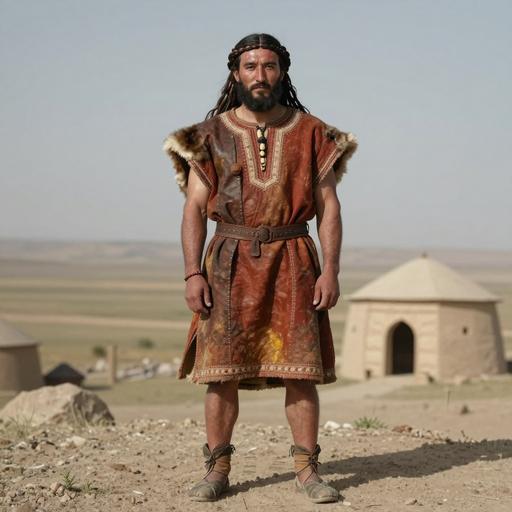
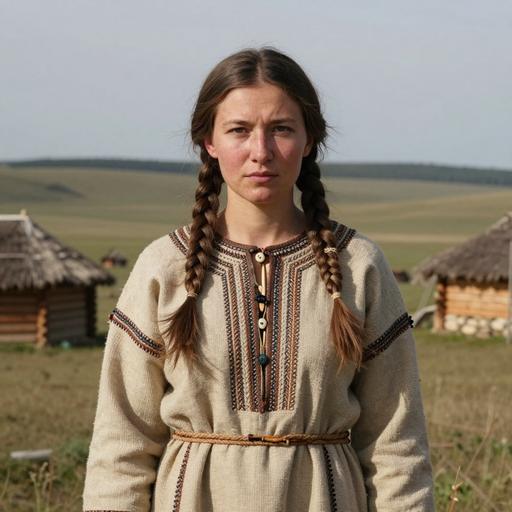
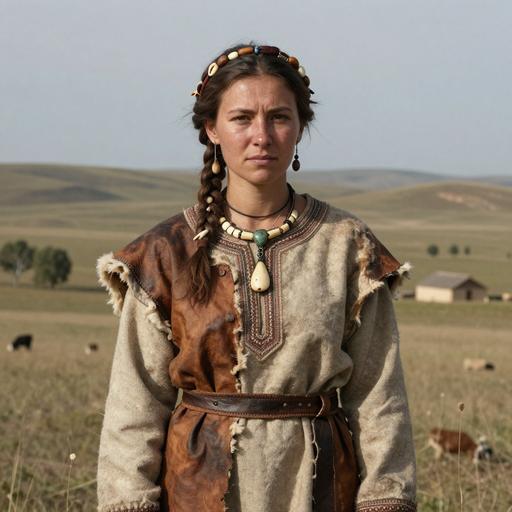
Because U4 and its subclades are strongly associated with European hunter-gatherer populations, U4B1A1A likely represents the continued presence and local diversification of these maternal lineages into later prehistoric periods. It may be encountered in archaeological contexts linked to regional hunter-gatherer traditions and later to groups interacting with incoming farming or steppe-associated populations. Relevant archaeological cultures where U4 and related subclades are found or associated include Comb Ceramic / Narva-type hunter-gatherers (representing persistent Mesolithic-Neolithic forager groups) and later societies such as populations connected with Corded Ware and steppe-associated horizons, where U4 appears intermittently due to admixture and regional continuity.
Conclusion
U4B1A1A is a low-frequency, regionally informative mtDNA lineage that refines the history of the broader U4 maternal cluster in northern and eastern Europe. It is best interpreted as a marker of localized maternal continuity stemming from postglacial hunter-gatherer populations, with limited evidence for major demographic expansions uniquely tied to this subclade. Increased sampling of both modern populations in northern Eurasia and high-resolution ancient mtDNA will clarify its finer-scale phylogeography and temporal depth.
Key Points
- Origins and Evolution
- Subclades (if applicable)
- Geographical Distribution
- Historical and Cultural Significance
- Conclusion