Menu
mtDNA Haplogroup • Maternal Lineage

U6A1B

mtDNA Haplogroup U6A1B

~6,000 years ago
Maghreb (North Africa)
3 subclades
6 ancient samples
Scroll to explore
Chapter I

The Story

The journey of mtDNA haplogroup U6A1B

Origins and Evolution

U6A1B is a derived subclade of mtDNA haplogroup U6A1, itself part of the broader U6 lineage associated with North African maternal ancestry. Based on the phylogenetic position beneath U6A1 and the time-depth of its parent clade, U6A1B most plausibly arose in the Maghreb during the mid-Holocene (roughly ~6 kya in our estimate). Its emergence fits a pattern of local diversification of U6 lineages in Northwest Africa as populations adapted to post-glacial and early-Holocene environmental and cultural changes.

Because U6A1B is a relatively deep but low-frequency branch, its internal diversity appears limited in modern surveys, suggesting either a modest original founder population or subsequent demographic processes (bottlenecks, drift, or limited outward expansion) that have kept it uncommon outside its core area.

Subclades (if applicable)

At present U6A1B is treated as a discrete subclade under U6A1 with only limited resolution reported in public datasets. There is little evidence for a broad hierarchical substructure within U6A1B from published population screens, implying that either (a) the clade is young and/or (b) surviving diversity is low because of demographic drift. Future high-coverage mitogenomes may reveal deeper branching within U6A1B, but current data support it as a minor, geographically-focused branch rather than a large radiation with many named downstream subclades.

Geographical Distribution

U6A1B is concentrated in Northwest Africa (the Maghreb), where U6 lineages in general are most frequent. Modern occurrences of U6A1B and closely related U6A1 lineages are recorded in:

  • Berber-speaking populations of Morocco, Algeria and Tunisia where U6 lineages form part of a characteristic Maghrebi maternal profile.
  • The indigenous Guanche of the Canary Islands, reflecting prehistoric maritime or littoral connections between the western Maghreb and the archipelago.
  • Southwestern Iberia (southern Spain and Portugal) and other Mediterranean coastal pockets at low frequencies, consistent with Neolithic-to-historic connections across the western Mediterranean.
  • Scattered, low-frequency appearances in parts of East Africa and the Near East, reflecting older or later gene-flow episodes involving North African maternal lineages.

The overall pattern is one of Maghrebi concentration with limited coastal dispersals rather than wide continental spread.

Historical and Cultural Significance

U6A1B contributes to the genetic signature commonly associated with autochthonous North African (Maghrebi) populations. Its presence in the Canary Islands (Guanche) and southern Iberia ties it to prehistoric and historic cross-Mediterranean contacts — including maritime movements of people, goods and genes during the Holocene. In the Maghreb, U6 lineages in general have been discussed in population-genetics literature as markers of long-term continuity in the region, with later episodic inputs from Europe and the Near East superimposed on this substrate.

Archaeologically, U6A1B is most plausibly linked with post-glacial and Holocene cultural trajectories in Northwest Africa (for example, Mesolithic/Neolithic transitions and Capsian-related contexts), and later it may have moved in small numbers with populations that colonized the Canary Islands and engaged in coastal exchange with Iberia. Its limited frequency outside North Africa means it is a useful, though not exclusive, indicator of Maghrebi maternal ancestry in modern and ancient samples.

Conclusion

U6A1B is a locally rooted Maghrebi mtDNA subclade that arose from the wider U6A1 lineage during the mid-Holocene. It exemplifies the pattern of regional maternal diversification in Northwest Africa, with restricted but archaeologically and historically meaningful dispersals into the Canary Islands, Iberia and nearby regions. Continued mitogenome sequencing and ancient DNA sampling in North Africa and adjacent regions will refine dates, internal structure, and the full geographic reach of this lineage.

Key Points

  • Origins and Evolution
  • Subclades (if applicable)
  • Geographical Distribution
  • Historical and Cultural Significance
  • Conclusion
Chapter II

Tree & Relationships

Phylogenetic context and subclades

Evolution Path

This haplogroup's evolutionary journey from its earliest ancestor to the present.

Steps Haplogroup Age Estimate Archaeology Era Time Passed Immediate Descendants Tested Modern Descendants Ancient Connections
1 U6A1B Current ~6,000 years ago 🪨 Chalcolithic 6,000 years 3 10 6
2 U6A1 ~12,000 years ago 🌾 Neolithic 12,000 years 2 29 0
3 U6A ~22,000 years ago 🏹 Mesolithic 22,000 years 6 76 5
4 U6 ~35,000 years ago 🦴 Paleolithic 35,000 years 4 117 10
5 U ~46,000 years ago 🦴 Paleolithic 46,000 years 12 2,835 110
6 R ~60,000 years ago 🦴 Paleolithic 60,000 years 12 10,987 57
7 N ~60,000 years ago 🦴 Paleolithic 60,000 years 15 15,452 13
8 L3 ~70,000 years ago 🦴 Paleolithic 70,000 years 11 17,621 6
9 L ~160,000 years ago 🦴 Paleolithic 160,000 years 7 18,987 5

Siblings (1)

Other branches from the same parent haplogroup

Chapter III

Where in the World

Geographic distribution and modern presence

Place of Origin

Maghreb (North Africa)

Modern Distribution

The populations where mtDNA haplogroup U6A1B is found include:

  1. North African Berber populations (Morocco, Algeria, Tunisia)
  2. Indigenous Guanche of the Canary Islands
  3. Iberian Peninsula (southwestern Spain and Portugal)
  4. East African populations (Ethiopia, Somalia) at low frequencies
  5. Near Eastern populations at low frequencies
  6. Sporadic presence in Mediterranean coastal populations (southern France, Sicily)
CHAPTER IV

When in Time

Your haplogroup in the context of human history

~10k years ago

Neolithic Revolution

Agriculture begins, settled communities form

~6k years ago

Haplogroup U6A1B

Your mtDNA haplogroup emerged in Maghreb (North Africa)

Maghreb (North Africa)
~5k years ago

Bronze Age

Metalworking, writing, and early civilizations

~3k years ago

Iron Age

Iron tools, expanded trade networks

~2k years ago

Classical Antiquity

Greek and Roman civilizations flourish

Present

Present Day

Modern era

Your Haplogroup
Historical Era
Chapter IV-B

Linked Cultures

Ancient cultures associated with mtDNA haplogroup U6A1B

Cultural Heritage

These ancient cultures have been linked to haplogroup U6A1B based on matching ancient DNA samples from archaeological excavations. The presence of this haplogroup in these cultures provides insights into the migrations and population movements of populations carrying this haplogroup.

English Jewish Himeran Greek Iberomaurusian Ifri n'Amr Kaf Taht el-Ghar Moroccan Early Neolithic Moroccan Transitional Peștera Muierii
Culture assignments are based on archaeological context of ancient DNA samples and may represent regional associations during specific time periods.
Chapter V

Sample Catalog

Top 6 ancient DNA samples directly related to haplogroup U6A1B or parent clades

6 / 6 samples
Portrait Sample Country Era Date Culture mtDNA Match
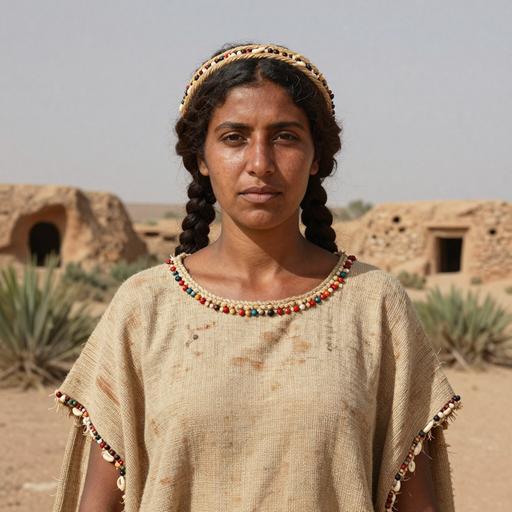
Portrait of ancient individual I17879 from Italy, dated 500 BCE - 400 BCE
I17879
Italy Sicilian Greek (Himera) 500 BCE - 400 BCE Himeran Greek U6a1b2 Direct
Portrait of ancient individual IAM.4 from Morocco, dated 4348 BCE - 4171 BCE
IAM.4
Morocco Early Neolithic Era in Morocco 4348 BCE - 4171 BCE Moroccan Early Neolithic U6a1b Direct
Portrait of ancient individual IAM.4.plus.5 from Morocco, dated 5211 BCE - 5010 BCE
IAM.4.plus.5
Morocco Epipalaeolithic-Neolithic Transition in Morocco 5211 BCE - 5010 BCE Moroccan Transitional U6a1b6 Direct
Portrait of ancient individual IAM.4.plus.5 from Morocco, dated 5211 BCE - 5010 BCE
IAM.4.plus.5
Morocco Neolithic North Africa 5211 BCE - 5010 BCE U6a1b6 Direct
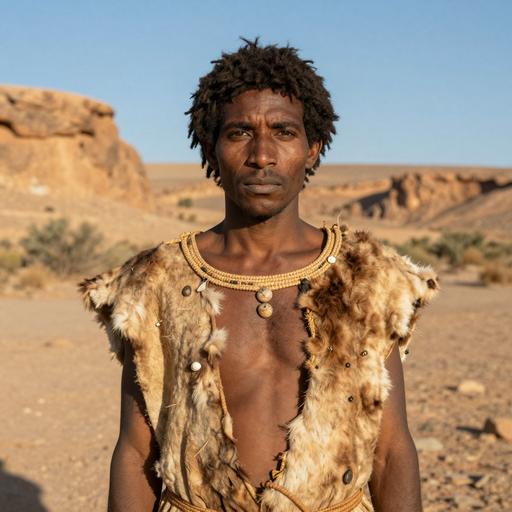
Portrait of ancient individual TAF015 from Morocco, dated 13200 BCE - 11900 BCE
TAF015
Morocco Iberomaurusian Era in Morocco 13200 BCE - 11900 BCE Iberomaurusian U6a1b Direct
Portrait of ancient individual TAF015 from Morocco, dated 13200 BCE - 11900 BCE
TAF015
Morocco The Iberomaurusian Culture 13200 BCE - 11900 BCE U6a1b Direct
Chapter VI

Carrier Distribution Map

Geographic distribution of 6 ancient DNA samples carrying haplogroup U6A1B

Time Period Filter
All Time Periods
Showing all samples
Each marker represents an ancient individual
Chapter VII

Temporal Distribution

Distribution of carriers across archaeological periods

Chapter VIII

Geographic Distribution

Distribution of carriers by country of origin

Chapter IX

Country × Era Distribution

Cross-tabulation of carrier countries and archaeological periods

Data

Data & Provenance

Source information and data quality

Last Updated 2026-02-16
Confidence Score 50/100
Coverage Low
Data Source

We use the latest phylotree for MTDNA haplogroup classification and data.