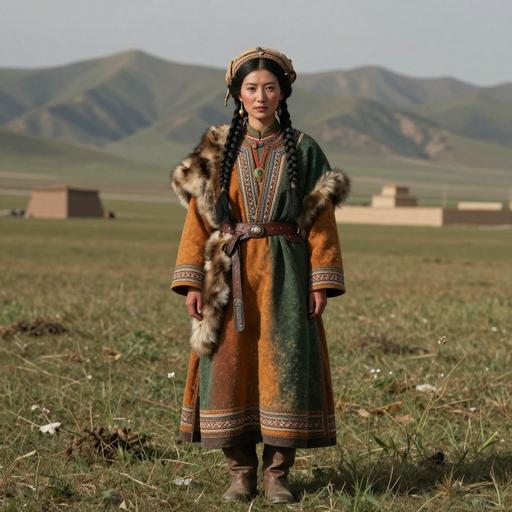
The Story
The journey of mtDNA haplogroup U6A1B6
Origins and Evolution
mtDNA haplogroup U6A1B6 is a derived sublineage nested within U6A1B, itself a branch of the broader U6 clade. The U6 haplogroup is widely interpreted in population genetics as a marker of maternal lineages that became established in North Africa following a Holocene or late Pleistocene backflow from Eurasia; subsequent diversification in the Maghreb produced multiple regional subclades. U6A1B6 is best explained as a mid‑Holocene (around 6 kya) Maghrebi founder lineage that emerged locally from U6A1B and remained at low to moderate frequencies in Berber populations while producing limited outward dispersals.
Subclades (if applicable)
U6A1B6 is itself a terminal or low‑diversity branch in current mtDNA phylogenies (only a small number of private mutations define it), and no widely recognized downstream named subclades with broad geographic spread have been reported to date. Because it is a minor lineage, available data suggest a shallow internal structure; future sequencing of additional modern and ancient mitogenomes could reveal finer substructure or recently derived offshoots.
Geographical Distribution
The highest relative concentration of U6A1B6 occurs in the Maghreb among Berber‑associated populations (Morocco, Algeria, Tunisia), consistent with an origin in the region. The haplogroup is also documented in the indigenous Guanche of the Canary Islands, indicating prehistorical or early‑historic trans‑Atlantic island colonization by North African maternal lineages. Low‑frequency occurrences in southwestern Iberia (southern Spain and Portugal), scattered Mediterranean coastal sites (southern France, Sicily), parts of the Near East, and selected East African populations (e.g., the Horn of Africa) point to episodic dispersals across the western Mediterranean and along maritime routes. The presence of U6A1B6 in two archaeogenetic samples confirms its appearance in archaeological contexts and supports continuity of this lineage in the region through time.
Historical and Cultural Significance
While U6A1B6 is not a high‑frequency marker, its distribution is informative about maternal population movements linking North Africa with adjacent regions. Its occurrence in the Canary Islands ties it to the indigenous Guanche population and reinforces archaeological and linguistic evidence of a Maghrebi origin for those islanders. Low levels in southwestern Iberia are compatible with prehistoric contact across the Strait of Gibraltar (late Mesolithic to Neolithic and later interactions), Phoenician and other Mediterranean seafaring contacts, and historical movements (e.g., Islamic period connections across the western Mediterranean). In East Africa and the Near East the haplogroup appears at very low frequencies and likely reflects episodic gene flow rather than primary demographic events.
Conclusion
U6A1B6 is a geographically focused, mid‑Holocene maternal lineage that exemplifies the internal diversification of U6 within North Africa and the patchy outward dispersals that link the Maghreb with the Canary Islands, Iberia and neighboring regions. As a minor but geographically informative clade, U6A1B6 is most useful for reconstructing regional maternal ancestry and local demographic processes; additional modern and ancient mitogenomes will refine its internal phylogeny and historical dynamics.
Key Points
- Origins and Evolution
- Subclades (if applicable)
- Geographical Distribution
- Historical and Cultural Significance
- Conclusion