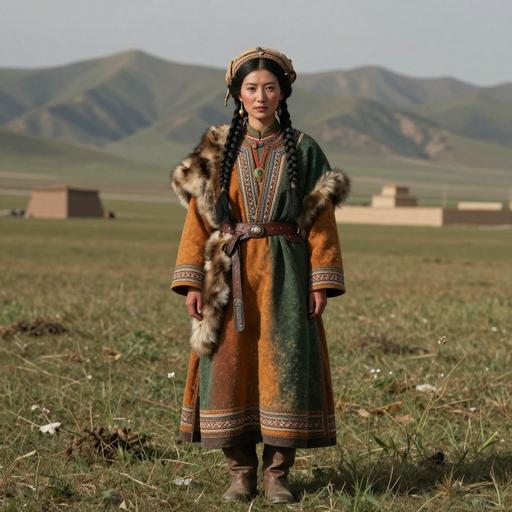
The Story
The journey of mtDNA haplogroup U6A1
Origins and Evolution
mtDNA haplogroup U6A1 is a subclade of U6A, itself a major branch of haplogroup U6 that arose in North Africa during the Late Pleistocene. U6A1 likely coalesced after the initial split of U6A, during the Late Pleistocene to early Holocene (roughly around 12 kya based on phylogenetic position and diversity), reflecting an in situ diversification of maternal lineages within the Maghreb. Its phylogenetic placement and geographic concentration indicate an origin among populations associated with post-glacial North African occupations and early Holocene cultural complexes.
Subclades
U6A1 contains further downstream lineages (sub-branches identified in high-resolution mtDNA studies) that show localized expansions. Some of these subclades are enriched in the Canary Islands and certain coastal regions of Iberia, consistent with founder effects and later historical movements. The diversity within U6A1 is lower than the parent U6A as a whole, which is typical for a subclade that has undergone regional founder events and partial demographic expansions.
Geographical Distribution
U6A1 is principally found in the Maghreb (Morocco, Algeria, Tunisia) where it reaches its highest frequencies and diversity, reflecting a long-term presence. Secondary but notable occurrences appear in the indigenous Guanche of the Canary Islands (where founder effects boosted particular U6A1 sublineages), and in southwestern Iberia (southern Spain and Portugal), likely the result of prehistoric coastal contacts and historic gene flow across the western Mediterranean. Low to modest frequencies of U6A1 are reported in parts of East Africa (e.g., Ethiopia, Somalia) and in the Near East, representing either ancient trans-Saharan/trans-Mediterranean connections or more recent movements. Sporadic occurrences in southern France, Sicily and other Mediterranean coastal areas reflect maritime contacts, migrations and historical exchanges.
Historical and Cultural Significance
Because U6A1 is concentrated in the Maghreb, it is often discussed in the context of indigenous North African populations (including many Berber-speaking groups). The lineage is compatible with continuity from Late Pleistocene/Mesolithic North African groups such as those identified archaeologically as Iberomaurusian and later Capsian-related populations, and it persisted into the Neolithic and later periods. The strong presence of U6A1-derived lineages among the Guanche indicates a clear founder effect during the colonization of the Canary Islands. Later historic movements across the Mediterranean (Phoenician, Roman, Islamic periods, as well as medieval and early modern exchanges) likely contributed to its low-frequency presence in Iberia and southern Europe.
Conclusion
U6A1 is a regionally informative maternal marker for post-glacial and Holocene demographic history in the western Mediterranean and North Africa. Its pattern—high diversity and frequency in the Maghreb with secondary, often founder-influenced occurrences in the Canary Islands and Iberia—supports models of long-term local continuity in North Africa combined with episodic outward dispersals across the Mediterranean and along coastal routes into East Africa and the Near East.
Key Points
- Origins and Evolution
- Subclades
- Geographical Distribution
- Historical and Cultural Significance
- Conclusion