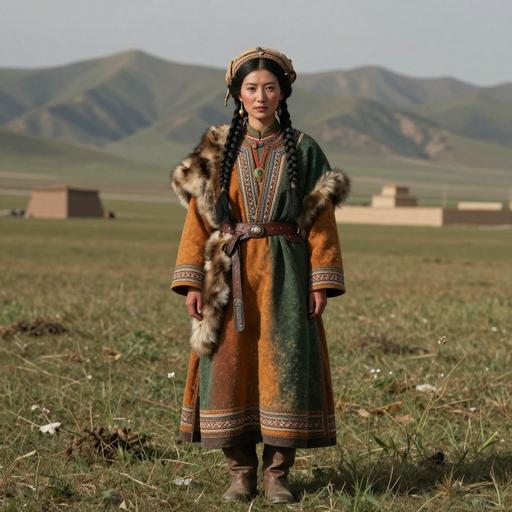
The Story
The journey of mtDNA haplogroup U6A5
Origins and Evolution
mtDNA haplogroup U6A5 is a downstream branch of U6a, itself a major North African subclade of haplogroup U6. U6a originated in North Africa during the Late Pleistocene (the parent clade is typically dated to ~22 kya), and U6A5 most likely arose later, during the early-to-mid Holocene (plausibly around ~6 kya based on phylogenetic placement and the relative short branch length of many U6a subclades). Its emergence represents part of the internal diversification of U6a within North Africa as populations adapted to post-glacial and Neolithic environments.
Because U6A5 is a relatively rare and recently defined subclade, age estimates are inherently uncertain and depend on available sequence data. The limited number of observed modern and ancient samples suggests a localized origin followed by episodic dispersal rather than a wide early expansion.
Subclades
As currently defined, U6A5 is a terminal or near-terminal branch within U6a. Compared with better-sampled U6a subclades (e.g., U6a1, U6a2), U6A5 has few downstream lineages reported in public databases, indicating either recent origin or undersampling. Continued whole-mtDNA sequencing of North African and adjacent Mediterranean populations may reveal further internal structure or closely related micro-clades.
Geographical Distribution
U6A5 is concentrated in North Africa, particularly among populations with Berber ancestry, and occurs at lower frequencies along adjacent Mediterranean coasts. Documented occurrences include the indigenous Guanche population of the Canary Islands and sporadic finds in the southwestern Iberian Peninsula. Low-frequency detections in parts of East Africa and the Near East likely reflect gene flow across the Red Sea and Mediterranean corridors over the Holocene. The distribution pattern is consistent with a North African origin and subsequent coastal dispersals rather than broad inland migrations.
Historical and Cultural Significance
The presence of U6A5 in North Africa is consistent with long-term maternal continuity in the region, often associated with indigenous Berber groups. Its occurrences in the Canary Islands and Iberia suggest participation in maritime/coastal movements that affected the western Mediterranean during the Holocene. While U6 lineages more broadly are implicated in prehistoric North African demographic processes (including postglacial recolonization and Neolithic transitions), U6A5 itself appears to have been a minor lineage contributing to the maternal genetic landscape rather than a driver of large-scale demographic change.
Archaeogenetic evidence for U6A5 is currently limited (a very small number of ancient samples or possibly a single published ancient detection), so direct ties to particular archaeological cultures remain tentative. The haplogroup's pattern fits with associations to North African Epipaleolithic/Neolithic contexts (for example, the wider U6 signal is seen in contexts linked to Capsian-related and later Holocene societies) and to later historic populations in the Canary Islands and Iberia.
Conclusion
U6A5 is a rare, regionally concentrated subclade of U6a that reflects North African maternal continuity and episodic coastal dispersals into adjacent regions. Its low frequency and limited ancient representation mean conclusions must be cautious: further sequencing of modern and ancient North African and Mediterranean samples will be necessary to refine age estimates, geographic origin, and historical dynamics for this lineage. For now, U6A5 is best interpreted as a localized North African-born mtDNA lineage with secondary, low-frequency presence in nearby Mediterranean and East African populations.
Key Points
- Origins and Evolution
- Subclades
- Geographical Distribution
- Historical and Cultural Significance
- Conclusion