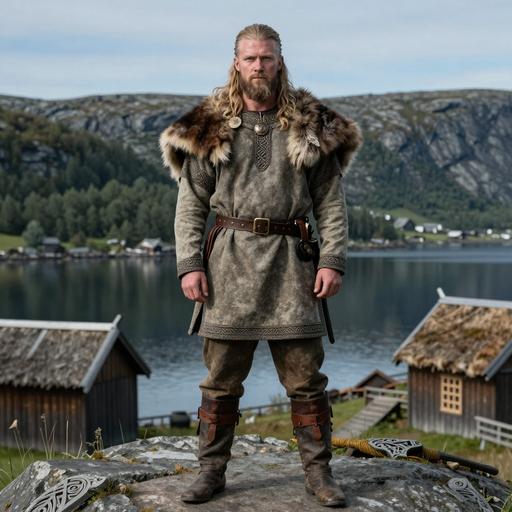
The Story
The journey of mtDNA haplogroup V16
Origins and Evolution
mtDNA haplogroup V16 is a downstream subclade of V1, itself a branch of mitochondrial haplogroup V that expanded during the post‑glacial recolonization of Western Europe. Given V1's estimated origin shortly after the Last Glacial Maximum (~12 kya), V16 most plausibly arose locally in the Atlantic/Iberian region during the early Holocene (roughly ~8 kya), as populations that had persisted in Franco‑Cantabrian refugia diversified. As a relatively deep but low‑frequency branch of V, V16 preserves a signature of maternal continuity in coastal and inland hunter‑gatherer and early farming communities.
Subclades
V16 is a specific terminal branch beneath V1; currently it is known as a low‑diversity lineage with few documented downstream branches. That scarcity of internal diversity suggests a modest effective population size and/or limited geographic spread after its emergence. Ongoing sampling and high‑resolution mitogenome sequencing could reveal additional internal structure or closely related tips currently assigned to basal V1.
Geographical Distribution
V16 is rare and geographically focal. Modern and ancient occurrences are concentrated along the Atlantic façade of Western Europe, with highest frequencies and most consistent reports from the Iberian Peninsula (including Basque and Atlantic Spanish/Portuguese populations) and parts of Atlantic France. Low‑frequency occurrences have been reported sporadically in northern Europe and in coastal North Africa, likely reflecting later mobility and prehistoric maritime contacts. Ancient DNA evidence for V16 is limited but consistent with a pattern of long‑term regional continuity from the Mesolithic into later periods in some localities.
Historical and Cultural Significance
Because V16 derives from a post‑glacial maternal lineage, it is informative for studies of Mesolithic recolonization and the persistence of pre‑Neolithic maternal lineages into the Neolithic and later archaeological horizons. V16's restricted distribution and low frequency mean it is generally not a major marker of large continent‑wide migrations (e.g., steppe‑associated Bronze Age movements), but it can serve as a tracer of local continuity and coastal population interactions, including potential exchanges across the western Mediterranean. In archaeological contexts, lineages like V16 are often found alongside other hunter‑gatherer‑associated haplogroups (e.g., U5) as well as farmer‑associated lineages (e.g., H), reflecting complex admixture in the early Holocene.
Conclusion
mtDNA V16 is best understood as a rare, regionally concentrated descendant of V1 that highlights maternal continuity in parts of Western Europe since shortly after the Last Glacial Maximum. While its low frequency limits its usefulness for tracking large‑scale migrations, V16 is valuable for fine‑scale studies of Iberian and Atlantic‑fringe population history and for detecting pockets of deep maternal ancestry that survived the demographic transformations of the Neolithic and later periods.
Key Points
- Origins and Evolution
- Subclades
- Geographical Distribution
- Historical and Cultural Significance
- Conclusion