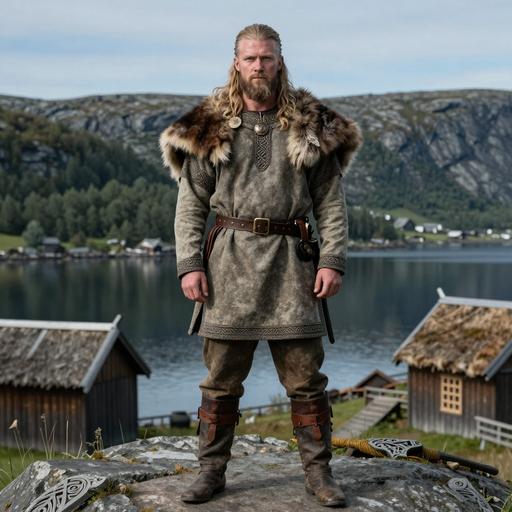
The Story
The journey of mtDNA haplogroup V3A1
Origins and Evolution
mtDNA V3A1 is a downstream subclade of V3A, itself a branch of haplogroup V associated with postglacial recolonization of Western and Northern Europe. V3A likely emerged in the Early Holocene (the parent is estimated near ~7 kya), and V3A1 represents a more recent diversification within that Western European maternal lineage. The likely scenario is that V3A1 arose as a localized mutation within populations that had expanded northward after the Last Glacial Maximum, with subsequent survival in pockets of northern Europe where genetic drift and founder effects increased its relative frequency in small or isolated groups.
Genetic processes important to the history of V3A1 include postglacial range expansion, bottlenecks associated with founder events during northward movement, and drift in small high-latitude populations (for example, Saami and other northern groups). The detection of V3A1 in modern and one ancient sample is consistent with a lineage that is rare but persistent through the Holocene in specific regions.
Subclades
As a named downstream branch (V3A1) of V3A, this haplogroup currently shows limited known internal diversity in public databases; no widely recognized, deeply branching named subclades of V3A1 have been established in the literature at large. Future whole-mitogenome sequencing from targeted regions (Iberia, Atlantic Europe, Scandinavia, and the Circum-Arctic) may reveal finer substructure (e.g., V3A1a, V3A1b) and help resolve phylogeographic patterns.
Geographical Distribution
V3A1 is found at low frequencies across parts of Western and Northern Europe, with the clearest signals in the Iberian Peninsula (as part of the broader V3A distribution) and in northern Scandinavia and Saami groups where it appears relatively enriched compared to continental averages. Sporadic, low-frequency occurrences have been reported in the Caucasus/West Asian margin and among some Northwest African Berber populations, consistent with rare long-distance dispersal or historical gene flow. The geographic pattern fits a model of origin in western refugia followed by coastal/continental northward expansion and later local persistence.
Historical and Cultural Significance
Because V3A1 is a low-frequency maternal lineage, it is not strongly tied to a single archaeologically defined culture in the way that some common haplogroups are. However, its inferred chronology (a few thousand years ago) and geographic associations make it compatible with demographic events spanning the Neolithic to Bronze Age transition in Europe and with later regional histories in the north:
- It is compatible with maternal continuity from Early Holocene/Neolithic coastal populations that recolonized temperate Europe after the LGM.
- Its presence in northern Scandinavia and Saami groups points to northern persistence and local isolation during the later Holocene, where founder effects and small effective population sizes preserved rarer maternal lineages.
The single documented ancient DNA occurrence of V3A1 indicates the lineage can be recovered from archaeological contexts, but the small number of ancient hits means strong culture-level associations (e.g., Bell Beaker, Corded Ware) are not well supported; associations remain probabilistic and regionally specific.
Conclusion
V3A1 is best understood as a rare, regionally informative maternal lineage that helps illuminate postglacial recolonization dynamics and later northern persistence in Europe. Its limited representation in modern and ancient datasets means that confident statements about fine-scale movements are tentative; additional whole mitogenome data from Iberia, Atlantic Europe, Scandinavia, and the Caucasus/North Africa would clarify its phylogeography and demographic history. For now, V3A1 is a useful marker of low-frequency maternal continuity linking western refugial origins with later northern presence.
Key Points
- Origins and Evolution
- Subclades
- Geographical Distribution
- Historical and Cultural Significance
- Conclusion